Articles in this Volume

Research Article Open Access
Solving Hidden Hunger: An Integrated Framework for Nutritional Enhancement Across the Food Chain, from Farm to Fork
Hidden hunger (micronutrient deficiency) is a global public health challenge rooted in the systemic loss of nutrients within the modern food system. This paper proposes an integrated "Nutrition Chain Repair" framework aimed at rebuilding nutritional integrity from production to consumption through synergistic multi-node interventions. Based on a systematic review of 11 recent publications (2024-2025), this study identifies three key intervention nodes: At the production end, enhancing the nutritional baseline through biofortification and the development of novel resources (e.g., algal protein). In processing and delivery, applying advanced encapsulation technologies (e.g., liposomes), optimizing traditional processes (e.g., freezing), and utilizing fermentation to protect and deliver nutrients precisely. At the assessment and cognition level, there is an urgent need to reform protein evaluation standards and establish the food matrix as a core paradigm. Flavor perception is the critical bridge ensuring consumer acceptance of technological outcomes and the realization of public health benefits. This study argues that only through such cross-chain, systemic, and synergistic repair can a truly nutrition-sensitive and sustainable food system be built to eradicate hidden hunger.
Show more
Read Article PDF
Cite
Research Article Open Access
The Impact of High-Protein Diet Models on Weight Loss in Obese People and the Mechanisms at Work
Current studies have inadequately investigated the regulatory mechanisms that high-protein diets (HPD) use to modulate basal metabolism during weight loss in obese people. To fill this gap, this research looks into the regulatory mechanisms and effects of HPDs on the basal metabolism of obese people losing weight. We analyze these mechanisms and impacts from multiple perspectives: the weight loss efficacy of HPDs, their mechanistic pathways in promoting weight loss in obese individuals, practical implementation protocols, associated adverse reactions and mitigation strategies, and short- and long-term effects. The research findings show that HPDs markedly improve body weight and metabolic indicators by adjusting satiety-related factors, increasing the thermic effect of food, and influencing blood lipids and lipid metabolism. More favorable results are obtained when HPDs are combined with fitting physical movement and other dietary weight-loss tactics. This research gives a theoretical basis for integrating HPD patterns with artificial intelligence and big-data technologies in the future. But, current studies of the short- and long-term effects of HPD interventions on the renal function of overweight/obese individuals are limited. Future research should work on refining these mechanistic frameworks to consolidate the theoretical foundation for HPDs.
Show more
Read Article PDF
Cite
Research Article Open Access
Association Between Gut Microbial Alpha Diversity and Body Mass Index: Evidence from the American Gut Project
Article thumbnail
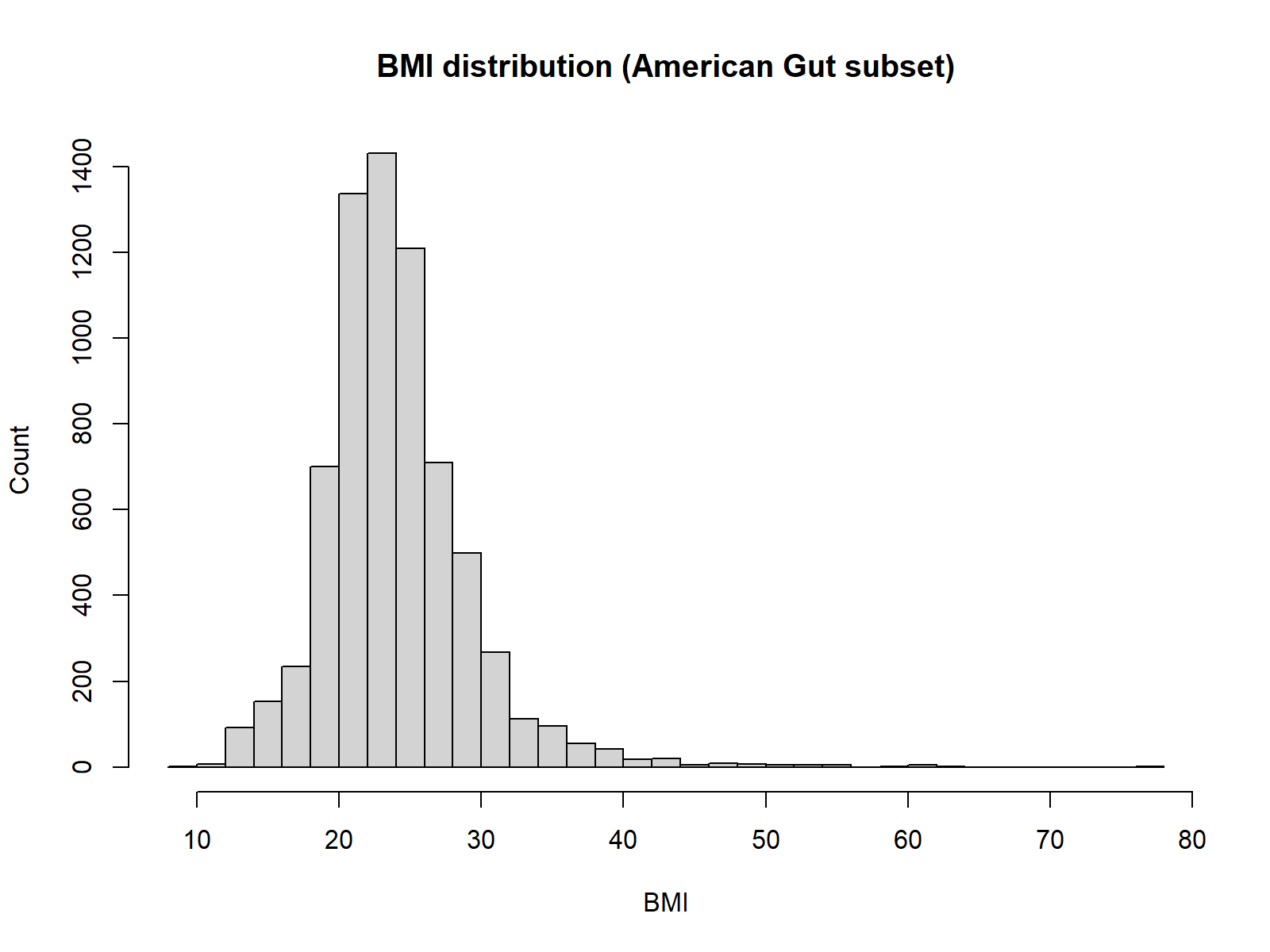
Obesity is one of the major global health issues. It has been increasingly connected with alterations in the gut microbiome, and the microbial alpha diversity is often considered a marker of gut ecosystem stability and metabolic health. However, evidence regarding the association between microbial diversity and body mass index (BMI) remains unclear. This article studied the relationship between gut microbial alpha diversity and BMI using data from the American Gut Project. In the analysis, 7021 individuals with available BMI and 16S rRNA sequencing data were included. Data analysis and R were applied to evaluate distributional assumptions, and a linear regression model was used to figure out the association between Shannon diversity and BMI. The results reveal that there is a small negative regression coefficient between Shannon diversity and BMI, suggesting that higher diversity was associated with lower BMI values. However, this association was not statistically significant due to the p value (0.163). The model cannot explain the majority proportion of variance in BMI. What's more, comparisons across BMI categories suggested obvious overlaps in diversity distributions, meaning that there's no clear separation between groups. These findings indicate that overall microbial alpha diversity alone may not be a strong independent predictor of BMI in this study.
Show more
Read Article PDF
Cite
Research Article Open Access
From "Single-Track Punishment" to "Dual-Track Coordination" — An Integrated Pathway of Legal Regulation and Public Health Intervention in Drug Governance
The governance of drug offenses has long been confronted with the challenge of balancing criminal justice interventions and public health approaches. Traditional criminal law-centered regulatory models face limitations such as the risk of overcriminalization, labeling effects, and resource allocation pressures when addressing addictive behaviors. From a legal policy perspective, this article proposes a governance framework consisting of "targeted stratification—diversion—continuity of care." Through a comparative analysis of Portugal's decriminalization system and the U.S. drug court model, it demonstrates the institutional experience of coordinating legal regulation and public health systems. The study argues that such coordination helps balance public safety and individual health, offering institutional insights for refining China's existing drug governance system.
Show more
Read Article PDF
Cite
Research Article Open Access
Dietary Patterns and Nutritional Interventions for Gestational Diabetes Mellitus: A Narrative Review
Gestational diabetes (GEM) poses a serious threat to both maternal and infant health, and dietary therapy is the core management approach for it. This review focuses on synthesizing recent clinical studies of the GEM dietary management and summarizes various effective dietary patterns. Through the looking back of the literature, this text analyzes the similarities and differences among international guidelines, discussing the relationship between the risk of gestational diabetes and core nutrients, such as fatty acids and dietary fiber, and assesses some dietary therapy methods like DASH and Low-GI diets. The result of the literature review points out that the DASH diet is the therapy method that has the most significant effects on blood glucose controlling and pregnancy outcomes improving. A Low-GI diet can lower the blood glucose after the meals and decrease the risk of fetal macrosomia and premature birth. The Mediterranean diet also has a promising future in lowering the morbidity of gestational diabetes. The goal of this review is to provide a diet guide that is based on reality and discover some new research directions in the future.
Show more
Read Article PDF
Cite
Research Article Open Access
The Mechanism of Action and Clinical Application of Saccharomyces boulardii in Childhood Enteritis
Article thumbnail
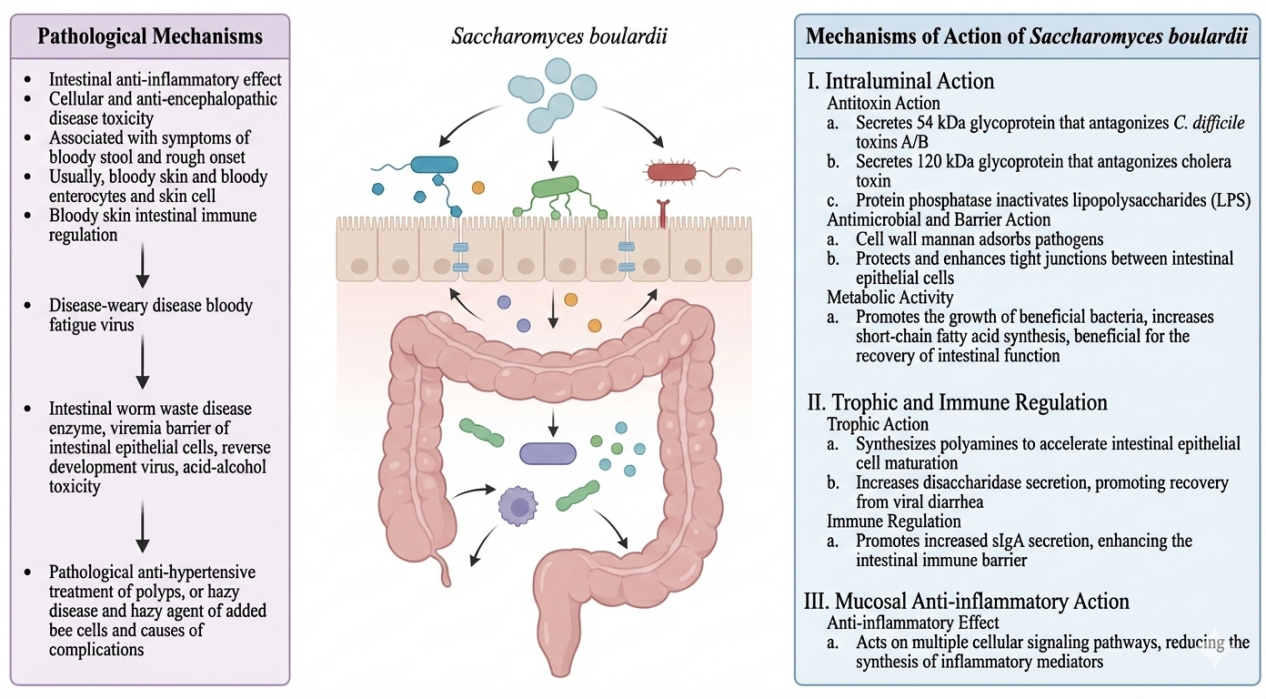
Diarrhea is one of the major health threats to children under five years old worldwide, and repeated intestinal inflammation can also lead to malnutrition, growth retardation and other problems. Saccharomyces boulardii is the infrequent non-pathogenic fungal probiotic used in clinical practice. Compared with traditional probiotics, it has the unique advantages of antibiotic resistance, acid resistance and heat resistance, and can reach the intestine smoothly to exert its effects. This paper sorts out the multidimensional action mechanisms of Saccharomyces boulardii, including antagonizing pathogens in the intestine, regulating body nutrition and immunity, and reducing intestinal mucosal inflammation. Meanwhile, the clinical application effects of this probiotic in children with acute infectious diarrhea, antibiotic-associated diarrhea (ADD) and chronic diarrhea were introduced, and the clinical safety and potential risks of this probiotic were analyzed. Saccharomyces boulardii can effectively shorten the course of diarrhea, reduce the frequency of bowel movements, and is well tolerated. Adverse reactions may occur only in specific populations, and the risk is extremely low. With the development of precision medicine, the application prospects of Saccharomyces boulardii in children's gut health management will be even broader. This article aims to provide a basic reference for research on the restoration of the gut microbiota ecosystem in children.
Show more
Read Article PDF
Cite
Research Article Open Access
Nutritional Intervention Strategies for People with Metabolic Syndrome Based on the Theory of Medicinal-Food Homology
Metabolic syndrome (MetS) is a multifactorial metabolic disease characterized by central obesity, glucose and lipid metabolism disorders, and hypertension. Its prevalence continues to rise, posing a serious threat to public health. While traditional drug treatments have some efficacy, long-term use is prone to adverse reactions and has low adherence. Nutritional interventions based on the concept of "medicine and food homology" have gradually become a research hotspot due to their naturalness and multi-target regulatory advantages. This article systematically reviews the mechanisms of action and application progress of substances derived from both medicine and food homology in MetS intervention, focusing on analyzing their synergistic regulatory mechanisms through four main pathways: improving insulin sensitivity, regulating lipid metabolism, inhibiting chronic inflammatory responses, and reshaping the gut microbiota structure. Studies have shown that multiple active ingredients form a synergistic effect across multiple pathways, significantly improving blood glucose, blood lipid levels, and inflammatory states, and demonstrating superior intervention effects compared to single-component interventions in animal experiments and some clinical studies. Nevertheless, current research still faces challenges such as a lack of standardized compound treatments and insufficient long-term clinical evidence. Future research should focus on strengthening high-quality clinical studies and mechanism exploration, promoting the precision development of interventions based on the homology of medicine and food, and providing stronger theoretical support for non-drug interventions for MetS.
Show more
Read Article PDF
Cite
Research Article Open Access
The Regulation of Lipid Digestion by Protein-Polysaccharide Complex Pickering Emulsions
Lipids are the core energy-supplying substances in the human body, and their rapid burst of hydrolysis and excessive absorption in the gastrointestinal tract are key pathological factors inducing chronic diseases such as obesity and fatty liver. Intervening in lipid degradation kinetics through food interface engineering has become an important strategy to regulate metabolic disorders. At present, traditional emulsions are prone to structural collapse in extreme digestive environments, while protein-polysaccharide complex Pickering emulsions exhibit great potential in controlling lipid release due to their excellent interfacial mechanical properties. However, the dynamic interfacial evolution of this system in complex in vivo environments and its targeted regulation mechanism on downstream metabolic pathways still lack systematic elucidation. In this paper, the microscopic self-assembly principle of polysaccharide-protein complex interfaces is comprehensively deconstructed, and its multidimensional regulation mechanism in the lipid digestion process is deeply analyzed. The results indicate that the complex system greatly weakens the adsorption efficiency of lipase by constructing a three-dimensional (3D) network framework with a high modulus, utilizing significant steric hindrance, an extremely high bile salt displacement energy barrier, and in situ microgelation characteristics. Consequently, the release mode of free fatty acids (FFAs) is successfully transformed into a stable and controllable sustained release. Given that current mechanistic demonstrations highly rely on in vitro static models, future research should prioritize combining in vivo in situ tracking technologies to map the interfacial fate under real dynamic gastrointestinal stress and deeply explore the interactive intervention mechanisms between specific polysaccharide structures and gut microbiota.
Show more
Read Article PDF
Cite
Research Article Open Access
A Review of Advances in AI Algorithm-Based Medical Imaging Technologies
With the rapid advancement of artificial intelligence, its application in medical imaging has become increasingly widespread, particularly in enhancing the clarity and precision of medical images. This paper reviews recent progress in AI-based medical imaging technologies, exploring how advanced techniques such as deep learning and computer vision can effectively analyze and process large volumes of imaging data, thereby improving image quality and assisting physicians in achieving more accurate disease diagnoses. At the same time, the introduction of AI has optimized medical image acquisition and processing workflows, reducing potential human errors. With the rise of multimodal biomedical imaging, the prospects for AI in medical imaging have grown even broader. Through an analysis of relevant domestic and international literature, this review reveals the current state, technical trends, and challenges of AI applications in medical imaging. The application of AI algorithms not only improves diagnostic efficiency but also offers new pathways toward personalized and precision medicine, pointing to a more intelligent and efficient future for medical imaging.
Show more
Read Article PDF
Cite
Research Article Open Access
The Improved Dietary Approaches to Stop Hypertension (DASH) Assisting in the Treatment of Hypertension
As one of the common chronic non-communicable diseases, hypertension also serves as one of the major risk factors for cardiovascular and cerebrovascular diseases, which can lead to the loss of more than 235 million years of healthy life every year. Although certain achievements have been made in the field of hypertension treatment and control, the control and treatment of hypertension still face significant challenges in developing countries and require effective treatment plans and policy guidance. In this thesis, the DASH and the research on the improved DASH assisting in the treatment of hypertension were analyzed and integrated. According to the analysis, improvements to the DASH diet, such as sodium restriction and integration of local dietary habits, can enhance therapeutic effects, improve the quality of life of patients, and increase patient compliance. Although it provides a reference for future research and the formulation of prevention policies, the mechanism for various nutrients in the improved DASH lower blood pressure remains unclear, there is also a lack of guidelines for the formulation of dietary recipes for different populations, and the optimal content ratio of nutrients in the improved DASH diet still requires further exploration.
Show more
Read Article PDF
Cite