Articles in this Volume

Research Article Open Access
Analysis of Second-Hand Housing Price Fluctuations in Beijing and Changsha Under the Impact of the Epidemic Based on an Interrupted Time Series Regression Model
Article thumbnail
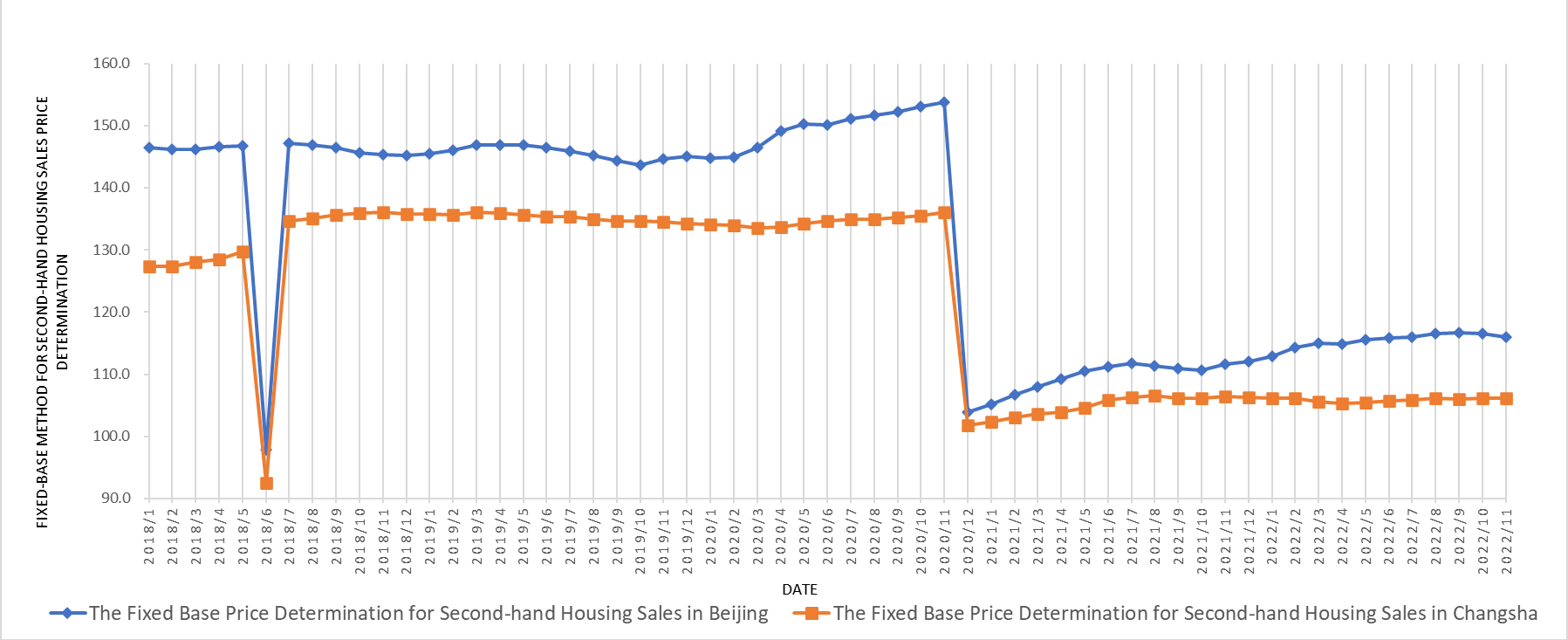
The arrival of the epidemic is hitting different industries, leading to an economic downturn. As one of the pillars of the national economy, the real estate industry holds indispensable significance for the stability of the national economy. There are many sectors within the real estate industry, but the secondary housing market constitutes an important part of the real estate industry and best represents it. This study aims to explore the fluctuations of the second-hand housing market in Beijing and Changsha, investigate the impact of the pandemic on the second-hand housing market from 2018 to 2022, while also considering the effects of M2, and include a dummy variable in the regression analysis. Using an interrupted time series regression model can effectively isolate mutation conditions, observe the instantaneous impact of an epidemic, and also monitor long-term fluctuations. It can also serve as research findings and provide purchase advice for homebuyers. At the same time, provide recommendations for government policy implementation, and consider using different policies for different cities' capital situations to quickly and effectively address current issues. Internationally, China provides a good example for other countries in responding to sudden public health events.
Show more
Read Article PDF
Cite
Research Article Open Access
Analysis of Factors Influencing the Consumer Price Index (CPI) for China's Residents
Article thumbnail
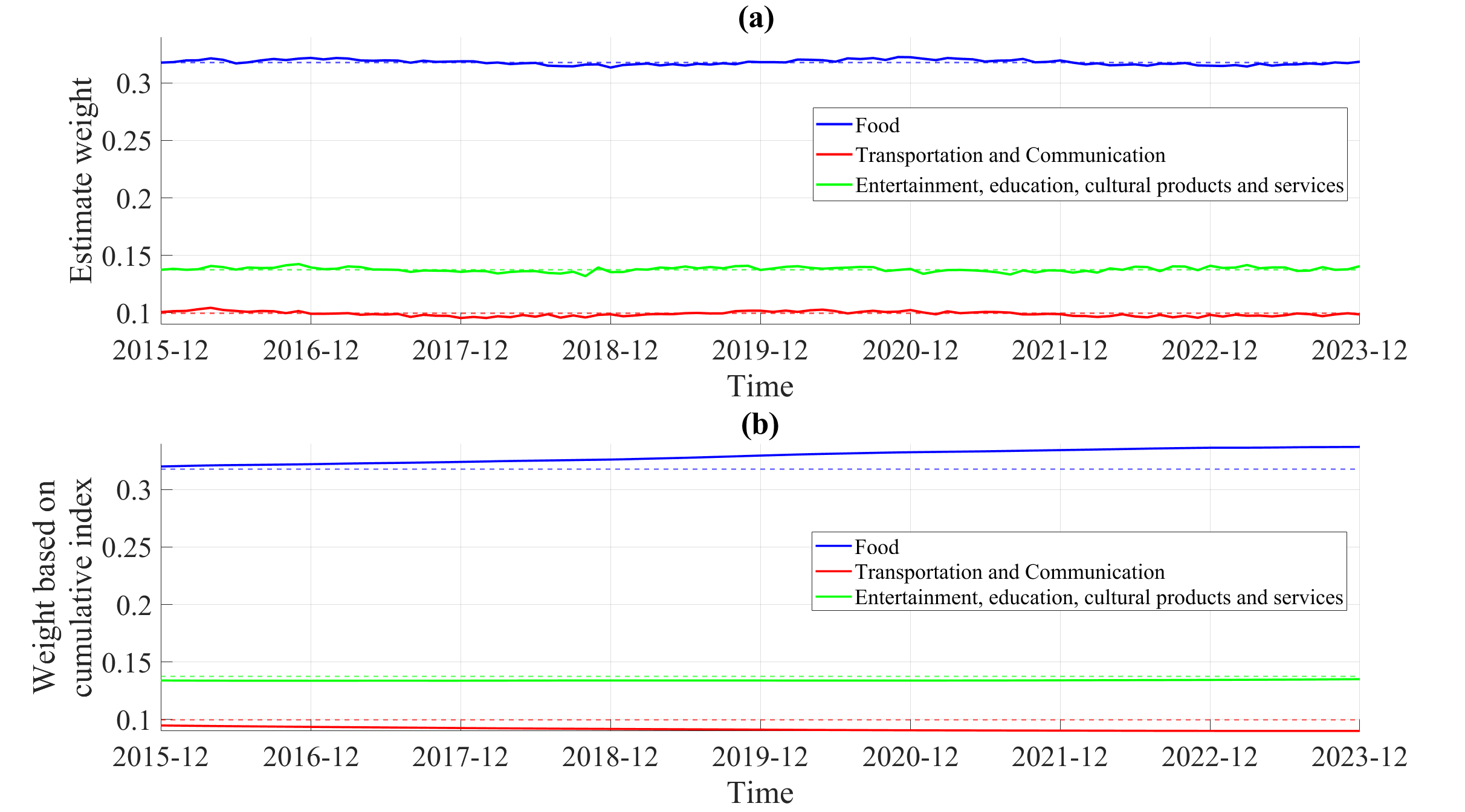
The Consumer Price Index (CPI) is an important indicator for measuring inflation, and its classification weight and dynamic changes directly affect macroeconomic policies and residents' perception of life. Based on the monthly CPI data from the National Bureau of Statistics spanning from 2011 to 2023, this study comprehensively employs the partial derivative method, ordinary least squares (OLS) with non-negative constraints, and the generalized inverse method to systematically estimate and compare the weights of eight major categories of goods and services in China's CPI. The results indicate that the weights estimated by the three methods are generally consistent with the official reference values, with the categories of food, housing, and transportation and communication experiencing the most significant changes, reflecting the trend of adjustment in residents' consumption structure. Through time-segment regression and rolling window analysis, the dynamic evolution of weights and characteristics of consumption upgrading was revealed. Further introducing Monte Carlo simulation to quantify weight uncertainty reveals its considerable impact on the estimation of the overall CPI level. This study verifies the consistency of the data and provides a robust basis for policy evaluation and inflation forecasting. It also suggests that statistical departments should improve data accuracy and regularly publish weights to enhance statistical transparency and policy reference values.
Show more
Read Article PDF
Cite
Research Article Open Access
The Effect of Wingtip Devices on Aircraft Aerodynamic Performance
Article thumbnail
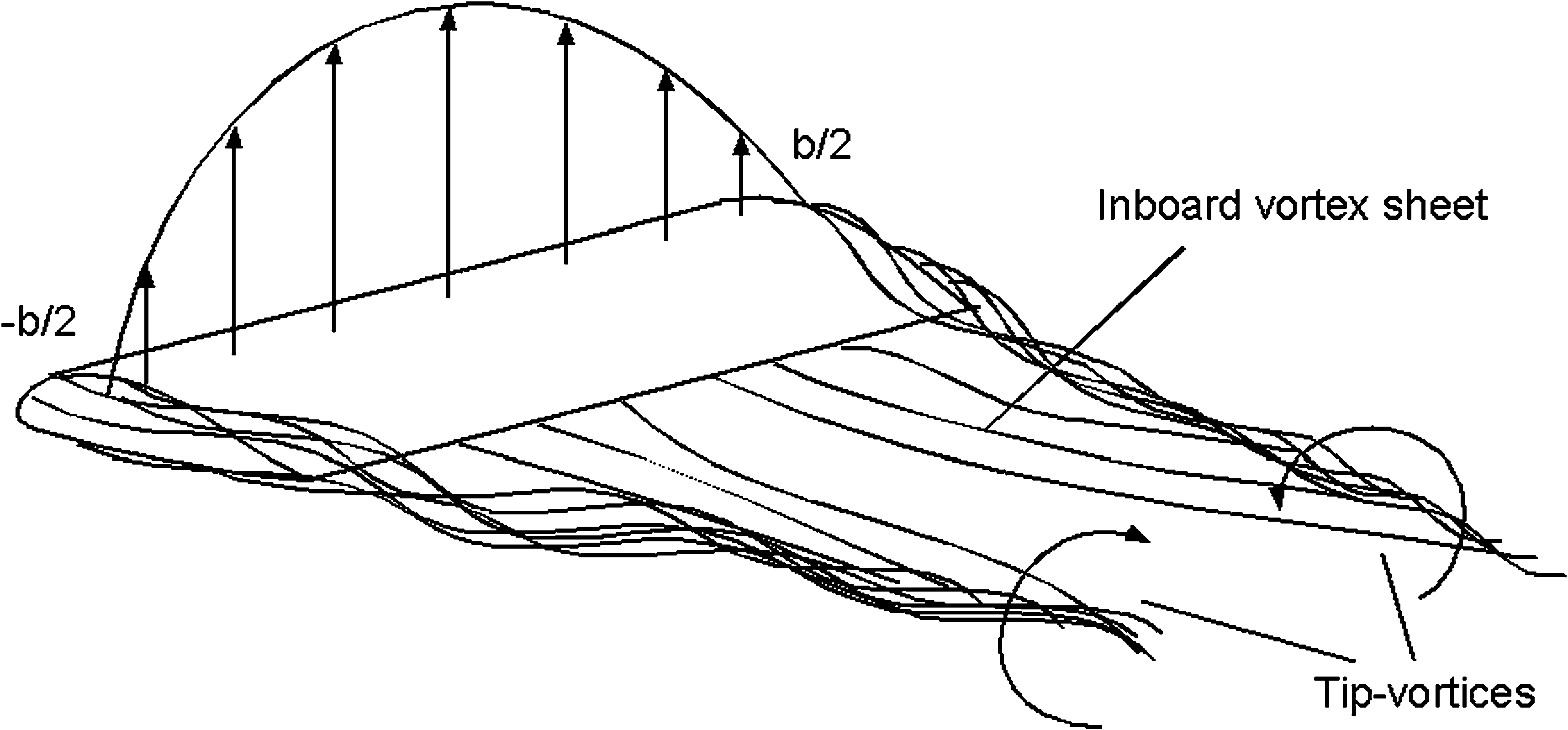
Induced drag is one of the main sources of drag acting on a wing, and it comes from the strong vortices that tend to form near the wingtips during flight. This kind of drag not only reduces aerodynamic efficiency but also means the aircraft burns more fuel than it needs to. Wingtip devices have been around for a while now, and they are basically designed to limit how much these vortices affect overall flight performance. In this paper, we take a closer look at several different wingtip device designs and how they each influence aircraft performance. We start by going over the basic mechanism behind wingtip vortex formation and why it leads to induced drag in the first place. After that, we compare both well-established designs like blended winglets and split-tip winglets with more recent ones such as multi-tip and spiroid winglets, using data from numerical simulations and wind tunnel experiments. We also look at how each design performs in terms of lift, drag reduction, and lift-to-drag ratio. Overall, the results suggest that all the devices studied are capable of improving aerodynamic performance to varying degrees.
Show more
Read Article PDF
Cite