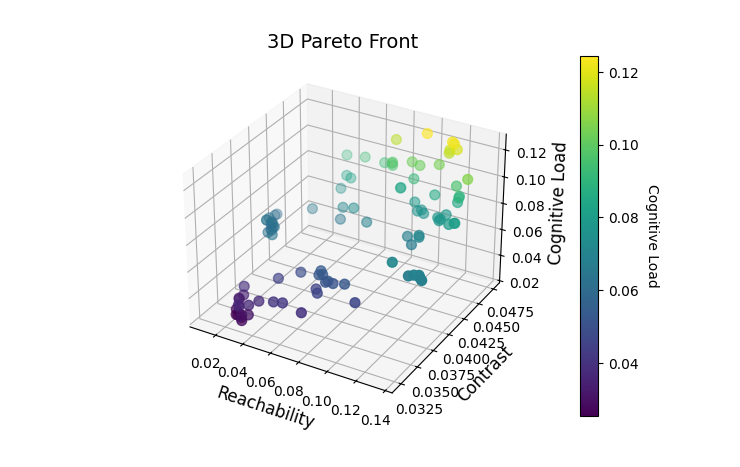
With the rise of the Single-Pilot Operation (SPO) mode, the human-machine interaction design of aircraft cockpits faces new challenges. This paper focuses on optimizing human-machine interaction in single-pilot aircraft cockpits by constructing a three-dimensional evaluation system based on the NSGA-II multi-objective optimization strategy. This system comprehensively analyzes the reachability of operating components (), the contrast of color information (), and the cognitive load of pilots (). Data are derived from assumptions and simulation analyses based on literature and theory, covering factors such as pilot characteristics, component layout, color contrast limits, and flight mission complexity. By generating Pareto front solutions, the paper reveals trade-offs among the three objectives, providing a new quantitative decision-making basis and research direction for cockpit design.