Articles in this Volume

Research Article Open Access
The Mathematics Behind "The House Always Wins": Law of Large Numbers and Parrondo's Paradox
Article thumbnail
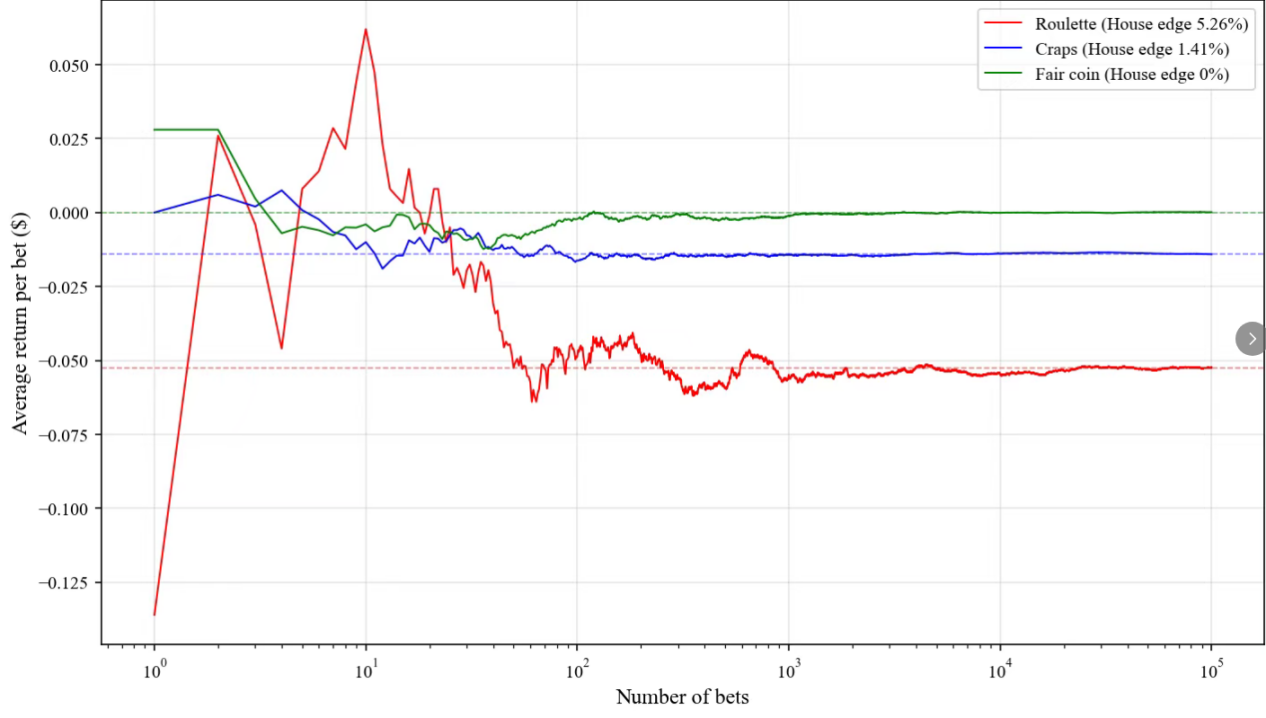
The assertion that "the house always wins" has a rigorous mathematical foundation. This paper examines why gamblers cannot achieve positive returns from casino games in the long run through the lens of the Law of Large Numbers. It reviews fundamental probability theory, discusses a recent breakthrough by Shandong University researchers who proved the "gambler's ruin" conjecture in 2025, and explains Parrondo's paradox – a phenomenon wherein two individually fair games become losing when played alternately. The paper's original contributions include: (1) computational simulations demonstrating the Law of Large Numbers in casino contexts; (2) comparative analysis of ruin rates across three distinct games; (3) presentation of the 2025 proof at a level accessible to high school students. The results demonstrate that prolonged gambling leads to certain financial loss. Note on sources and original work: This paper cites all sources using numbered brackets. Chapter 2 synthesizes findings from these papers with proper attribution. The simulation code, graphical visualizations, comparative analyses, and exposition of Chen's proof are the author's original work. The author employed AI tools for code debugging assistance, as disclosed in the Acknowledgments.
Show more
Read Article PDF
Cite
Research Article Open Access
Research on the Application of Machine Learning in the R&D of Automotive Solid-State Electrolyte Materials
With the rapid development of the new energy vehicle industry, solid-state electrolytes, as key materials to improve the safety and energy density of lithium-ion batteries, have attracted extensive attention. The traditional research and development (R&D) of solid-state electrolyte materials relies on the "trial-and-error" model, which features long cycles and high costs, making it difficult to meet the demand for efficient screening of excellent materials. This paper systematically sorts out the key performance indicators of solid-state electrolytes, including stability, electronic conductivity and ionic conductivity, and focuses on the application progress of machine learning technology in the property prediction and inverse design of solid-state electrolyte materials. By analyzing the development overview and application examples of generative models (such as variational autoencoders, generative adversarial networks, recurrent neural networks, reinforcement learning) and predictive models (such as artificial neural networks, graph neural networks) in material design, this paper summarizes the challenges faced by current methods in data dependence, model interpretability, generation stability and other aspects. Research shows that the machine learning-based material R&D paradigm is expected to break through the limitations of traditional methods, accelerate the discovery and optimization of high-performance solid-state electrolyte materials, and provide strong support for the development of solid-state batteries for electric vehicles.
Show more
Read Article PDF
Cite
Research Article Open Access
A Review of Aerodynamics, Optimization and Track-Related Performance of Formula One Front Wings
Article thumbnail
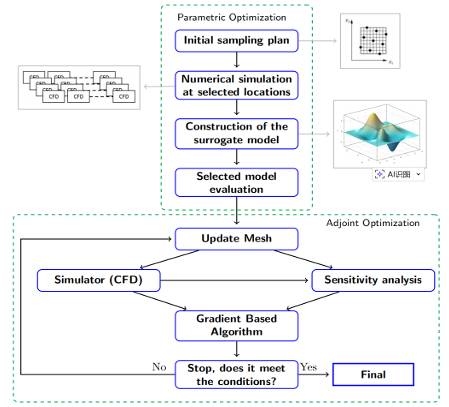
Formula One (F1) is becoming more and more popular and competitive in recent years. As a significant component of F1 racing car, front wing has a huge impact on downforce, drag, wake management and performance of the car. Therefore, the study on the front wing should be given the highest priority. This paper provides a review of the aerodynamic performance, airfoil optimization and performance of F1 front wings on the tracks. It systematically summarizes the parametric and adjoint-based aerofoil optimization focusing on the front wing, brake ducts and wheels. The fluid-structure interaction (FSI) is also included, which focuses on the of aeroelastic deformation causing by high-speed oncoming airflow. Besides, aerodynamics behaviors in real racing scenarios are critical to analyse, including the wheel-to-wheel competition, damage of endplates, leading to different aerodynamic performance on straights and corners with various speed. The comparison of different types of large eddy simulation (LES) and behaviors of distinct methods of RANS are also included. Finally, existing limitations are pointed out and future directions are given to provide references for the design and optimization of racing cars under real competitive conditions.
Show more
Read Article PDF
Cite
Research Article Open Access
Mechanical Analysis of an Externally Pressurized Cylindrical Shell with Initial Ovality
Article thumbnail
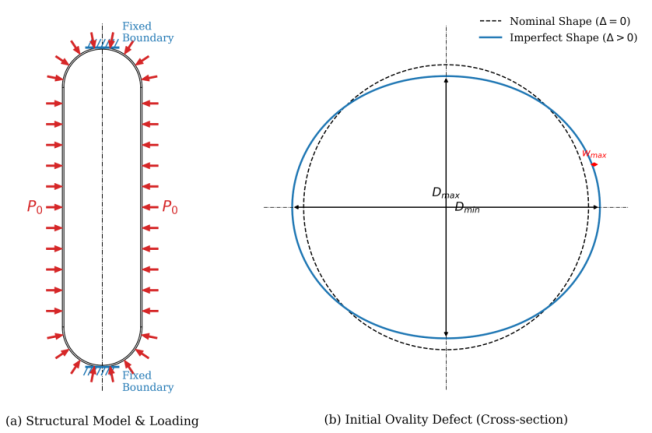
Thin-walled cylindrical shells are often used in aerospace structures and deep-sea pressure components because they can carry load efficiently with limited weight. In external-pressure service, however, this advantage comes with a clear weakness: the shell may lose stability before the material reaches its yield strength. Manufacturing and assembly also make a perfectly circular section difficult to obtain, and initial ovality is one typical defect that can change the buckling response. In this paper, a cylindrical shell with initial ovality is analyzed by finite element eigenvalue buckling analysis, and four stiffening schemes are compared, namely circumferential T-shaped stiffeners, longitudinal T-shaped stiffeners, circumferential channel-section stiffeners, and circumferential equal-leg-angle stiffeners. The results show that the arrangement direction of the stiffener has a stronger effect than the section type alone. The circumferential T-shaped scheme gives the largest buckling load multiplier, 0.948, while the longitudinal T-shaped scheme gives only 0.320 under the same comparison conditions. This difference indicates that an effective stiffener should restrain the circumferential buckling wave rather than only increase local axial stiffness. The study therefore gives a direct reference for selecting stiffener layouts when unavoidable ovality has to be considered in pressure-resistant cylindrical shell design.
Show more
Read Article PDF
Cite
Research Article Open Access
Price and Volatility Effects of the US-Iran Conflict on Brent Crude Oil
Article thumbnail
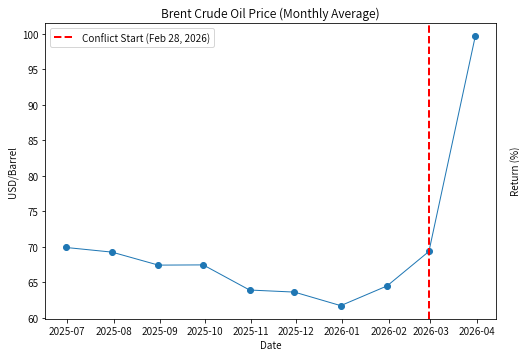
The Strait of Hormuz is a key route for global oil transportation. Any disruption there can affect oil prices around the world. This study looks at how the recent conflict between the United States and Iran changed the price of Brent crude oil. The main goal is to find out if the conflict caused a clear shift in price levels and market uncertainty. Monthly price data from July 2025 to April 2026 were used. The date February 28, 2026, marks the start of the conflict. Simple statistical methods, including t-tests, F-tests, and a basic regression model, were applied to compare the period before the conflict with the period after it. The results show that the conflict had a strong effect. The average price of Brent oil rose by about 28 percent. At the same time, monthly price swings, or volatility, grew from 4.72 percent to 25.58 percent. These changes are statistically significant. The findings suggest that the conflict not only pushed prices higher but also made the market much more unstable. This work adds to the limited research on this recent event and shows how fast energy markets can react to geopolitical events.
Show more
Read Article PDF
Cite
Research Article Open Access
Fluid Dynamics Advances in Turbojet Engines: From Fundamental Mechanisms to Engineering Applications
Article thumbnail
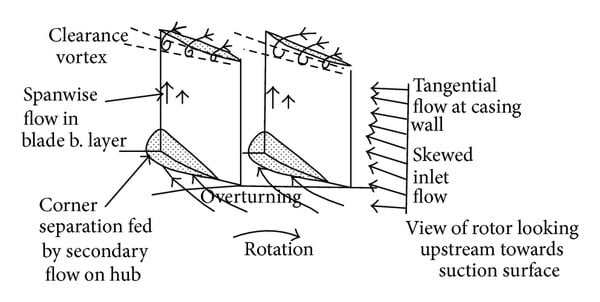
Turbojet engines are the core power source of modern aerospace vehicles, and their performance is directly determined by internal fluid dynamics. With the increasing demand for high thrust-to-weight ratio and low fuel consumption, the fluid flow mechanism in turbojet engines has become a research hotspot. This paper systematically reviews the latest advances in fluid dynamics of turbojet engines from two dimensions: fundamental flow mechanisms and engineering application technologies. It summarizes the research progress of numerical simulation, experimental measurement and theoretical analysis in recent 10 years. The analysis shows that the development of high-precision turbulence models, the optimization of compressor/turbine blade flow channels, and the control of combustion chamber flow instability have significantly improved the efficiency and reliability of turbojet engines. The application of active flow control technology and additive manufacturing has brought new breakthroughs in engine fluid design. Finally, the key challenges and future development directions of turbojet engine fluid dynamics are prospected, including multi-physics coupling flow simulation, digital twin flow field optimization, and green energy-efficient flow design. This review provides a theoretical reference for the performance improvement and innovative design of next-generation turbojet engines.
Show more
Read Article PDF
Cite
Research Article Open Access
The Association Between Sleep Quality and Blood Pressure Using Linear Regression
Article thumbnail
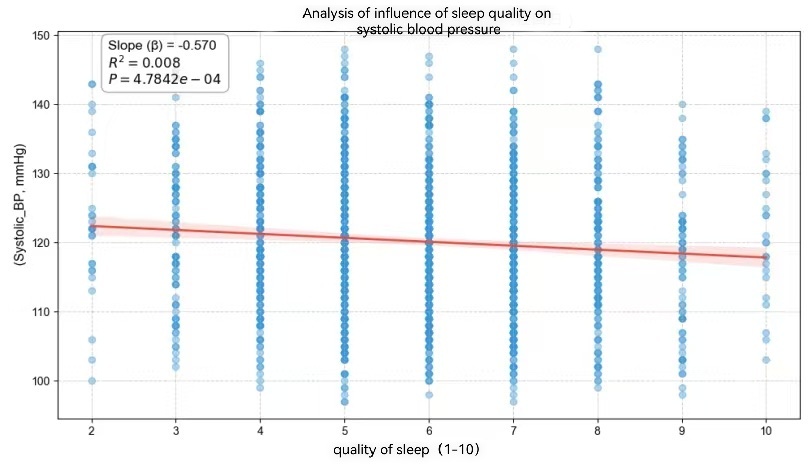
Among Chinese adults, approximately 27.9% suffer from hypertension, and the group affected by hypertension is becoming younger. More and more studies are beginning to explore cardiovascular diseases from the perspective of sleep. However, current research on these issues is rather scattered and is limited to the elderly population. This study utilized the "Sleep Health and Lifestyle" dataset from Kaggle (with 1500 samples) and conducted an in-depth analysis of the relationship between sleep quality and blood pressure levels among different age groups (young group: 18-38.6 years old; middle-aged group: 38.6-59.3 years old; The research results indicate that poor sleep quality is an important predictor of future hypertension. Younger groups have a higher sensitivity to blood pressure due to sleep quality than middle-aged and elderly groups. Sleep quality may regulate blood pressure levels by influencing heart rate. Based on these findings, targeted intervention strategies were proposed to provide scientific support. Early hypertension prevention and theoretical references on sleep health were provided.
Show more
Read Article PDF
Cite
Research Article Open Access
The Efficiency of Rocket Fuel
Article thumbnail
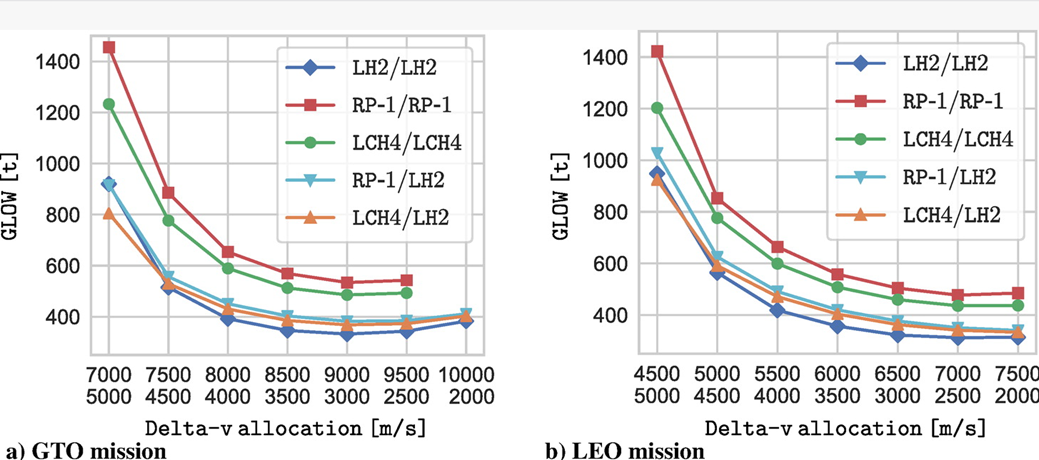
Selecting a chemical propellant for a launch vehicle isn't just about looking up specific impulse values in a handbook. Vacuum I_{sp} matters a great deal for upper stages, obviously, but for a reusable booster that has to fly again next week, a bunch of other considerations start to dominate. Things like tank volume, whether the fuel gunks up the cooling channels, and how much time the ground crew spends scrubbing things between flights. This article walks through the main propellant types—liquids, solids, hybrids—with a focus on the trade-offs that actually matter in a high‑cadence operation. Liquid methane gets a lot of attention here because it sits in an interesting middle spot: denser than hydrogen but not nearly as dense as kerosene, and it burns clean enough that coking is less of a pain. It's not the absolute best at any one metric, but the overall balance is what makes it attractive for the current generation of reusable rockets.
Show more
Read Article PDF
Cite
Research Article Open Access
Comparative Analysis of Cauchy Integral Formula and Residue Theorem in Contour Integration
Contour integration is one of the most basic methods of complex analysis that has widespread use in physics, engineering, and applied mathematics. Some of the strongest methods to consider such integrals include the Cauchy Integral Formula and the Residue Theorem. Despite being two foundations of complex analysis, the relationship between the two and the relative practical benefits have been of much pedagogical concern. The paper will provide a comparative analysis of these two central theorems in detail using a well-selected concrete case study. The study conclusively proves the computational equivalence of the two methods by comparing a particular contour integral between the two methods in a pole singularity scenario. The analysis given above shows that the Cauchy Integral Formula is a particular case of the more general and flexible Residue Theorem. The former is an intuitive and direct method to functions whose pole structure is simple, but the latter is more general, efficient, and powerful to functions with higher-order poles, multiple isolated singularities, or even essential singularities. The argument also explains the procedural differences and philosophical relationships of the two theorems. After all, the comparative study offers simple, effective instructions on how to choose a method to tackle the problem of contour integration in academic and practical scenarios, which will advance the level of understanding and the ability to compute.
Show more
Read Article PDF
Cite
Research Article Open Access
Dynamics of Quantum Entanglement in Transverse-Field Ising-Interacting Two-Qubit Systems Subject to Local Amplitude Decoherence
Article thumbnail
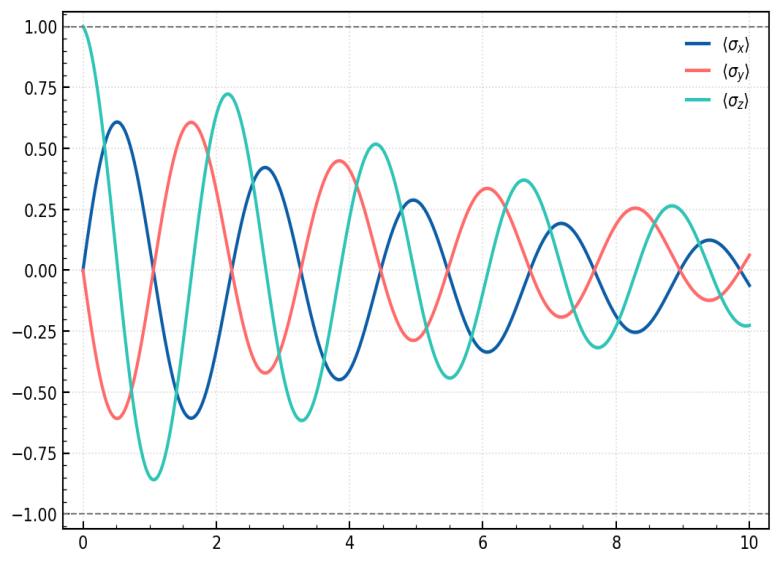
Quantum entanglement is a cornerstone of quantum technologies, but its susceptibility to environmental noise hinders practical implementations. This study investigates the entanglement dynamics in a two-qubit system governed by a transverse-field Ising Hamiltonian and exposed to local amplitude decoherence via the Lindblad master equation. Beginning with a maximally entangled Bell state, we numerically integrate the density matrix evolution using QuTiP. Entanglement, measured by concurrence, displays oscillatory decay influenced by the coupling J, transverse field B, and decoherence rate γ. Analytical benchmarks, including the unitary limit C(t) ≈ |cos(2Bt)| and non-interacting limit C(t) =ⅇ−2γt, corroborate the simulations. Scans across J/γ reveal that for |J|/γ > 1, entanglement lifetime (time until C < 0.5) can extend by factors of 2–10 relative to weak coupling cases, attributed to interaction-induced level splitting that mitigates damping. Bloch vectors exhibit spiraling contraction in the x-z plane toward the excited state pole, while von Neumann entropy rises in tandem with disentanglement, underscoring decoherence-driven mixing. Local observables such as 〈σ_z〉 oscillate amid relaxation to near-zero equilibrium. At finite temperature (T = 10 mK, n_th = 0.01), lifetime shortens by ~10–20% due to thermal excitations. Anchored in parameters from IBM Eagle and Google Sycamore processors, these results elucidate interaction's protective role against decoherence, offering design guidelines for resilient superconducting qubits in quantum computing and sensing. This work resolves prior inconsistencies in interaction-damping interplay and proposes testable conjectures for entanglement plateaus at specific J/γ ratios.
Show more
Read Article PDF
Cite