
Articles in this Volume

Research Article Open Access
Study on the Relationship Between Guardians' Worries about the Disease and Family Support and Psychological Endurance of Children with Inflammatory Bowel Disease
Article thumbnail
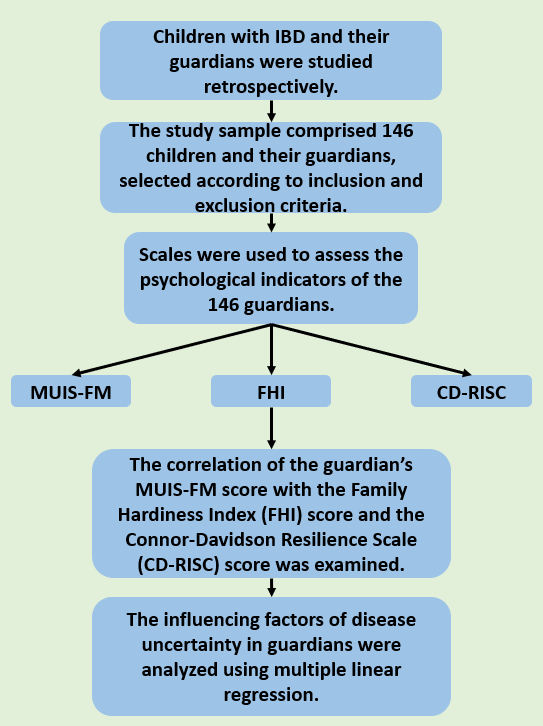
This study explored the connection between disease uncertainty and family/mental resilience in 180 guardians of children with IBD. Guardians completed the Mishel Illness Uncertainty Scale (MUIS-FM), Family Resilience Index Scale (FHI), and Connor-Davidson Mental Resilience Scale (CD-RISC). Results showed high disease uncertainty, with top scores for uncertainty (84.3%), lack of information (76.9%), unpredictability (74.0%), and complexity (68.2%). Guardians' mental resilience significantly linked to family resilience. Multiple regression analysis revealed family resilience's challenge dimension and mental resilience's tenacity and strength as key predictors of disease uncertainty. The study concludes that guardians of children with IBD face significant disease uncertainty, tied to lower family and mental resilience. Interventions should focus on enhancing family support and psychological adaptability to improve their monitoring experience, ultimately aiding in better management of their children's condition and overall well-being. This highlights the importance of a holistic approach in supporting these families, addressing not only medical needs but also the psychological and emotional aspects of caring for a child with a chronic illness.
Show more
Read Article PDF
Cite
Research Article Open Access
Prediction of Enzyme Michaelis Constant (Km) Based on Deep Learning
Article thumbnail
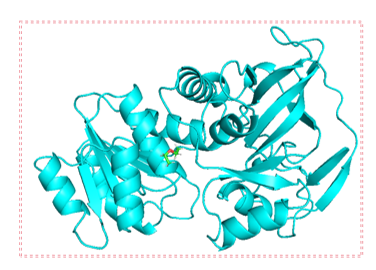
The Michaelis constant (Km) is a key parameter that describes the binding affinity between an enzyme and its substrate. However, experimentally determining the Kmvalue is both difficult and time-consuming. Therefore, developing a deep learning-based method to predict enzyme Kmvalues is of great significance. In this study, we constructed a deep learning model capable of extracting three-dimensional structural information from protein and substrate structural files. The model leverages a graph neural network to deeply process this information, thereby enabling accurate prediction of enzyme Kmvalues. The model achieved an R² value of 0.453 on the SABIO-RK dataset, outperforming the model proposed by Kroll A et al., and demonstrating superior accuracy and generalization capability. This research not only showcases the great potential of deep learning in structure-based prediction of enzyme Kmvalues, but also provides new perspectives and methodologies for advancing this field.
Show more
Read Article PDF
Cite
Research Article Open Access
Liposomes in Panoramic View: From Structural Engineering to Clinical Translation in Advanced Therapeutics
Liposomes, as biosimilary stealth nanocarriers composed of phospholipid bilayers, have become a core technological platform for breaking through traditional drug delivery bottlenecks due to their unique structural features (ability to encapsulate both hydrophilic and hydrophobic drugs), excellent biocompatibility, and high functional designability. This review systematically summarizes the current research progress of liposomes. First, the composition and classification of liposomes are analyzed and summarized based on particle size and vesicle structure, clarifying the intrinsic link between structural characteristics and application requirements. Second, the main preparation strategies such as Thin-Film Hydration Method, Reverse phase evaporation technique, Ether injection method, and Microfluidic method are evaluated and compared. Third, the research progress of liposome delivery systems is described in detail, including conventional liposomes, targeted liposomes, long-circulating liposomes, and stimuli-responsive liposomes. Fourth, the research progress and clinical applications of liposomes are elaborated in detail, including their transformation achievements and key milestones in fields such as anti-tumor, anti-infection, anti-fungal, gene therapy, and vaccine delivery. The challenges and development trends faced by current research frontiers are also analyzed.
Show more
Read Article PDF
Cite
Research Article Open Access
Research Progress on Spiritual Care for Patients with Chronic Diseases
With the shift in medical models from the traditional biomedical model to the bio-psycho-social medical model, spiritual care for patients with chronic diseases, as an important component of palliative care, is increasingly recognized by scholars for its critical role in improving patients’ quality of life. However, in China, spiritual care in chronic disease management still faces challenges, such as an underdeveloped theoretical system, insufficient localization of assessment tools, and a lack of standardized intervention measures. Therefore, this study provides a review of the current status of spiritual care, research tools, influencing factors, and intervention measures, aiming to provide theoretical support for clinical healthcare professionals in formulating relevant intervention strategies.
Show more
Read Article PDF
Cite
Research Article Open Access
Therapeutic Mechanisms and Clinical Outcomes of Nintedanib in Idiopathic Pulmonary Fibrosis Management
This review systematically examines the pharmacological mechanisms and therapeutic performance of nintedanib in treating idiopathic pulmonary fibrosis (IPF). Initially, the pathogenesis of IPF is delineated, including its pathological progression, molecular underpinnings, and the limitations of conventional therapies such as glucocorticoids and immunosuppressants. Subsequently, the multi-target tyrosine kinase inhibitory properties of nintedanib are elaborated, focusing on its capacity to antagonize PDGFR, FGFR, and VEGFR signaling pathways. Clinical trial data from the TOMORROW and INPULSIS studies are analyzed to validate its efficacy in slowing forced vital capacity (FVC) decline and improving patient-reported outcomes. Safety profiles, including common adverse events like diarrhea, are also critically assessed. As the first FDA-approved agent for IPF, nintedanib represents a paradigm shift in fibrosis management, though long-term survival benefits require further investigation.
Show more
Read Article PDF
Cite
Research Article Open Access
Dementia Research: A Comprehensive Overview
Dementia is a general term describing irreversible diseases that affect people’s memory and capabilities. In recent years, its global prevalence has been rising gradually. Several studies have focused on different areas of dementia. This article reviews current knowledge of dementia from ten aspects, including types, etiology, symptoms, diagnosis, treatment, prognosis, ethical policies, and the latest news on dementia. Most studies agree that the most common type of dementia is Alzheimer’s disease, which accounts for 60% to 80% of cases; the average life expectancy after diagnosis is 5 to 10 years. Recent National Health Service (NHS) policy and the General Medical Council (GMC) have listed caregiving suggestions for doctors and carers of dementia patients. The NHS explained the reasons it denied drugs intended to treat dementia. Our review summarises basic information about dementia, analyses the policies and treatment resources that need to be addressed or improved, and indicates the next steps to control this global problem.
Show more
Read Article PDF
Cite
Research Article Open Access
Ingredients and Applications of Ephedra Herbs
This paper mainly introduces the chemical constituents of ephedra and its different uses in medicine and scientific research. In traditional Chinese herbal medicine, ephedra contains the main active compounds, alkaloids such as ephedrine and pseudoephedrine, volatile oil, flavonoids and terpenoids. These components have pharmacological effects, such as stimulating the central nervous system, decomposing fat, fighting inflammation and viruses, and acting as a powerful antioxidant. Ephedra is a well-known clinical drug, that is used to treat bronchial asthma, cold, obesity and many other diseases. In modern research, it has been identified as a candidate for anticancer and neuroprotective drugs. However, several patients may also suffer from side effects and safety problems. In this paper, the application status of Herba Ephedrae was summarized through a systematic analysis of related research at home and abroad. At present, Herba Ephedra is mainly used in the central nervous system, cardiovascular system and respiratory system. The research findings are mainly applied to the clinical treatment of bronchial asthma, cold - induced cough, and obesity. Moreover, this paper also sums up the future research trends, thereby laying a scientific basis for the further development and safe utilization of ephedra.
Show more
Read Article PDF
Cite
Research Article Open Access
A Critical Review on Therapeutic Imaging in Oncology
Oncology, a critical discipline within medical science, is dedicated to understanding the mechanisms of tumor development, progression, diagnosis, and treatment. As medical technologies advance, cancer therapies have diversified to include surgical resection, radiotherapy, chemotherapy, and more recently, immunotherapy. However, challenges persist—particularly in accurately locating tumor tissues, monitoring treatment efficacy in real time, and minimizing treatment-related side effects. Therapeutic imaging technologies have emerged as essential tools to address these challenges, enhancing the precision and adaptability of oncological care. By providing detailed visualization of tumor structure and function, these technologies support accurate diagnosis, guide therapeutic interventions, and enable dynamic treatment evaluation. Recent innovations—such as multimodal imaging, artificial intelligence-driven diagnostics, and molecular-targeted approaches—have significantly expanded the capabilities of therapeutic imaging. Technologies like dynamic full-field optical coherence tomography (D-FFOCT), microscopic optical tomography (MOST/fMOST), and near-infrared fluorescent probes demonstrate the growing role of intelligent imaging in surgical navigation, pathology mapping, and phototherapy. Meanwhile, the integration of modalities such as photoacoustic imaging, MRI, and PET improves early-stage tumor detection and therapeutic monitoring. Emerging strategies, including nanoparticle self-assembly and multifunctional molecular probes, are advancing the convergence of diagnostics and therapy. This review aims to provide a comprehensive overview of therapeutic imaging in oncology, examining its theoretical foundations, clinical applications, and future development trends.
Show more
Read Article PDF
Cite
Research Article Open Access
Mindfulness-Based Programs for Eating Disorders: A Review of Effectiveness, Mechanisms, and Limitations
In recent years, mindfulness-based programs (MBPs) have made substantial progress in the field of mental health, particularly in the treatment of depression, anxiety, and addictive behaviors. However, the efficacy and limitations of MBPs in the treatment of eating disorders (EDs) have not yet been thoroughly reviewed. This paper examines recent studies on the use of Mindfulness-Based Cognitive Therapy (MBCT), Mindfulness-Based Stress Reduction (MBSR), and Mindfulness-Based Eating Awareness Training (MB-EAT) in treating eating disorders, emphasizing their effects on emotional regulation, self-compassion, and eating behaviors, along with the underlying mechanisms, effectiveness, and limitations. Two types of MBPs, besides MBSR, effectively treat Binge Eating Disorder (BED), reducing binge eating and improving self-awareness and emotional regulation. In treating Anorexia Nervosa (AN) and Bulimia Nervosa (BN), positive effects have been shown, but efficacy varies widely, with considerable heterogeneity across studies. Existing research on MBPs for eating disorders is limited by small sample sizes, few empirical studies and randomized controlled trials, inconsistent measurement standards, and cultural differences. Future research should examine the applicability of MBPs across diverse populations and cultures, while creating standardized criteria to assess efficacy.
Show more
Read Article PDF
Cite
Research Article Open Access
Research Progress on the Application of 3D-Printed Bioscaffolds in the Repair of Maxillofacial Soft Tissue Defects
Maxillofacial soft tissue defects are common clinical conditions that significantly affect patients’ function and appearance. Traditional repair methods, such as autotransplantation and allotransplantation, have achieved certain effects in some cases but still face numerous issues, including donor site injury, limited donor resources, and immune rejection. In recent years, the rapid development of three-dimensional printing (3D printing) technology has provided new ideas and possibilities for the repair of maxillofacial soft tissue defects. This paper reviews the latest research progress of 3D-printed bioscaffolds in this field, focusing on the analysis of key factors such as scaffold material selection, structural design, and biocompatibility evaluation. Meanwhile, the paper discusses the performance of 3D-printed bioscaffolds in preclinical research and practical clinical applications, demonstrating their potential advantages such as personalized customization and promotion of tissue regeneration. However, the current technology still faces challenges, including the long-term stability and functionality of scaffolds. In summary, this paper aims to provide a comprehensive understanding of the application of 3D-printed bioscaffolds in the repair of maxillofacial soft tissue defects and prospect their future development directions.
Show more
Read Article PDF
Cite