Articles in this Volume

Research Article Open Access
A Stock Price Prediction Model Based on Neural Networks and Deep Learning
As financial markets become increasingly complex and volatile, the limitations of traditional statistical models in stock price prediction have become more apparent. This paper proposes a hybrid neural network architecture that integrates convolutional feature extraction and attention-based temporal modeling, aiming to address issues such as noise sensitivity, overfitting, and inadequate integration of multimodal data in existing approaches. Through comparative experiments, the model is shown to be effective in enhancing prediction accuracy and robustness. The results indicate that combining temporal dependency modeling with multimodal data fusion represents a promising direction for future financial forecasting. The paper further explores prospective research directions, including multimodal data processing, cross-market analysis, and the development of real-time systems, thereby providing theoretical support for the application of neural networks in the financial domain.
Show more
Read Article PDF
Cite
Research Article Open Access
Research on Vital Sign Detection Technology for Rescue Robots after Earthquakes
Article thumbnail
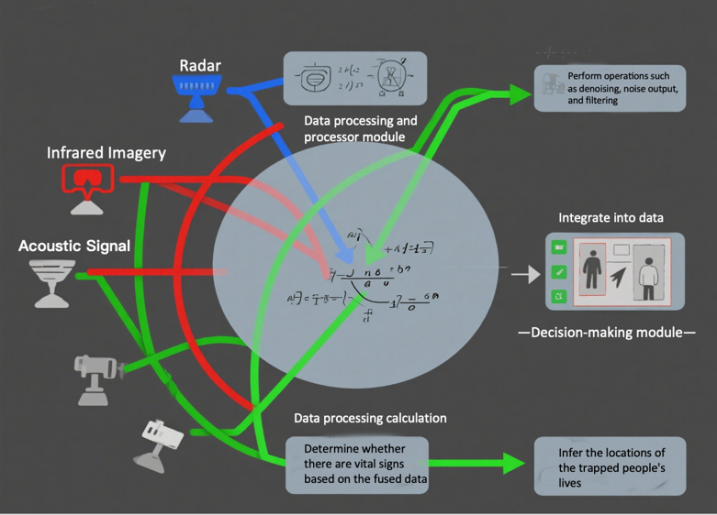
In earthquake and other natural disaster rescue scenarios, rapid and accurate detection of vital signs in trapped individuals is crucial. Traditional manual methods suffer from low efficiency and poor environmental adaptability to harsh environments, seriously impacting the timeliness and effectiveness of rescue operations. Although robot-based post-disaster life detection technologies have made progress, limitations remain such as limited detection distance, high sensitivity to environmental interference, incomplete acquisition of physiological parameters, and high dependence on robot hardware. This study employs bibliometric analysis and typical case studies to systematically examine these limitations. Based on the findings, an innovative multi-sensor fusion scheme is proposed. The research shows that this technology significantly enhances rescue robots’ ability to perceive and locate vital signs, improves rescue efficiency, increases the survival probability of trapped people, and ensures greater safety for rescuers. This study offers a new technical path for earthquake rescue and holds both theoretical and practical value for advancing disaster rescue technology system.
Show more
Read Article PDF
Cite
Research Article Open Access
The Application of Sensors in Bionic Limbs
With the increasingly prevelance of bionic limbs in the medical field, societal demands for these advanced devices are continually evolving, leading to a surge in academic research. A critical focus of this area is how to effectively communicate patients' needs to bionic limbs. Through extensive studies, it has been established that sensors play a crucial role in this communication process by converting physiological signals and user intentions into actionable commands for the bionic devices. As a bridge connecting patients with bionic limbs, many scholars have conducted in-depth researches on the application of sensors in bionic limbs. By synthesizing the existing research, this article aims to examine the application of sensors in bionic limbs and explore the current status, future prospects, and key challenges that need to be overcome to advance the field. The findings reveal that sensors have been widely integrated into the field of bionic limbs and have undergone rapid development in recent years.
Show more
Read Article PDF
Cite
Research Article Open Access
Automation’s “Black-Box” Conundrum: The Interpretability Crisis of Data-Driven System Identification and the Path Forward
Article thumbnail
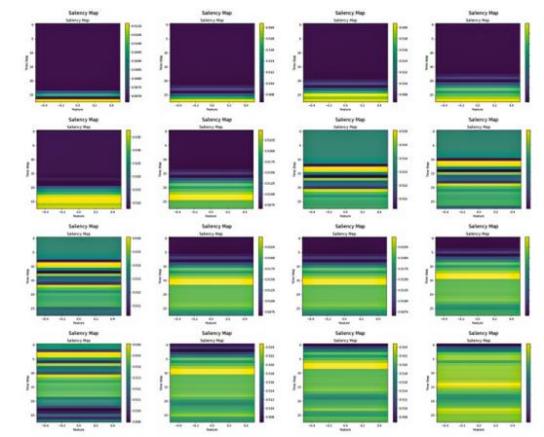
Data-Driven System Identification (DDSI) has shone brightly in the contemporary field of automation control. Modern automated control systems now rely on DDSI as their main source of intelligence and performance enhancement. However, the "black-box" models represented by deep learning have brought about a serious interpretability crisis. Their opaque decision-making processes have severely affected the predictability, verifiability, and safety of automated control systems, which has hindered their application and trustworthiness in critical tasks of automated systems. This paper deeply analyzes the interpretability crisis faced by DDSI in automated control, especially its impact on the understanding of complex control decisions and the prediction of system dynamic behaviors. On this basis, this paper critically examines the limitations of current mainstream interpretability methods in addressing the unique dynamic challenges of automated systems, and proposes a solution path and research outlook that combines enhanced physical understanding with Explainable AI (XAL). This paper aims to provide key analysis for building more transparent, trustworthy, and safe next-generation data-driven automated control systems.
Show more
Read Article PDF
Cite
Research Article Open Access
The Application Status and Future Development of Tactile Perception Technology in Prosthetic Design
Article thumbnail
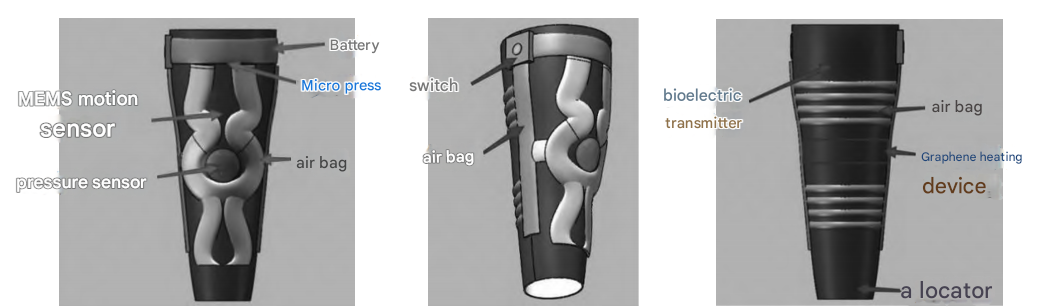
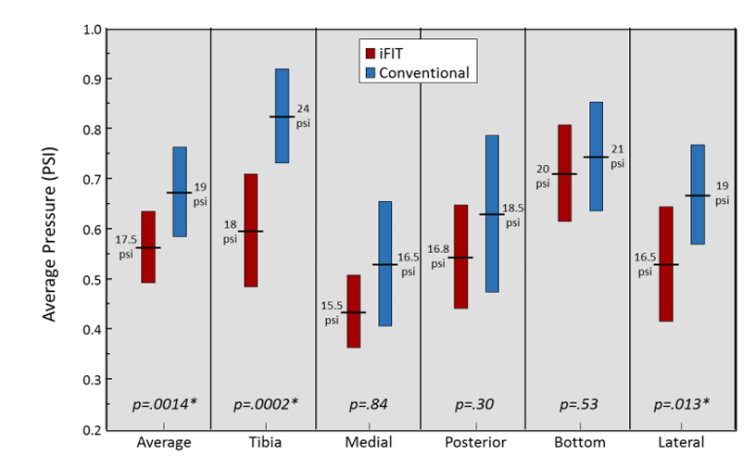
In today's market, tactile perception and sensors have significantly advanced, enhancing human life quality and condition. Many researchers are striving to achieve intelligent touch sensing systems for prosthetic devices. Many new inventions and developments have also been applied in medical rehabilitation to assist people's lives. In addition, some researchers have proposed design concepts for the future by applying existing technologies, combining bionic manufacturing of prosthetic limbs, and designing hardware and tactile perception systems to further deepen the development of tactile perception technology. How to improve the accuracy of tactile perception in prosthetic limbs is a crucial problem to be overcome. This article summarizes the current achievements of researchers and looks forward to the future prospects in three major directions that apply tactile perception technology: dentures, sports protective gear, and prosthetic hands. The findings reveal that tactile sensing technology is of great significance in improving the quality of human life and assisting functional recovery.
Show more
Read Article PDF
Cite
Research Article Open Access
Beyond Bionics: The Future of Augmented Modular Prosthetics
Article thumbnail
The majority of modern prosthetic limbs are made to resemble actual human hands in both appearance and movement. However, in practice, they have limited capabilities and frequently need repair. Using a literature review and insights from various fields, this paper examines both the current state and the key issues of traditional prosthetics. It also discusses why augmented prosthetics might be a better direction. The findings reveal that augmented limbs can be more flexible and functional, offering users more options based on their needs. Beyond that, modular design may help lower production costs, making prosthetics more accessible, especially for people in developing countries or with fewer resources and lower income. Another advantage of modular design would be the simplification of verification and compliance process, which enables new designs to benefit patients at the earliest possible stage. Although the current technological limitations of augmented limbs are complex, the rapid advancement of neuroscience is likely to overcome them in the near future.
Show more
Read Article PDF
Cite
Research Article Open Access
The Impact of Bionic Limbs on Limb Disability Rehabilitation for Disabled Children
Bionic limbs are artificial devices that mix multiple disciplines and cutting-edge technologies to simulate the structures and functions of human natural limbs. In the current era, many children with limb disabilities still face challenges in daily life due to limb loss. With the continuous progress, innovation, and application of bionic limb technology, an increasing number of disabled children have achieved effective treatment and rehabilitation. However, despite the significant achievements of bionic limbs in the rehabilitation of disabled children, challenges such as insufficient funding, talent shortages, and poor adaptability still need to be solved out. This paper employs a literature review research methodology to investigate the impact of bionic limbs on children's limb disability rehabilitation. Specifically, data analysis is used to examine the importance of bionic limbs in enhancing limb function and fostering psychological development. Additionally, it discusses the challenges faced during the application of bionic limbs and corresponding strategies. The study finds that bionic limbs have a substantial impact on the rehabilitation of disabled children, and it is proposed that bionic limb technology in medical rehabilitation can be further enhanced in the future to enable more children with limb disabilities to recover.
Show more
Read Article PDF
Cite
Research Article Open Access
Multi-sensor Fusion for High-Precision Robort Arm in Intelligent Manufacturing: A Review
Collaborative robots have seen growing integration into intelligent manufacturing, yet precision challenges in high-demand fields like semiconductor packaging and logistics sorting—stemming from mechanical errors, sensor noise, and control limitations—remain critical. This paper reviews multi-sensor fusion strategies for high-precision robotic arms, focusing on integrating joint encoders, laser trackers, 3D vision systems, and FBG sensors. A hierarchical fusion framework is highlighted, combining data-level calibration (e.g., laser trackers correcting encoder errors), feature-level environment-task mapping (via 3D vision), and decision-level structural health management (using FBG sensors). Case studies demonstrate sub-micron accuracy (±0.5μm) in semiconductor applications by eliminating transmission chain errors and ±0.1mm precision in dynamic logistics sorting through vision-inertial coordination. However, barriers like high hardware costs (core sensors comprising >60% of system costs), multi-data synchronization complexities, and limited upgrade incentives in traditional manufacturing are identified. The study underscores the strategy’s potential to meet Industry 4.0 demands for customization and automation, offering a foundational guide for advancing autonomous robotic systems toward smarter, more reliable precision manufacturing solutions via AI-driven models and cost-effective sensor innovations.
Show more
Read Article PDF
Cite
Research Article Open Access
Precise End-Position Control of Flexible Manipulators
Article thumbnail
Flexible manipulators, owing to their lightweight structure, high degrees of freedom, and environmental adaptability, hold great promise for applications in medical surgery, aerospace, industrial inspection, and other fields. However, challenges such as rigid-flexible coupling, strong nonlinear dynamics, and vibration sensitivity make precise end-effector positioning a core difficulty. This study constructs a system model for a flexible manipulator and implements end-position control using Proportional-Integral-Derivative (PID), Linear Quadratic Regulator (LQR), Sliding Mode Control (SMC), and an improved Fast Terminal Sliding Mode Control (FTSMC) method. Results show that PID control yields an overshoot of 4.6% with a settling time of 1.374 seconds, making it suitable for scenarios with highly accurate models. LQR control results in an overshoot of 5.7% and a settling time of 3.426 seconds; while energy-optimal under precise modeling conditions, its dynamic performance (in terms of overshoot and settling time) is inferior. The SMC controller demonstrates strong robustness with zero overshoot, but it has a slower rise time and requires attention to chattering suppression. FTSMC also shows strong robustness and eliminates overshoot, while achieving faster rise times, albeit with chattering issues that need to be addressed. This study identifies new application scenarios for the four representative control strategies and analyzes their respective strengths and limitations. Future work may focus on adaptive optimization by integrating fuzzy logic and neural networks, as well as improving practical applicability through robust control, model order reduction, and nonlinear control techniques.
Show more
Read Article PDF
Cite
Research Article Open Access
Theoretical Research Review on Artificial Intelligence-Enhanced Power System Dynamic Resilience
Power systems face unprecedented complex challenges against the dual backdrop of accelerating energy transition and intensifying global climate change. To achieve "dual carbon" goals, large-scale integration of intermittent and volatile renewables like wind and solar is essential, increasing operational and dynamic stability challenges for power systems. Simultaneously, more frequent and intense extreme weather events heighten risks to power infrastructure and raise the likelihood of large-scale blackouts. The combined effect of these two factors drastically increases the risk of power systems suffering complex, variable, and highly dynamic disturbance impacts, posing severe challenges to their safe and stable operation. Traditional resilience enhancement methods have real-time performance and adaptability limitations, while artificial intelligence technology provides a new paradigm for building a dynamic resilience enhancement system. This paper systematically reviews the application of AI in power system dynamic resilience, focusing on analyzing AI-enabled dynamic resilience frameworks, key technologies, and development pathways. Comparing traditional methods reveals the advantages of AI technology in improving power system stability, enhancing scheduling decision accuracy, and reducing operation and maintenance costs. Simultaneously, it discusses current technical bottlenecks and future research directions, providing theoretical references for constructing a new generation of resilient power grids.
Show more
Read Article PDF
Cite