Articles in this Volume

Research Article Open Access
Study on the Relationship Between Findings of Coastal Cities and the Degree of Marine Pollution
Marine pollution is an important issue in global ecological and environmental governance, with plastic pollution in coastal waters being particularly prominent, and land-based human activities as its primary driving factor. As core areas of population agglomeration and human activities, coastal cities make the internal correlation between population density and marine pollution degree an important research direction in marine environmental research. This study adopts the literature research method to systematically sort out relevant research results at home and abroad, analyze the correlation between the population density of coastal cities and the degree of marine pollution, and discuss the influence of research scales and analysis methods on research results. The study shows that population density is significantly positively correlated with marine pollution degree in most coastal areas of the world, and differences in research scales and analysis methods will lead to certain divergences in the correlation results of the two. This study sorts out the research status and deficiencies in this field, and provides a basic reference for the precise prevention and control of coastal marine pollution.
Show more
Read Article PDF
Cite
Research Article Open Access
Clinical Evidence and Prognostic Mechanisms of Perioperative Immune Combination Therapy for Hepatocellular Carcinoma
Hepatocellular carcinoma (HCC) represents a significant leading cause of cancer mortality the worldwide, characterized by a 70% recurrence rate within five years following surgical resection, while conventional adjuvant treatments exhibit limited clinical benefits. This paper extensively evaluates the empirical evidence regarding perioperative integrated immunotherapy in operable HCC, exploring cytokine-mediated prognostic regulatory mechanisms, clinical contributions and practical applications. Initially, the paper organizes primary clinical trial findings concerning local-regional interventions and immunotherapy, specifically highlighting perioperative combined regimens like the EMERALD-1, NEO-LAP and IMBRAVO-050. Subsequently, it is defined primary prognostic pathways, including tumor microenvironment restructuring, minimal residual disease eradication, and the synergistic interaction between anti-angiogenic agents and immunotherapy. Furthermore, current clinical practice gaps include optimal timing of intervention and specific therapeutic combinations. This work provides a structured framework for implementing standardized perioperative immune-based strategies in HCC treatment, while simultaneously providing strategic guidance for the subsequent investigations focusing on both clinical and mechanistic dimensions.
Show more
Read Article PDF
Cite
Research Article Open Access
The Impact of The Invasion of Alternanthera Philoxeroides in the Background of Climate Change on the Local Biodiversity
Global climate change is reshaping the structure and function of terrestrial and aquatic ecosystems, becoming a significant natural driving force for frequent biological invasions. Alternanthera philoxeroides, as a typical invasive alien plant in China, has extremely strong climate adaptability. Under the background of climate change, its colonization, diffusion ability, and invasion risk have significantly increased. The successful invasion of this species has caused serious and continuous negative impacts on the native biodiversity of aquatic and terrestrial ecosystems from three dimensions: species diversity, genetic diversity, and ecological diversity. It has disrupted the stability of the local ecosystem and threatened regional ecological security. This article takes Alternanthera philoxeroides as a research case. It analyzes the driving mechanism of its invasion under climate change from two aspects: changes in survival and reproduction conditions and the reconfiguration of interspecific competition. It explores the multi-dimensional impacts of its invasion on native biodiversity. On this basis, it reveals the intrinsic relationship and functional laws between climate change, typical invasive species invasion, and native biodiversity, with the aim of providing theoretical references for understanding the maintenance mechanism of biodiversity under global change and providing a scientific basis for the prevention and control of typical invasive species and the protection of native biodiversity.
Show more
Read Article PDF
Cite
Research Article Open Access
Machine Learning-Based Classification of Malignant Cells in Glioblastoma Using Single-Cell RNA Sequencing Data
Article thumbnail
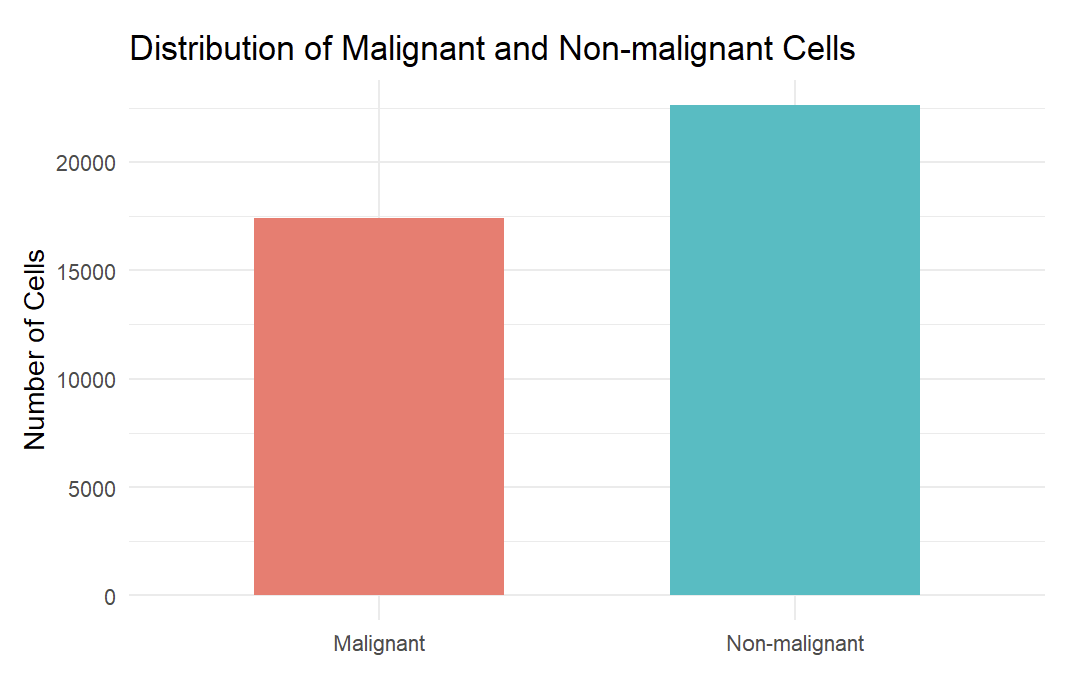
Glioblastoma (GBM) is an aggressive primary brain tumour marked by pronounced cellular diversity. In single-cell RNA sequencing (scRNA-seq) studies, distinguishing malignant cells from surrounding non-malignant cells is essential for interpreting tumour biology and estimating tumour purity, but manual annotation is often slow and subjective. In this work, machine learning models were trained on a curated scRNA-seq dataset comprising 40,026 cells and 5,000 genes. Genes were screened with Welch's t-test, and the 30 most informative features were retained for model development. The data were split into training (60%), validation (20%), and independent test (20%) subsets. An Extreme Gradient Boosting (XGBoost) classifier was compared with a feedforward neural network. On the independent test set, XGBoost reached an area under the ROC curve (AUC) of 0.9529, exceeding the neural network result (AUC = 0.9136). It also maintained well-balanced sensitivity and specificity. Moreover, the proportion of cells predicted as malignant offered a useful proxy for tumour purity. Overall, the results indicate that gradient boosting is a practical and scalable option for automated malignant-cell identification in GBM single-cell data.
Show more
Read Article PDF
Cite
Research Article Open Access
The Role of Urban Green Infrastructure in Improving Thermal Environment and Resident Health: A Case Study in Changsha, China
Article thumbnail
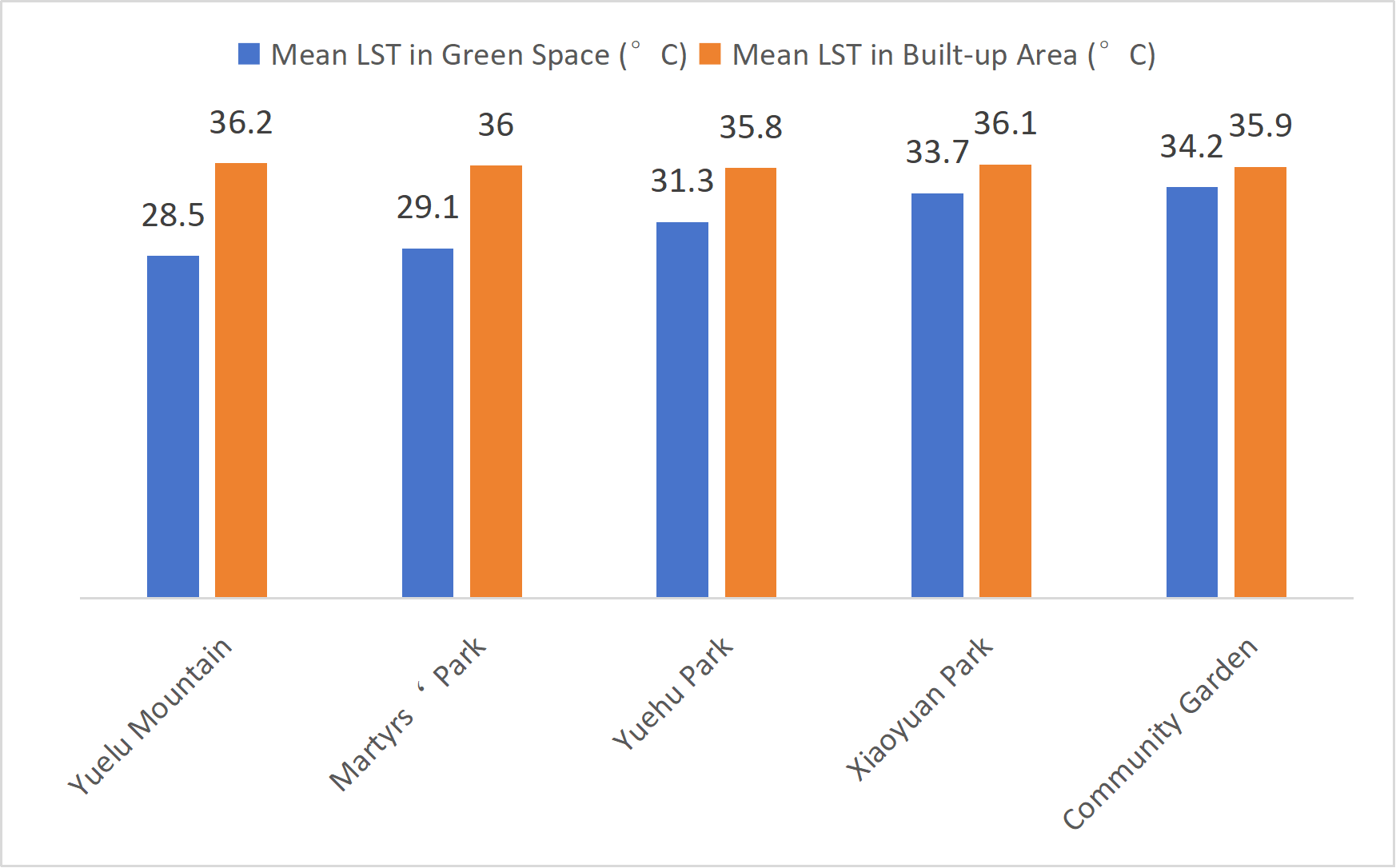
With the rapid development of cities, urban heat island effects and climate change are posing more and more threats to people's health. Urban green infrastructure, such as parks and green belts, offers a nature-based way to adjust the local microclimate and reduce temperatures. This study looks into the cooling effects of five urban green spaces in Changsha, China. Landsat 9 remote sensing images taken between 2022 and 2024 were used, and land surface temperature was calculated to compare the thermal conditions of Yuelu Mountain, Martyrs'Park, Yuehu Park, Xiaoyuan Park, and a community garden. The results show that large green spaces like Yuelu Mountain and Martyrs'Park have the best cooling effects—they can lower the surface temperature around them by up to 7.3°C compared with the nearby built-up areas (such as buildings and roads). In addition, the more vegetation a green space has, the lower the land surface temperature tends to be. Findings indicate that protecting large green spaces, while building small, closely distributed pocket parks in high-temperature areas, can help cities better adapt to climate change and improve public health.
Show more
Read Article PDF
Cite
Research Article Open Access
Radiotherapy Combined with CD20×CD3 Bispecific Antibodies in Relapsed or Refractory Diffuse Large B-Cell Lymphoma
Diffuse large B-cell lymphoma (DLBCL) is the most common type of non-Hodgkin lymphoma, and patients with relapsed or refractory (R/R) disease still have few treatment options and poor long-term results after the failure of standard therapy. Recently, some good clinical results have been achieved in the application of CD20×CD3 bispecific antibodies (BsAbs) to direct T cells to malignant B cells. The response of the treated people varies, and not everyone can maintain remission for a long time. More and more studies have shown that the tumour microenvironment can affect the response to therapy. Radiotherapy (RT) is used to treat cancer locally, and now it is also known for modulating the immune system. RT can cause immunogenic cell death, release tumor antigens, and increase the infiltration of immune cells in the tumour microenvironment; thus, it is one of the reasons for combination therapy with BsAbs. Review of Recent Research on RT in Combination with BsAbs for R/R DLBCL: Treatment Sequence, Radiation Dose and Fractionation, Differences among BsAb Platforms. At present, it is known that RT can enhance the antitumor effect of BsAb by promoting immune activation and T-cell migration; however, clinical results have been inconsistent in various studies. There is no standard RT protocol and reliable predictive biomarkers, so some patients have been harmed by the treatment so far.
Show more
Read Article PDF
Cite
Research Article Open Access
Research of Progress on the Impact of Air Pollution (PM2.5) on Sleep Quality
As the urbanization process accelerates, the effect of air pollutants with respect to the health of the population has become more apparent, especially as far as its possible hazards to the quality of sleep are concerned, which has gradually gained traction. This paper concentrate on the fine particulate matter (PM 2.5) as the intended research object and adhere to PRISMA guidelines to perform systematic synthesis of the research on the topic published during the period of 2020-2025. The study examines the pathophysiology between PM2.5 exposure and sleep quality in adults. The findings showed that higher levels of PM2.5 are linked with greater Pittsburgh Sleep Quality Index (PSQI) scores, lowest Apnea-Hypopnea Index (AHI) scores, sleep efficiency. Precisely, an average decrease of 1.2 percent in sleep efficiency is caused by a 10 μg/m 3 increment in PM 2.5 concentration. It is also found that the sensitivity to pollution varies among the various age groups with the most pronounced effects being witnessed in the elderly population. Air pollution has become a major environmental risk factor in the context of which sleep health is endangered and the improved management of air quality and personal protection measures are required.
Show more
Read Article PDF
Cite
Research Article Open Access
Endoplasmic Reticulum Stress in Intervertebral Disc Degeneration: Mechanisms and Research Progress
Intervertebral disc degeneration (IDD) is the underlying cause of many spinal diseases, such as disc herniation and chronic low back pain. The pathogenesis of IDD has been the focus of many studies, but its underling mechanisms are complex and not totally clear. Disrupted cells with deficient protein folding capacity or intracellular degradation equilibrium will elicit endoplasmic reticulum stress (ERS), and ERS has recently attracted considerable attention for its pervasive regulatory role in cell function. To respond to this stress, activation of the unfolded protein response (UPR) modifies the function of cell by tuning intracellular processes, including programmed cell death, autophagic flux, inflammatory signalling, metabolic modulation and so on. Increasing evidence has emerged indicating the role of endoplasmic reticulum stress (ERS) in promoting IDD mainly through modulating cellular integrity and extracellular matrix. Such information endows ERS as a potential target for future treatment of IDD. Collectively, we summarize current knowledge about ERS-related mechanisms in IDD and describe emerging intervention strategies, with the aim to contribute to the knowledge and to guide clinical management of IDD.
Show more
Read Article PDF
Cite