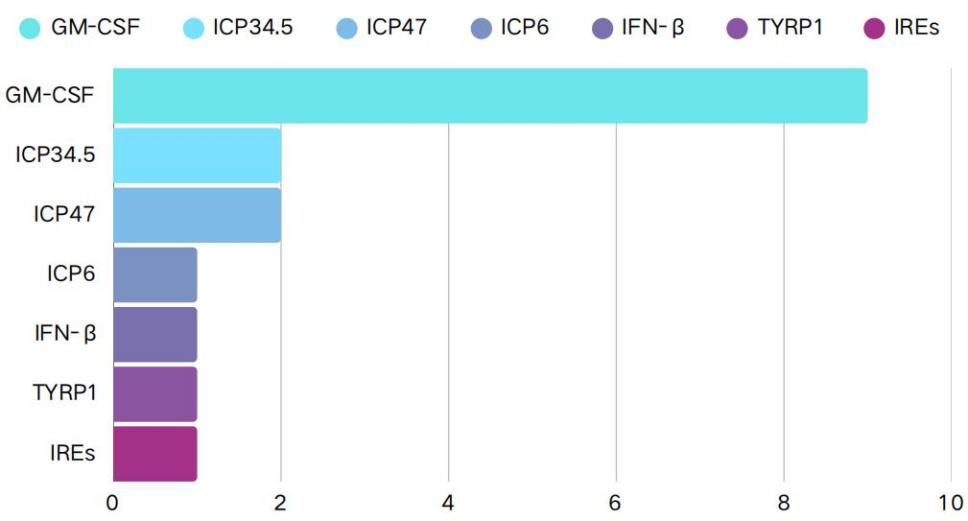
Oncolytic viruses (OVs) have emerged as a groundbreaking class of cancer therapeutics, demonstrating remarkable potential in the treatment of melanoma in recent years. By lysing and infecting tumor cells only, these viruses cause systemic antitumor immune responses while avoiding harm to healthy organs. This article provides a systematic review of the clinical applications of OVs in melanoma therapy, based on an analysis of relevant literature from the PubMed database spanning 2021 to 2025. The findings highlight that herpes simplex virus type 1 (HSV-1) and V937 (a modified coxsackievirus) are the most commonly utilized oncolytic viruses due to their proven safety profiles and tumor-targeting efficiency. Granulocyte-macrophage colony-stimulating factor (GM-CSF) serves as the predominant transgene, enhancing immune activation by promoting dendritic cell recruitment and T-cell priming. Melanoma, particularly advanced or metastatic forms that are resistant to conventional therapies, remains the primary target of OV-based treatments. The main routes of administration include intratumoral injection (for localized lesions) and intravenous delivery (for disseminated disease). Notably, combination therapies involving OVs and immune checkpoint inhibitors (such as anti-PD-1/PD-L1 antibodies) have shown synergistic effects, significantly improving response rates and survival outcomes in clinical trials. However, challenges such as variability in clinical responses, the potential for preexisting immunity to limit efficacy, and the need for optimized delivery methods persist. Despite the promising potential of OVs in melanoma treatment, further research is essential to optimize their clinical application.