Articles in this Volume

Research Article Open Access
Examining the Influences on Human-Animal Relationships in the Era of Artificial Intelligence
With the development of biotechnology, artificial intelligence and robotics, animals are not only part of the natural ecology, but also become the object of scientific research. At the same time, global climate change and ecological crisis are reshaping the interaction between humans and animals. This study explores the historical evolution of the relationship between humans and animals, analyzes the changing roles of animals in people's lives under different social and cultural backgrounds, and the impact of technology and environmental factors on this relationship. This study finds that while technological progress has improved productivity and medical research, it has also brought ethical and ecological challenges. In addition, the rise of artificial intelligence and robotic animals provides new ways of companionship and protection, but its impact on traditional animal identity cognition has not been fully resolved. Future research needs to combine primary data to explore how to balance innovation and sustainability in the formulation of animal-related policies to ensure that technological development is coordinated with ecological protection and ethical responsibilities.
Show more
Read Article PDF
Cite
Research Article Open Access
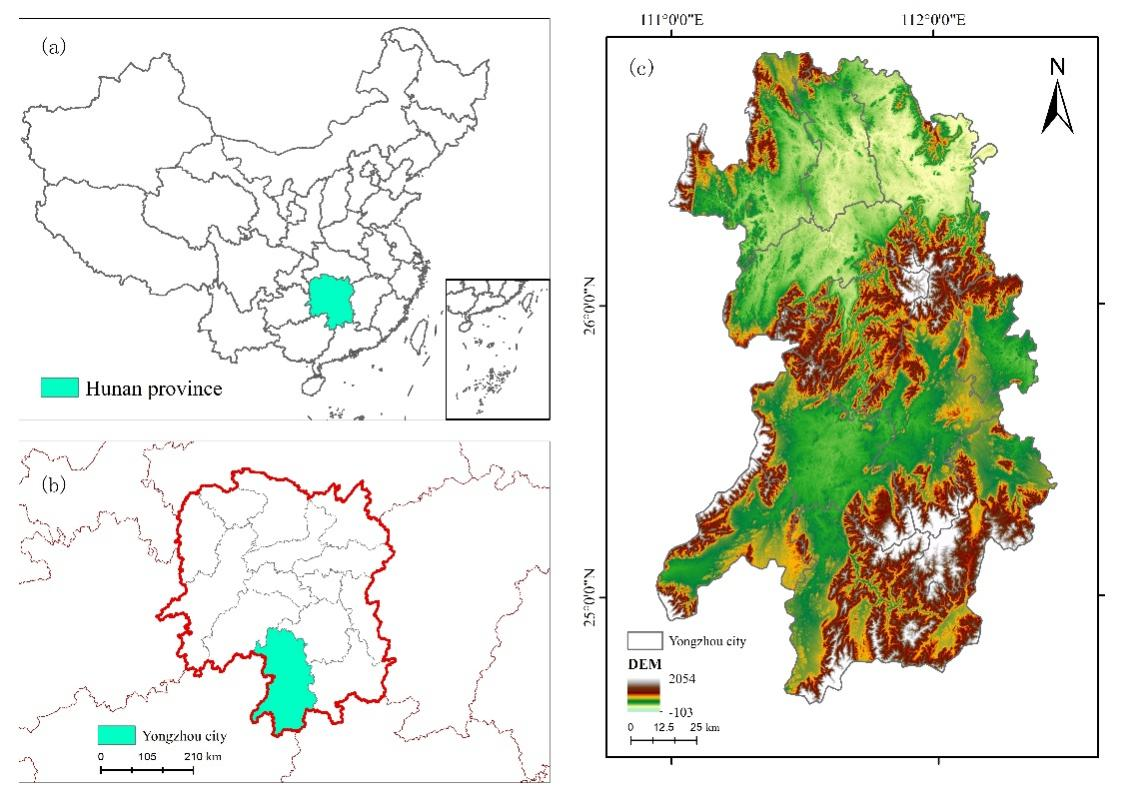
Ecological Suitability Evaluation of Construction Land Based on GIS: A Case Study of Yongzhou City
Article thumbnail
Ecological suitability evaluations of land use are often conducted as an important reference when formulating urban and rural planning and land use policies. This study selects five indicators—topography, hydrology, transportation, land use, and ecosystem The College of Forestryservices—and uses the Analytic Hierarchy Process (AHP) and GIS spatial analysis to evaluate the ecological suitability of construction land in Yongzhou City. The results show that the construction land in Yongzhou is mainly located in areas of moderate suitability, with the most suitable and moderately suitable areas together accounting for 51.55% of the total area, indicating good overall ecological suitability. The areas of basic suitability and unsuitability are mainly steep hill and mountain areas, which are prone to geological hazards. The unsuitable areas are primarily nature reserves and national forest parks, with high vegetation coverage and steep slopes, designated as restricted development zones. It is recommended that develop moderately in the Xintian-Ningyuan line and northern areas to achieve a coordinated development of urban growth and ecological conservation.
Show more
Read Article PDF
Cite
Research Article Open Access
New Horizons in Oncolytic Virotherapy for Osteosarcoma
Osteosarcoma is a highly aggressive malignant bone tumor characterized by an immunosuppressive microenvironment, with the five-year survival rate of metastatic patients remains dismally low. Oncolytic virotherapy has emerged as a promising strategy, utilizing both direct tumor lysis and immunity activation. This review systematically examines the latest advancements in oncolytic virus monotherapy Oncolytic monotherapy and combination therapy for osteosarcoma, drawing from preclinical models (e.g., mouse and canine studies) and clinical trials. In monotherapy, genetically engineered viruses such as VCN-01 (targeting integrin αvβ3/5 via an RGD sequence and secreting hyaluronidase for stromal degradation) and Delta-24-ACT (expressing 4-1BBL to enhance T-cell activation) demonstrated significant tumor reduction and prolonged survival. VSV-IFNβ-NIS was well tolerated in canine models, improving long-term survival and upregulating T-cell immune responses. In combination therapy, oncolytic viruses enhanced the efficacy of chemotherapy (e.g., OBP-702 with doxorubicin), radiotherapy (e.g., E4orf6 virus), targeted drugs (e.g., VSVΔ51 with PI3K inhibitor ZSTK474), and immune checkpoint inhibitors (e.g., CAV2-AU-M2 delivering anti-PD-1 antibodies). Despite these promising outcomes, challenges such as viral toxicity, limited delivery modes, and species-specific variability remain. Future strategies may include gene editing for improved tumor targeting, oncolytic virus-T-cell chimeras, and novel systemic delivery approaches to enhance therapeutic efficacy. Oncolytic virotherapy, in combination with multidisciplinary treatments, holds great potential to overcome current limitations amd improve survival outcomes for vosteosarcoma patients.
Show more
Read Article PDF
Cite
Research Article Open Access
The Therapeutic Potential of METTL3 Inhibition in Modulating N6-Methyladenosine for Chronic Kidney Disease
Chronic kidney disease (CKD) is a progressive disease with limited therapeutic options, necessitating novel approaches for disease management. N6-methyladenosine (m6A) modification has emerged as a key regulator of gene expression in CKD, influencing pathways involved in inflammation, fibrosis, and cellular stress. METTL3 plays a crucial role in modifying RNA, with its overexpression linked to the activation of pro-fibrotic and inflammatory signaling pathways, such as TGF-β1 and NF-κB. Consequently, METTL3 inhibition has been explored as a potential therapeutic strategy for CKD. Preclinical studies suggest that METTL3 inhibitors can attenuate renal fibrosis, reduce inflammation, and restore oxidative stress and apoptosis by modulating m6A-dependent gene expression. However, challenges remain in developing selective and bioavailable METTL3 inhibitors, understanding the context-dependent effects of m6A modifications, and ensuring precise targeting in renal cells. Advances in small-molecule drug discovery, RNA-based therapies, and nanoparticle-mediated delivery may improve the clinical applicability of METTL3 inhibitors. Future research should focus on optimizing these therapeutic strategies to enhance efficacy while minimizing off-target effects. By targeting aberrant m6A methylation, METTL3 inhibition represents a promising avenue for CKD treatment, offering new possibilities for precision medical science.
Show more
Read Article PDF
Cite
Research Article Open Access
Gene Editing in Livestock: Bridging Gut Microbiome Modulation and Antibiotic Resistance Mitigation
The crisis of antibiotic resistance caused by the overuse of antibiotics has become a major threat to global agriculture and public health, and traditional livestock strategies have demonstrated significant limitations in addressing this challenge. Gene editing technologies, in particular the CRISPR-Cas9 system, offer innovative solutions to the problem of antibiotic resistance by regulating the gut microbiota of livestock and directly interfering with resistance genes. This study systematically explores cross-cutting applications of gene editing technology in livestock health management, focusing on three major themes: (1) Editing host genes to optimize gut microbiota balance; (2) Directly editing resistant genes of pathogenic bacteria to restore their sensitivity to antibiotics; (3) Developing collaborative strategies (phage delivery systems and probiotic engineering). The results showed that pigs with CD163 gene knocked out by CRISPR-Cas9 had complete resistance to porcine reproductive and respiratory syndrome. Engineered probiotics can remove 99.9% of resistant bacteria; The bifunctional delivery strategy reduced the intestinal drug-resistant bacterial load to <100 CFU/g. In addition, multi-omics techniques provide a precise tool for dynamically assessing the effects of gene editing on microbiome function. Conclusion: Through the new strategy of "host-microbiome co-editing", gene editing technology has the potential to be transformative in livestock microbiome regulation and drug resistance management, but challenges such as delivery efficiency, ecological risks and ethical controversies still need to be addressed, and its widespread application depends on technological innovation, interdisciplinary cooperation and the coordinated development of an international regulatory framework. To achieve the dual goals of agricultural sustainability and public health security.
Show more
Read Article PDF
Cite
Research Article Open Access
The Effect of Circadian Rhythm on Obesity
Article thumbnail
Obesity is a state of overaccumulation, leading to a weight higher than normal data. The rate of obesity is increasing quickly; over-eating, a shortage of exercise, and the alteration of daily routines play significant roles in it. It represents one of the most significant challenges in contemporary health discussions. Circadian rhythm disruption influences hormonal levels and alters digestive and eating patterns within the body. However, reaching a comprehensive consensus on how the biological mechanisms of circadian rhythms directly contribute to obesity remains a challenging task. This review will classify circadian rhythms as a key factor in obesity by looking at how they affect conditions like metabolic syndrome that may be related to obesity and how they change the body's physiological states. It further suggests integrating circadian rhythm research into investigations of obesity's etiology to uncover its influence on internal mechanisms. For the application, by monitoring metabolite levels in specific groups, like shift workers and those in high-stress, high-intensity jobs, to preemptively identify individuals who are at higher risk for obesity or not. Consequently, this can prompt the development of personalized prevention and treatment strategies tailored to diet, exercise, and rest regimens for these populations.
Show more
Read Article PDF
Cite
Research Article Open Access
The Impact of N6-methyladenosine on RNA in Lung Cancer
Lung cancer can lead to the death of many people around the world and it is a challenge faced globally. The most common type of lung cancer is non-small cell lung cancer, and it accounts for 80% to 85%. In comparison, the proportion of patients with small cell lung cancer is relatively small, which is approximately 10% to 15%. In gene editing, m6A (N6-methyladenosine) refers to the methylation of adenosine on RNA at the 6th nitrogen atom. It is a common type of RNA modification that affects processes such as RNA stability, splicing, translation, and degradation. Regulating the m6A modification level of specific genes can play an important role in certain aspects of lung cancer RNA. m6A regulatory factors including ‘writers’, ‘erasers’ and ‘readers’ play crucial roles in various biological processes related to RNA metabolism and gene expression. Their functions can exert an influence on the treatment of lung cancer. This view will discuss the functions of m6A methylation modification on the stability, translation and non-coding part of RNA and the newest treatment methods act m6 modification as the therapeutic target for lung cancer.
Show more
Read Article PDF
Cite
Research Article Open Access
Progress and Prospects of Immunotherapies and Vaccines for Type 1 Diabetes
Type 1 diabetes (T1D) is an autoimmune disease known as the destruction of pancreatic β cells, which results in the patient being permanently dependent on insulin. While conventional insulin therapy remains the primary treatment, it does not address the underlying autoimmune mechanisms driving the disease. Novel immunotherapy and vaccination offer promising methods for modifying immune responses and preserving β cell function. Antigen-specific immunotherapy (ASI) can induce immune tolerance by targeting key autoantigens and showing efficacy in delaying disease progression. Immune-modulating therapies also shown potential in delaying disease onset by modulating T-cell activity. Additionally, emerging platforms, such as mRNA vaccines and nanoparticle-based delivery systems, offer new opportunities for targeted immune modulation. Despite these advancements, challenges remain, including patient heterogeneity, variability in immune responses, and safety concerns. Moreover, the long-term efficacy of these interventions is not yet fully understood. Personalised treatment, improved biomarkers for early detection, and combination therapies may enhance treatment efficacy. This review explores the progress and translational potential of immunotherapies and vaccines for T1D, highlighting key developments and ongoing challenges.
Show more
Read Article PDF
Cite
Research Article Open Access
Current Challenges and Future Prospects of TCR-T Cell Therapy in Cancer Treatment
T cell receptor-engineered T cell (TCR-T) therapy has emerged as a promising approach in cancer immunotherapy, with applications in both hematologic malignancies and solid tumors, by targeting tumor-specific antigens. However, several challenges hinder its widespread practical application. First, the complexity and specificity of tumor antigen selection limit treatment efficacy. Second, challenges in optimizing TCR affinity and overcoming tumor-induced immunosuppression limit the further refinement of therapeutic strategies. Third, the clinical application of current TCR-T products is constrained by limited patient response rates, potential safety concerns, and high manufacturing costs. Recent research progress includes advancements in high-throughput antigen screening technologies, such as single-cell RNA sequencing and peptide-MHC multimer platforms, which have improved the identification of neoantigens and TCRs with high affinity and specificity. Additionally, innovative strategies like combination therapies with immune checkpoint inhibitors (e.g., PD-1 blockers) and STING agonists have shown potential to enhance TCR-T cell efficacy and persistence in the tumor microenvironment. Future breakthroughs may involve the development of universal TCR-T platforms and gene-editing technologies (e.g., CRISPR/Cas9) to reduce costs and improve scalability. In conclusion, while TCR-T therapy faces significant challenges, its potential to revolutionize cancer treatment is undeniable. Addressing issues such as tumor heterogeneity, immune evasion, and manufacturing efficiency will be critical for its broader clinical adoption.
Show more
Read Article PDF
Cite
Research Article Open Access
Birds on the Edge: Urban Transport Infrastructure and Its Toll on Avian Communities
The global expansion of transport infrastructure—such as roads, highways, and railways—has emerged as a hallmark of urbanization, enabling economic development while posing significant ecological risks. Birds, as sensitive environmental indicators, are among the most affected wildlife groups, facing habitat fragmentation, behavioral disruption, noise pollution, and accidental mortality. This paper synthesizes findings from highly urbanized countries, including China, France, Italy, and Brazil, to explore how transport infrastructure affects urban bird populations. Key impacts include habitat loss and fragmentation, with certain species like the little bustard experiencing a 60% population decline near high-speed railways. Noise pollution disrupts communication and breeding, especially in vocal species such as the European robin. Behavioral changes in foraging and nesting patterns are observed, with some raptors and omnivorous birds adapting to exploit human-modified environments. However, increased bird mortality from vehicle collisions remains a pressing concern. The study highlights regional disparities in mitigation strategies, noting that while Europe has implemented measures like sound barriers and green corridors, other areas lag behind. To address these gaps, the paper proposes tailored, context-specific solutions that enhance habitat connectivity, reduce noise interference, and integrate modern monitoring tools. By offering a comprehensive overview and practical recommendations, this research underscores the urgency of reconciling infrastructure development with biodiversity conservation, ultimately supporting more sustainable urban ecosystem.
Show more
Read Article PDF
Cite