Articles in this Volume

Research Article Open Access
Pathogenesis and Clinical Management of Diabetic Cardiomyopathy: a Review from Basic Research to Clinical Practice
Article thumbnail
This article explores the complex disease of diabetic cardiomyopathy (DCM), the main form of cardiac complications in diabetic patients, seriously affecting the quality of life and life expectancy of patients based on existing literature and data results. The results show that the pathophysiological mechanism of DCM is complex, involving multiple levels such as oxidative stress, inflammatory response, immune regulatory imbalance, and cardiometabolic abnormalities. In particular, the article emphasizes that insulin resistance not only affects glycolipid metabolism, but also significantly exacerbates the inflammatory response, and promotes cardiac fibrosis and functional decline by activating key mechanisms, such as the NLRP3 inflammasome, the NFκB positive feedback loop, and macrophage M1 polarization. The purpose of this article is to provide clinicians with the latest research on DCM and treatment recommendations, while also serving as a valuable reference for future research directions, emphasizing the importance of multidisciplinary collaboration in deepening the understanding of DCM and promoting its clinical management. In the face of DCM, continuous scientific research innovation and optimization of clinical practice are the keys to improving patient outcomes.
Show more
Read Article PDF
Cite
Research Article Open Access
Repair of cardiopulmonary function damage caused by smoking by aerobic exercise
In modern society, finding ways to manage stress is a major challenge for many individuals. Part of the Chinese adult population turns to smoking as a method to alleviate stress from work, life, and family. However, this behavior has numerous negative effects on the body, leading to a range of health issues. Therefore, I have discussed how to mitigate the negative impacts of smoking. The passage believes that engaging in exercise can effectively alleviate some of the health problems caused by smoking, such as heart disease, bronchitis, and lung cancer. Since the probability for smokers to get bronchitis is 15 times higher than that of people who do not smoke, 3 times for them to experience influenza or pneumonia. Through this article, I hope readers will fully understand the harm smoking poses to individuals, families, and society. Additionally, this paper encourage smokers to reduce their smoking frequency and, for those who have failed to quit smoking multiple times, to consider incorporating exercise as a way to counteract the detrimental effects of smoking on their health.
Show more
Read Article PDF
Cite
Research Article Open Access
Analysis of Factors Influencing Amyloid-beta Deposition in the Context of Alzheimer's Disease
As a neurodegenerative ailment, Alzheimer's disease closely associates with the deposition of beta-amyloid (Aβ) proteins. The abnormal accumulation of Aβ plays a pivotal role in the disease’s progression, leading to cognitive impairment and neurological damage. APOE is a key gene that affects the accumulation of Aβ, with its ε2, ε3, and ε4 alleles closely associated with the likelihood and advancement of Alzheimer's disease. APOEε2 variant appears to slow disease progression by reducing Aβ deposition, thereby exerting a protective effect; whereas the APOEε4 allele increases the risk of the disease by promoting Aβ deposition and speeding up its advancement. Besides the APOE gene, variations in the TREM2 and Presenilin-1 (PSEN1) genes are also linked to the development of Alzheimer's disease. TREM2 plays a role in immune responses and inflammatory processes, and mutations in this gene may impair the brain’s ability to clear Aβ , resulting in increasing deposition. Presenilin-1, a component of the gamma-secretase complex, plays a key role in producing Aβ, and mutations in this gene are linked to the development of early-onset Alzheimer's disease. This paper examines genetic factors, epigenetics, chemical reactions, and cellular dysfunction from multiple dimensions to explore how they interact to affect the production, deposition, and pathogenic mechanisms of Aβ. Through this multidimensional analysis, this study emphasizes the interplay of various factors in the pathological process of Alzheimer's disease, jointly promoting the abnormal accumulation of Aβ. By unveiling these complex mechanisms, the study provides insights into potential targets for upcoming treatment plans.
Show more
Read Article PDF
Cite
Research Article Open Access
Application of CRISPR/Cas9 on multiple sclerosis target validation
Article thumbnail
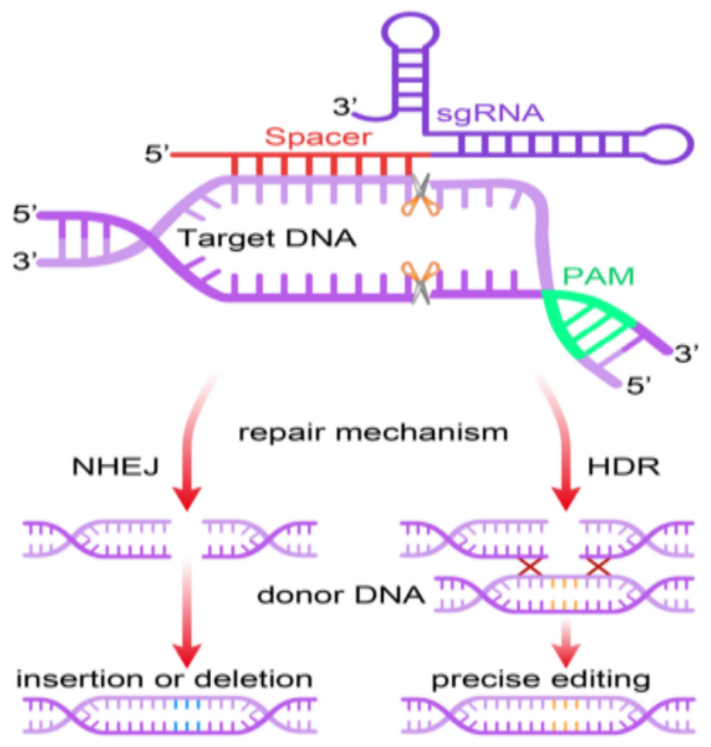
Multiple Sclerosis is one of the serious diseases worldwide. Demyelination of neurons in the central nervous system is its fundamental cause. Genome engineering for various MS research has recently undergone a revolution since the establishment of the clustered regularly interspaced short palindromic repeats (CRISPR) technology. This includes research spanning from basic science to translational medicine and precise MS therapy. Researchers have been able to identify, visualise, modify, and annotate specific DNA and RNA regions in a variety of living organisms thanks to the prokaryote-derived genome editing systems CRISPR/CRISPR associated proteins (CRISPR/Cas).The identification, validation, and targeted delivery of the target are all significantly aided by the CRISPR/Cas systems. With considerable technical developments, CRISPR/Cas systems have proved to be very effective, accurate, and flexible when targeting the specified genetic site. Despite major advancements in this area, a number of challenges still need to be solved, including immunological reactions, off-target activities, and ethical concerns. The following article aims to provide an overview of the CRISPR clinical applications, including their benefits and drawbacks.
Show more
Read Article PDF
Cite
Research Article Open Access
Ultrashort Echo Time (UTE) Imaging for Contrast Agent Deposition Measurement: A Review
Article thumbnail
The deposition of Gadolinium-based contrast agents (GBCAs) has become a growing concern in the field of enhanced Magnetic Resonance Imaging (MRI). GBCAs have been found to be accumulate in various tissues, including the brain and bone, leading to potential long-term health risks, even in patients with normal renal function. Conventional MRI sequences are often limited in detecting Gd deposition in tissues like cortical bone due to their extremely short transverse relaxation times. Ultrashort Echo Time (UTE) MRI sequences offer a promising solution to this challenge by capturing signals from tissues with short relaxation times, enabling more accurate assessment of Gd deposition. This review provides a comprehensive overview of the application of UTE sequences in the measurement of Gd deposition, highlighting key advancements in the applications of UTE technique. It also explores the use of UTE imaging in combination with other methods. This review also discusses potential future directions and give some possible solutions.
Show more
Read Article PDF
Cite
Research Article Open Access
Impact of Cultural Context on the Effectiveness of Mindfulness-Based Interventions for Chronic Pain in Older Adults
The increasing proportion of the population that is aged presents healthcare with the challenge of providing effective pain management for patients from a variety of cultural backgrounds. Mindfulness-based interventions (MBIs) have demonstrated efficacy in the alleviation of pain. However, there is limit research on how different ethnic groups view and benefit from them. The paper seeks to explore the impact of culture on the acceptance and effectiveness of multidisciplinary, comprehensive pain management for people aged 65 years and older. By analyzing prior research, it examines how cultural influences interact with age-related worries and attitudes to utilize positive thoughts for pain control. The findings show that matching norms significantly affects how well MBIs are accepted and perceived as effective with views traditional healing methods and self-perception playing important roles. In addition, this paper highlights the need for culturally adapted MBI and enhanced cultural competence in the delivery of healthcare services. These insights can facilitate the development of more effective, culturally sensitive pain management strategies for older adults, thereby improving the health and quality of life of this growing population.
Show more
Read Article PDF
Cite
Research Article Open Access
The Multifaceted Impact of the Prostate on Quality of Life
Prostatitis, a common condition in men, is known to significantly impact quality of life (QoL) by affecting daily activities, mental health, and sexual function. This review examines the relationship between prostatitis and QoL, with a focus on chronic prostatitis/chronic pelvic pain syndrome (CP/CPPS), the most prevalent form. The physical symptoms of prostatitis, including chronic pelvic pain and urinary issues, can lead to fatigue, disrupted social participation, and limitations in work and physical activity. Psychologically, prostatitis is linked to anxiety, depression, and feelings of hopelessness, which can exacerbate the severity of physical symptoms and reduce overall well-being. Sexual dysfunction, particularly erectile dysfunction, is a frequent concern for men with prostatitis, compounding mental health challenges and further diminishing QoL. Traditional treatments, including antibiotics and anti-inflammatory medications, provide limited relief for some patients. However, alternative therapies like physical therapy, acupuncture, and herbal remedies show promise in addressing both physical and psychological symptoms. A multidisciplinary treatment approach, incorporating both symptom management and mental health support, is crucial for improving the overall QoL of men suffering from prostatitis. This review highlights the need for comprehensive interventions to address the multidimensional impact of prostatitis on daily life, mental health, and sexual function.
Show more
Read Article PDF
Cite
Research Article Open Access
Genetics and Metabolism: How Genetics Affects Metabolic Syndrome in Various Populations
The increasing prevalence of metabolic diseases, including cardiovascular disease (CVD) and type 2 diabetes (T2D), emphasizes how critical it is to comprehend the hereditary components of metabolic syndrome. The metabolic pathways that determine an individual's susceptibility to disease are shaped by genetic variation that is driven by evolutionary pressures, migration, and environmental adaptation. This paper explores how these variants lead to metabolic syndrome in different populations through population genetics based on existing literature and data. The result shows that genetic adaptations in specific populations (e.g., survival at high altitudes) are strongly associated with metabolic health. Despite significant progress, there are still research gaps in underrepresented populations and new genetic variants. In order to effectively prevent and control metabolic illnesses, this article urges further research to create healthcare policies that take hereditary features into account.
Show more
Read Article PDF
Cite
Research Article Open Access
Experimental study on the effect of rapid telescopic compound training on lower limb explosiveness of adolescent road cyclists
To study the effect of rapid telescopic compound training on the explosive power of lower limbs of adolescent road cyclists. A total of 19 adolescent road cyclists were randomly selected and divided into two groups for 10 weeks of training intervention. The control group received traditional strength training, and the observation group received rapid telescopic compound training, and the results of standing long jump, in-situ vertical jump, vertical vertical jump, and isokinetic muscle strength test were used as observation indicators to evaluate the changes of lower limb explosive power in the two groups. The results showed that the lower limb explosiveness indexes of the athletes who received rapid telescopic compound training were better than those of the other group, indicating that the rapid telescopic composite training could have a good effect on the lower limb explosiveness of adolescent road cyclists, and could be applied to daily training.
Show more
Read Article PDF
Cite
Research Article Open Access
Research on the Relationship Between Heart Failure and Calcium Cycling Proteins
Heart failure, defined as the inability of the heart to pump blood efficiently, involves various pathophysiological mechanisms, including disruptions in calcium cycling. Calcium cycling proteins, including calcium pumps and channels, are essential for the optimal contraction and relaxation of cardiac muscle. In patients with heart failure, the dysfunction of these proteins results in impaired calcium regulation, which serves to exacerbate the condition. This study explores the relationship between heart failure and calcium cycling proteins, which play a crucial role in the regulation of heart function. Through a review of recent experimental studies, this research reveals the significant changes in calcium cycling proteins observed in heart failure and discusses potential treatment strategies aimed at restoring calcium homeostasis. The findings indicate that the targeting of calcium cycling proteins may provide novel therapeutic avenues to improve cardiac function in patients with heart failure.
Show more
Read Article PDF
Cite