Articles in this Volume

Research Article Open Access
Association between transferrin receptor and urine cobalt: NHANES 2015-2020
Article thumbnail
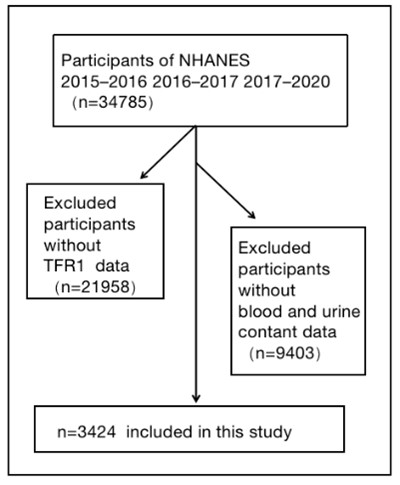
The transferrin receptor protein 1 (TfR1) is a critical cellular membrane protein. It orchestrates the internal transport and metabolism of iron, a vital process for intracellular functions. Additionally, TfR1 has the capacity to bind with metals beyond iron, including cobalt and manganese; however, the specific mechanisms of this binding and subsequent interactions with other proteins remain elusive. This study delves into the potential correlation between TfR1 levels in humans and the presence of cobalt in urine. Drawing on data from 3,424 participants across three survey cycles spanning two years each, this paper meticulously contrasts the clinical features of individuals across diverse TfR1 and urinary cobalt levels. Through the lens of both univariate and multivariate linear regression analyses, the research uncovers an inverse connection between TfR1 concentrations and urinary cobalt, post exclusion of participants with incomplete biochemical profiles. This inverse relationship could shed light on the complex interplay between TfR1 and metal ions within the body, providing a deeper understanding that may inform future studies and potential clinical applications. In the multivariate linear regression analysis, it is found that with the increasing of TFR1 quartiles, the proportion of obese participants (P<0.01), high level blood manganese, high cobalt level in urine and blood (P<0.01) increased gradually. This association remained significant in sensitivity analysis, while in the stratified analysis, above association was not significant in men with samples aged 65 and over. Transferrin receptor protein levels might be positively associated with urinary cobalt in the general U.S. crowd.
Show more
Read Article PDF
Cite
Research Article Open Access
Ketogenic diet and its treatment for brain and other nervous system cancers
Article thumbnail
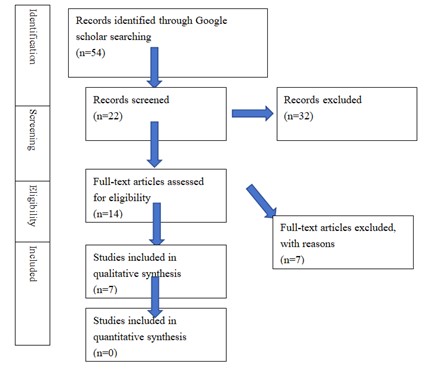
A growing body of empirical evidence indicates the paramount importance of nutrition in cancer treatment, especially glioma. Among the various strategies proposed to enhance traditional anticancer therapy, ketogenic diets (KD) have emerged as a noteworthy approach. In this review, seven papers highly relevant to the effects of ketogenic diet on glioma are selected and the factors involved are summarized. A Google Scholar search with the subject terms “ketogenic diet” and “brain cancer” or “ketone bodies” and “glioma” results in the selection of seven papers highly relevant to the topic. Animals injected with tumor cells or patients diagnosed with glioma, which had received a ketogenic diet for at least ten days, are included in the analysis. The metabolism-related measurements are also taken. The seven papers show that the ketogenic diet can lower glucose levels, increase β-OHB levels, and reduce tumor size or weight. Additionally, it can also impact brain tumor vascularity and gene expression and potentially influence survival time, making it a promising approach for managing brain cancer in humans. In conclusion, there is evidence showing that the Ketogenic diet has the potential to treat brain cancer. Due to the duration and sample volume of the previous studies, future research still needs to continue.
Show more
Read Article PDF
Cite
Research Article Open Access
The reasons and solutions for lipsotrichia and pelada phenomenon
Article thumbnail
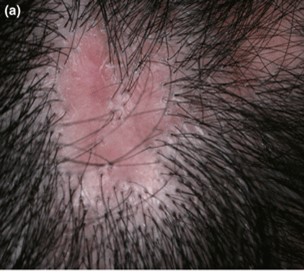
According to Darwin’s evolution, people know that humans evolved from certain types of apes which used to have a lot of hair. In the process of evolving from apes to humans, apes’ hair was lost gradually. Nowadays, there is only a little bit of hair that modern humans still left, like hair on the heads and four limbs. NLM database reported an experiment that justified hair on the heads can protect human brains by reducing solar radiation. But many people, because of some reasons, like genes, immune system, and endocrine, have hair loss problems, which leads to possible damage to their brain and appearance. This paper aims to explore the way to mitigate scarring alopecia and androgenetic alopecia. The results show that people can prevent their hair by changing their life habits cleaning their scalps carefully and having a good mood. If they already get scarring alopecia, people must take medicine based on medical advice. And if people get androgenetic alopecia, they should use Minoxidil. This paper can help people with hair loss problems grow their hair back so that it can better help the brain dissipate heat.
Show more
Read Article PDF
Cite
Research Article Open Access
Research progress on treatments for Alzheimer's disease
Alzheimer’s disease (AD) is an irreversible neurological degenerative disease characterized by progressive cognitive impairment, and its pathogenesis remains unclear. Its main pathological features include neurofibrillary tangles formed by hyperphosphorylated tau protein and amyloid beta (Aβ) plaque deposition. As the disease progresses, the patient’s self-care ability will become worse and worse. In the later stages, the patient will have to rely on others for daily life, which places a great burden on the patient, family, and society. Currently, there are a limited number of AD treatment drugs and their efficacy is limited, and they cannot effectively improve the condition of AD. This article reviews different methods for treating AD and provides a reference for the treatment of AD. At present, the treatment of senile dementia is mainly divided into two categories. The current treatment methods include Lencamab, bee therapy related drugs, NSCs transplantation therapy, Panax notoginseng saponins, and hyperbaric oxygen therapy. It is necessary to explore new treatment methods and drugs to improve treatment effectiveness and widely apply dementia in the elderly.
Show more
Read Article PDF
Cite
Research Article Open Access
Research progress on the role of β-glucan in obesity suppression through the gut microbiota
Article thumbnail
Globally, the prevalence of chronic illnesses is on an upward trajectory. With the number of patients suffering from hypertension, cardiovascular diseases, or obesity rising globally. world’s population will be severely affected in their daily lives and work. Metabolic dysregulation caused by obesity can likely lead to a series of metabolic diseases such as hypertension, hyperlipidemia, and diabetes, while also increasing the risk of neurological disorders such as cerebral infarction or hemorrhage. numerous studies have shown that regulating the gut microbiota through the consumption of β-glucan can effectively address obesity from multiple perspectives. Therefore, researching the mechanism by which β-glucan affects chronic diseases through its action on the gut microbiota holds significant implications for the prevention and treatment of chronic diseases.
Show more
Read Article PDF
Cite
Research Article Open Access
VisRNA: Interactive web server for scRNA-seq data analysis to discover therapeutic targets for non-small cell lung cancer
Article thumbnail
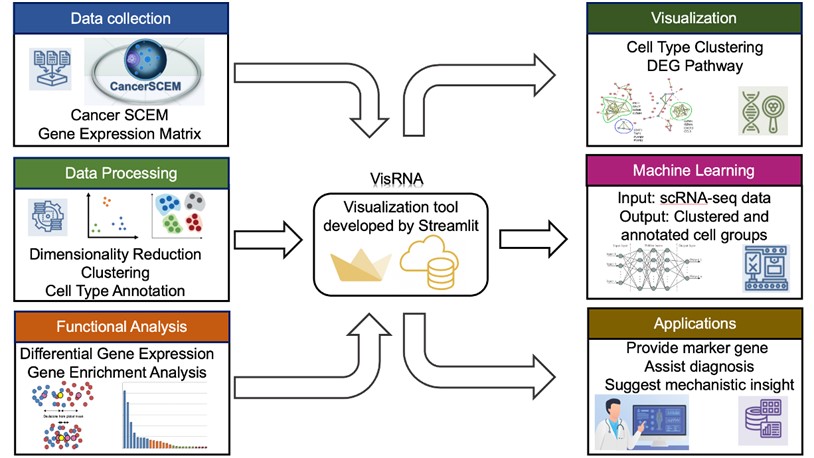
Motivation: Non-small cell lung cancer (NSCLC) is a leading cause of lung cancer diagnoses and mortality worldwide. Single-cell RNA sequencing (scRNA-seq) has transformed our molecular understanding of cancer by revealing gene dysregulation in individual cells. This granularity allows the discovery of new therapeutic targets, promising NSCLC treatment strategies. Method: The study introduces VisRNA, a Python-based web application for analyzing scRNA-seq data statistically and functionally. VisRNA uses advanced machine learning algorithms to reduce multiple dimensionalities in scRNA-seq data and automatically annotate cell types. This method allows gene expression analysis across NSCLC tumor cell populations. Results: VisRNA analysis of NSCLC scRNA-seq datasets identified 14 distinct cell types with distinct gene expression patterns. VisRNA found several significantly differentially expressed genes in these cell populations that could be therapeutic targets. The application ranked drug candidates by molecular docking simulation performance, indicating potential efficacy against targets. Conclusion: VisRNA is a powerful tool for identifying new therapeutic targets and drug candidates for NSCLC, highlighting a significant advancement in scRNA-seq data analysis. VisRNA helps understand the disease’s molecular basis by examining gene expression in individual NSCLC tumor cells, which may lead to better treatments.
Show more
Read Article PDF
Cite
Research Article Open Access
Predication on organs-on-chips applications the systematic treatment of breast cancer
With the continuous development of cancer therapy, traditional in vitro models have been unable to reproduce the structure of organs and tissues of various parts of the human body, fluid flow and mechanical stimulation characteristics, and the human tumor microenvironment, which is crucial to the study of the behavior and progress of cancer, can not be presented through the animal model in vivo, which shows that the traditional physiological model of cancer can no longer meet the research of human anti-cancer therapy. Benefits from the continuous infusion of cell cultures through the microchannel, the device of organ-on-a-chip improves cell viability and activity and facilitates the simulation of the tumor cell microenvironment, which is expected to further replace traditional zoological experiments. This study reviews a method to simulate the microenvironment of the vitro breast cancer metastasis combined with microfluidic technology, and the application of this device in relevant researches of breast cancer cell metastasis and screening of breast cancer therapeutics.
Show more
Read Article PDF
Cite
Research Article Open Access
Association between circadian gene expression amplitude and phase abnormalities and ocular diseases
The biological clock is an internal timing regulation system that exists in almost all organisms, including humans. It plays an important regulatory role in the physiology, behavior, and cognitive functions of organisms. It is one of the important mechanisms for organisms to adapt to the environment, maintain a stable internal environment, and achieve coordination of biological functions. The master controller of the biological clock system is located in the suprachiasmatic nucleus of the brain. Normal operation of the biological clock requires the normal expression of clock genes such as Bmal1 and Cry. Clock and rhythm genes also exist in the retina. Damage to the retinal clock can affect the occurrence and development of retinal diseases and also have an impact on retinal aging. This article reviews the relationship between myopia, diabetic retinopathy, glaucoma, age-related macular degeneration, and abnormalities in clock genes, providing new ideas for the management and treatment of these diseases in clinical practice.
Show more
Read Article PDF
Cite
Research Article Open Access
Research on the functional properties and extraction methods of dietary fiber
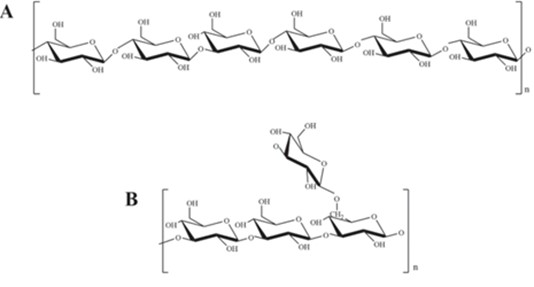
Dietary fiber is a form of polysaccharide that does not yield energy and cannot be fully broken down and absorbed by the digestive enzymes in humans. Furthermore, the human body is unable to produce it; instead, food produced from plants is the only source of it. There are specific species of gut microbiota that ferment dietary fiber, producing short-chain fatty acids, monosaccharides, and gases as byproducts. Dietary fiber has both physicochemical (solubility, viscosity, absorption, water holding capacity, and oil holding capacity) and functional properties (glucose adsorption, cholesterol adsorption, and nitrite ion adsorption ). Dietary fiber can be extracted from plant using a variety of techniques, including chemical, mechanical, and enzymatic methods; however, these techniques have significant shortcomings, such as narrow extraction zones and poor extraction quality. Through the course of the last few centuries, the amount of dietary fiber has significantly decreased, which has led to unhealthy human conditions like obesity, cancer, type 2 diabetes, and constipation. Nowadays, these Dietary fibers, therefore, are given great attention because of their physicochemical and functional properties which are vital for human health. These products from plant resources and fruits can be further used for food manufacturing and processing.
Show more
Read Article PDF
Cite
Research Article Open Access
The relationship between vitamin D and periodontal disease
In recent years, periodontal disease has been plaguing many people, and the topic of this study is the relationship between periodontal disease and Vitamin D. Aspects are divided into Vitamin D and periodontitis, which are discussed separately. The research question is mainly in the discussion of the disease, and experiments are conducted using simulation tests to draw conclusions to do the control and observation methods to draw conclusions to take samples, there are also based on people’s daily habits to make reference to improve the treatment methods and the results of the study. The conclusion is that Vitamin D and dental care are inseparable; the lack of trace elements will lead to a decline in resistance and ultimately the formation of periodontitis. Vitamin D is the primary factor affecting the growth and protection of bones, so Vitamin D will make the teeth stronger.
Show more
Read Article PDF
Cite