Articles in this Volume

Research Article Open Access
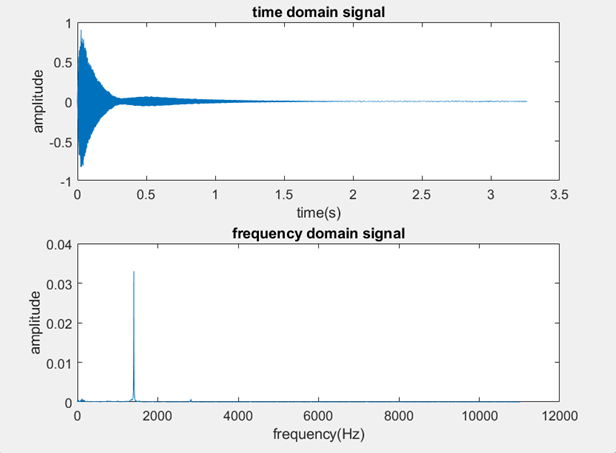
Analyzing musical tones with fourier transformation
Article thumbnail
This essay delves into the mathematical exploration of musical tones through the application of Fourier Transformation, a pivotal tool in the field of digital signal processing and acoustics. By converting complex musical tones from the time domain to the frequency domain, Fourier Transformation enables the deconstruction of sounds into their constituent frequencies, revealing the unique harmonic structures that contribute to the characteristic timbre of different musical instruments. The focus of this analysis is particularly on the trumpet, chosen for its rich harmonic content and distinctive sound. Through the examination of audio recordings, this study uncovers the fundamental frequency and harmonics of the trumpet, demonstrating how these elements combine to form its unique acoustic fingerprint. The process involves recording, analyzing, and comparing musical tones using software tools like MATLAB and Python, providing an accessible yet profound insight into the intersection of mathematics and music. This essay not only highlights the technical methodology of Fourier Transformation in analyzing musical tones but also explores its practical applications in music theory, digital audio processing, and the broader field of acoustics. The findings underscore the transformative power of mathematical analysis in understanding and appreciating the complex beauty of musical sounds, opening avenues for further research and application in both the scientific and artistic domains.
Show more
Read Article PDF
Cite
Research Article Open Access
A method to test the uniform convergence of function series
The series refer to performing infinite addition operations on infinite numbers or functions in a certain order. It is hard to find out whether the positive function series converges uniformly in many cases. In this article, a new method that replacing the sum of function terms series with improper integral will be introduced, which is designed to solve problems that cannot be solved by classical Weierstrass M-test. The Cauchy uniform convergence test will serve as the basis for the entire proof process because it can lead the focus point from the whole sum to the partial sum of the function series, where its value can be easier substituting by the value of the improper integral. After using basic knowledge of the improper integral, the uniform convergence can finally be known. By using this method, testing the uniform convergence of the irregular function series even estimating its value can be possible accomplished.
Show more
Read Article PDF
Cite
Research Article Open Access
The application of convex function and GA-convex function
A convex function is a function that maps from a convex subset of a vector space to the set of real numbers. Convex functions have some important properties, such as non-negativity, monotonicity, and convexity, which can help us derive and prove inequalities. This paper explores the concepts of convex functions and GA-convex functions, demonstrating their utility in proving a variety of common and complex inequalities. Beginning with an overview of convex functions and their extension to GA-convex functions, the study shows how these mathematical tools can be effectively utilized in the context of inequality proofs. By leveraging the properties of these functions, the paper successfully establishes rigorous proofs for a range of inequalities, highlighting the versatility and applicability of convex and GA-convex functions in mathematical analysis. The properties convex and GA-convex functions allow us to use it to determine the direction of inequalities, prove inequalities, determine the optimal solution of inequalities, and even prove Cauchy inequalities.
Show more
Read Article PDF
Cite
Research Article Open Access
Research on Improved Crowd Detection Based on YOLOv5
Article thumbnail
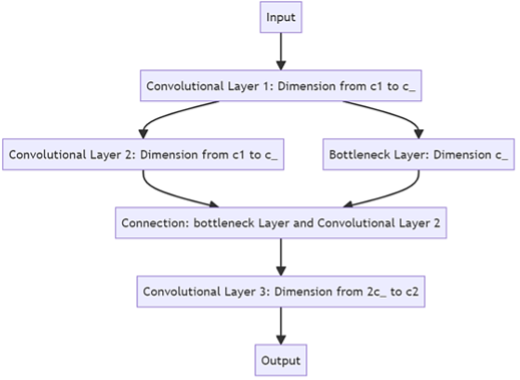
With the acceleration of the process of modern urbanization and the improvement of residents' material living standards, the flow of people in the public space is gradually becoming saturated. The monitoring equipment in public places records a huge amount of people flow information all the time, but due to the crowds tend to be dense and crowded. Traditional machine learning cannot make accurate and efficient identification of a large number of dense crowds, if the deep learning technology can be used to process the crowded crowd captured by the surveillance camera and accurately identify the number of people in public places, it provides an important guarantee for the flow of people in public areas and safety construction. However, for crowded targets with occlusions, the traditional target detection algorithm sometimes performs poorly. Based on the above background, this paper introduces an enhanced deep learning framework utilizing the YOLOv5 neural network for crowd detection research. aiming at the characteristics of dense and crowded crowds in public areas. By improving convolutional layer C3 in the backbone structure of YOLOv5 neural network and adding CBAM attention mechanism. Compared with the original YOLOv5, the improved model has increased the maximum F1 value of crowd recognition at near, middle and far distances. To sum up, the deep learning framework improved by YOLOv5 neural network proposed in this paper has significantly improved the recognition accuracy of crowded people in public areas.
Show more
Read Article PDF
Cite
Research Article Open Access
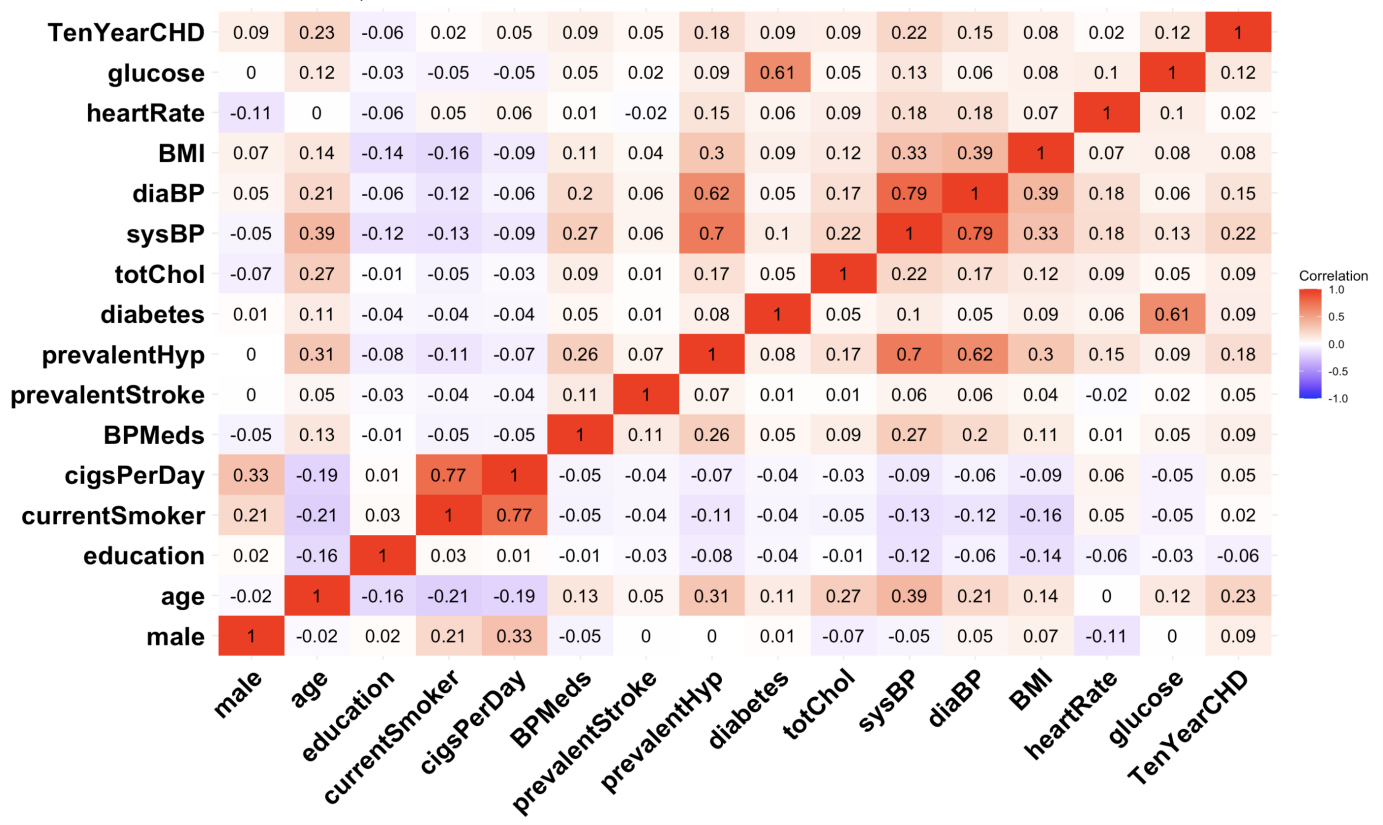
Prediction of heart disease based on logistic regression
Article thumbnail
Heart disease is a major threat to human health, with a variety of contributing factors, and is not easily cured. This paper will present a dataset from a cardiovascular study of residents of Framingham, Massachusetts. First, the validity of the three models, logistic regression, random forest, and decision tree, is estimated by comparing information such as accuracy, precision, recall, and F1 values. The optimal model, i.e., the logistic regression model, was selected by plotting ROC curves and using AUC as a reference criterion for assessing the predictive effectiveness of the models. Then the raw data and data were preprocessed, including dealing with missing values. Finally, a logistic regression model was developed to analyze the influencing factors of heart disease. The purpose of this study was to use the results of the logistic model to help doctors and patients in heart disease treatment. The results show that the model has a good predictive effect.
Show more
Read Article PDF
Cite
Research Article Open Access
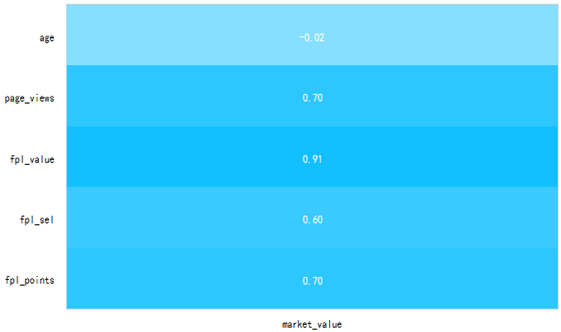
Analysis of the market value of Premier League attacker
Article thumbnail
The main purpose of this study is to use the method of multiple linear regression to conduct a comprehensive discussion on "“Factors affecting the market price of Premier League striker players"”. In the era of increasingly hot soccer, the transfer of stars is a big attraction in the transfer period every year, but there are still many clubs signing overpaid and underpaid players. The overall objective of this study is to find the determinants of players'’ price, so as to provide a reference for clubs to improve the utilization of funds in the transfer period. In this study, a dataset of player data for the 17-18 Premier League season was first downloaded via Kaggle. Then, the dataset obtained from Kaggle was used for empirical analysis to identify correlations that significantly affect the market price of players, and multiple linear regression analysis was performed after processing these data. Through the calculations, it was determined that match performance and goals scored had a significant positive impact on market value, and age and match possession had a non-significant negative impact on market value, which suggests that there is a need for the relevant team managers to optimize these aspects in order to promote a virtuous cycle of club development and team performance.
Show more
Read Article PDF
Cite
Research Article Open Access
Harmonic analysis approach to the proof of Heisenberg inequality
the Heisenberg uncertainty Principle is a fundamental principle in quantum mechanics, which was developed by the German physicist Werner Heisenberg and was proposed by him in 1927. This principle states that for a pair of physical quantities that share phase space, such as position and momentum, it is impossible to accurately measure their values at the same time. There are several variants of it in harmonic analysis studies, and the article will introduce some of them in R^1 space and L^2 space. In the process of providing the Heisenberg inequality, the article proved the Plancherel identity and Schwartz inequality by using Fourier transform and inverse Fourier transform. Finally, author solved the equation of the wave function φ(x) . The famous physicists Heisenberg proposed one of the more novel ideas in quantum mechanics – the existence of unobservable orbits cannot be assumed, which did bring great influence in quantum mechanics. The article will introduce the conception of Heisenberg inequality and try to finish the proof.
Show more
Read Article PDF
Cite
Research Article Open Access
Research on the influencing factors of student performance
Article thumbnail
The aim of this report is to analyze the factors influencing student performance and to develop a predictive model for Grade Point Average (GPA) based on five aspects: demographic details, study habits, parental involvement, extracurricular activities, and academic achievement. Utilizing a multiple linear regression model, this report identifies key factors that significantly impact academic performance. The dataset includes a total of 14 student characteristics, such as parental education level, weekly study time, extracurricular activities, absences and so on. Through stepwise regression, non-significant factors were iteratively eliminated, leading to the development of a predictive model to determine the primary influences on student performance. The research findings underscore the significant role of weekly study time, absences, tutoring, parental support, extracurricular activities, sports, and music in student performance. In contrast, age, gender, ethnicity, parental education, and volunteering have negligible impact on GPA. These insights provide actionable guidance for educators and policymakers to implement targeted measures to enhance student performance.
Show more
Read Article PDF
Cite
Research Article Open Access
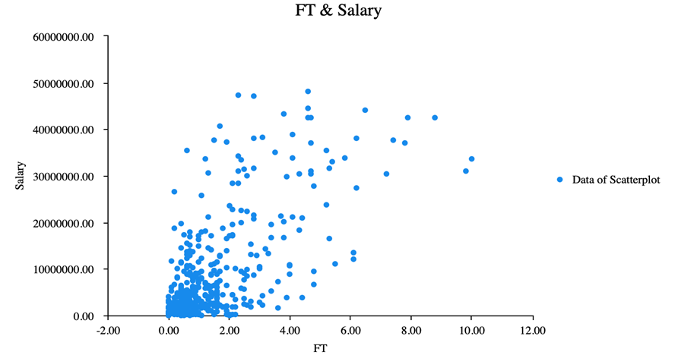
Analysis of the Relationship between NBA Player Salary and Their On-Court Performances
Article thumbnail
This research attempts to investigate the connection between NBA player salary and on-court performance. By collecting and analyzing NBA player salary data and related game statistics, some interesting trends and correlations are found. Through scatter plots, error-bar, bar chart and clustered line showing the direct relationships between the factors of players’ performance and their salaries. In addition, the importance of the independent and dependent variables is examined using correlation analysis in order to judge their positive or negative relationships. Linear Regression model could show the level of influencing on the variables. The results of the study show that some highly paid players perform well in the game. Further statistical analysis shows that players’ score attempt is not the only factor affecting their salaries, and factors such as assists and blocks made per game also play an important role. These findings have implications for managers, players and fans, and help to better understand and evaluate the true value of players.
Show more
Read Article PDF
Cite
Research Article Open Access
Schrödinger equation for various quantum systems based on Heisenberg's uncertainty principle
This article establishes the proof of the Schrödinger equation for numerous quantum systems, utilizing Heisenberg's uncertainty principle. The Fourier transform connects functions in the time and frequency domains, resulting in the mathematical inequality that is the foundation of the uncertainty principle. In the part of Methods and Theory, the article derives the uncertainty principle through Fourier transforms by defining the mean and variance of angular frequency and time, and subsequently expanding the integral. This establishes the fundamental connection between time and frequency domains, illustrating the constraints imposed by quantum mechanics. In the part of Results and Application, the article applies the uncertainty principle to derive the Schrödinger equation under different conditions: free particle, particle in a box, harmonic oscillator, and hydrogen atom. For each case, the article assumes wave function solutions, uses the uncertainty in position and momentum to estimate kinetic and potential energies, and shows that the total energy matches the ground state energy derived from the Schrödinger equation. The results highlight the critical role of Heisenberg's uncertainty principle in understanding key aspects of quantum mechanics, providing a unified framework for these diverse systems.
Show more
Read Article PDF
Cite