
Articles in this Volume

Research Article Open Access
Sequence and structure statistics of the nanobody database and molecular dynamics simulation analysis of the nanobody VHH
Article thumbnail
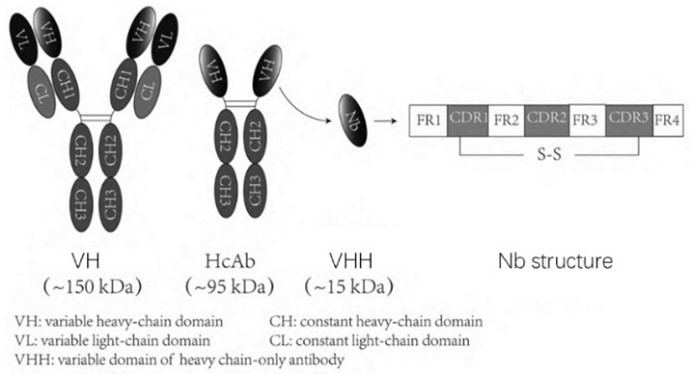
Antibodies are immunoglobulins produced in vivo by immune cells stimulated by exogenous molecules, and nano-antibodies are a class of molecules that are similar to conventional antibodies but smaller in size. Originally discovered as an antibody in camelidsand cartilaginous fishes, they are called heavy chain antibodies due to the lack of light and heavy chain constant regions in the CH1 region except for the retained heavy chain, and their binding region to the antigen consists of the heavy chain variable region only, making them the smallest antibodies available with complete antibody functional properties. In this experiment, we analyzed the commonalities and differences of the nanobodies by extracting all their amino acid sequences, performed protein modeling of the relevant nanobodies of coronaviruses among them, and then analyzed the data of RMSD and RMSF by using molecular dynamics simulation, and finally predicted and analyzed the protein conformation and the structures of VHH at all levels.
Show more
Read Article PDF
Cite
Research Article Open Access
Maternal embryonic leucine zipper kinase in cancer progress and therapeutic potentials
This review delves into the investigation of Maternal Embryonic Leucine Zipper Kinase (MELK) and its significance in different cancer types. The primary emphasis is placed on understanding its role in cancer cell proliferation, migration, invasion, and resistance to therapeutic interventions. The intricate mechanisms of action exhibited by MELK are of significant importance in the context of cancer progression. These mechanisms encompass a wide range of biological processes, including gene regulation, cellular activities, and interactions at the tissue level. This highlights the multifaceted nature of MELK’s involvement in cancer development and underscores its significance in this context. This essay explores the potential of MELK as a diagnostic and prognostic biomarker, with a focus on its altered expression patterns in various cancer types. Furthermore, this study delves into the investigation of MELK as a highly promising target for cancer therapy. It provides an in-depth analysis of the progress made in the development of MELK inhibitors and explores their potential clinical applications. The research endeavours in this study focus on addressing challenges related to therapeutic resistance and biomarker validation. Additionally, the investigation explores potential opportunities for combination therapies and personalised medicine approaches. The future directions of research on maternal embryonic leucine zipper kinase (MELK) encompass an in-depth investigation into its underlying molecular mechanisms, the validation of clinical biomarkers associated with MELK, and the exploration of effective combination strategies involving MELK. The role of MELK in cancer and the possibility to utilize it as a target for therapy have garnered significant attention due to their potential to advance precision cancer care and improve patient outcomes.
Show more
Read Article PDF
Cite
Research Article Open Access
Current available treatments for NSCLC
Lung cancer is one of the most prominent forms of cancer and ranks as the deadliest of disease afflicting humanity. To tackle this issue, a variety of treatment approaches have been devised to counteract this disease. This review aims to illustrate the mainstream curative and palliative treatment methods in managing non-small cell lung cancer, the most common subtype of lung malignancies.For each treatment method, we have investigated its mechanism, classifications, and techniques involved as well as the clinical success of these treatments. Furthermore, we have also included the reasoning behind each treatment plan, including both quality of life as well as overall survival benefits for the patient.
Show more
Read Article PDF
Cite
Research Article Open Access
Recent treatments to Hepatocellular Carcinoma Cancer(HCC): update and outlook
In the US, hepatocellular carcinoma (HCC), which accounts for 75%–85% of instances of liver cancer, is a substantial cause of cancer-related fatalities. This review focuses on the recent developments in managing HCC, specifically through Trans-arterial Chemoembolization (TACE), which is currently first-line recommended and boasts a high survival rate. We have also discussed gene therapy, which aims to correct or replace faulty genes contributing to HCC development. Although it is still on trial, early results show promise. There are also various treatments such as OLT, molecularly targeted therapy, radiation therapy, locoregional therapies, gene therapy and immunotherapy. We have also come up with an innovative idea of creating a therapeutic vaccine using circRNA instead of mRNA, along with LNP, to treat HCC. This approach combines the benefits and functions of both circRNA and LNP. Different components of LNP aid in diverse benefits, to name but a few, stability, encapsulation and delivery efficiency, and higher targeting specificity. The use of circRNA offers adjuvant to immune response and better stability. Recent studies suggest that this hypothesis is theoretically possible. A better understanding of the hazardous disease could lead to the development of more effective treatments, which are urgently needed.
Show more
Read Article PDF
Cite
Research Article Open Access
Immune checkpoint inhibitor combination therapy
In recent years, Immune checkpoint inhibitors (ICIs) are being approved for the treatment of a wide range of malignancies, and they are one of the most popular immunotherapies for tumours, bringing new hope to patients. However, single-agent ICI therapy has limited efficacy and is prone to drug resistance, and the objective remission rate of ICI alone is only 10-20% in some tumours, therefore, how to improve clinical efficacy is the key point of clinical research associated with immunotherapy. New research has found that the combination of ICIs with differing mechanisms not only improves efficacy, but also prolongs the anti-tumour effect, while an appropriate dosing regimen can effectively balance efficacy and safety. It is proposed to review the mechanism, pharmacokinetics and clinical research progress of ICI combination therapy.
Show more
Read Article PDF
Cite
Research Article Open Access
Advances in early diagnosis and treatments of kidney cancer
OVERMAN M J, LONARDI S, WONG K Y M, et al. Durable clinical benefit with nivolumab plus ipilimumab in DNA mismatch repair-deficient/microsatellite instability-high metastatic colorectal cancer [J]. J Clin Oncol, 2018, 36(8): 773-779.
Show more
Read Article PDF
Cite
Research Article Open Access
The Pathogenesis and Differences in molecule of Autism
With the deepening of the understanding of autism, the scope of autism spectrum disorder (ASD) continues to expand. The prevalence rate of ASD has arrived over 1% around the world. Language and social communication issues, as well as recurrent stereotyped interests and behaviors, are the main signs of autism. To find out the pathogenesis of autism, scientists have found a lot, which show that autism is a complex disorder resulting from many factors, but many questions remain unanswered. Numerous theses have been written about the causes and symptoms of autism, but frequently only a few of these perspectives have received attention. This review is to sum up the causative factors of autism, including genes and environmental, and lists how autism different from normal people in terms of genes, proteins, and cells. This review will introduce these factors with some examples.
Show more
Read Article PDF
Cite
Research Article Open Access
Improving brain penetration using elacridar—a P-glycoprotein and BCRP inhibitor
The central nervous system (CNS) is a site for a myriad of disorders and diseases, such as schizophrenia, Alzheimer’s disease, and Parkinson’s disease. Many medications targeting these illnesses remain challenged due to efflux transporters forming a blood-brain barrier (BBB). To combat such challenges, elacridar shown promise at inhibiting such transporters, such as P-glycoprotein (P-gp) and breast cancer resistance protein (BCRP), therefore improving brain penetration. However, as an early clinical candidate, many remain unknown about elacridar’s pharmacokinetic (PK) properties in the human body. This paper aims to obtain a better understanding of elacridar’s pharmacokinetic profile and predict the optimal dose and dose interval for its application in the clinic. To begin with, a series of basic PK models were created using fundamental PK equations and the models were fit to elacridar clinical data to obtain elacridar-specific PK parameters. Next, elacridar preclinical PK as well as in vitro inhibition assay were used to determine the therapeutic window. Our final, multiple-dose extravascular PK model reveals that the most convenient and effective dose regimen is 900 mg BID (bis in die; twice per day). With this elacridar PK model, researchers can leverage elacridar human PK to improve clinical outcomes.
Show more
Read Article PDF
Cite
Research Article Open Access
The potential and prospects of sleep biomarkers in early Alzheimer's disease diagnosis
Alzheimer’s disease (AD), often accompanied by sleep disturbances, is a neurodegenerative disease. Sleep disruptions have the potential to serve as biomarkers for early diagnosis because they can be observed in the initial stages of disease progression in the sleep-wake cycle. This paper summarizes the latest findings on AD manifestations during non-rapid eye movement (NREM) sleep, rapid eye movement (REM) sleep, sleep oscillations, and cognitive impairment. It provides a detailed overview of diagnostic bioindicators for primary Alzheimer’s disease, including invasive cerebrospinal fluid (CSF) markers, non-invasive electroencephalography (EEG), and plasma biomarkers, and compares their advantages and limitations in diagnosing early AD. The accuracy and reliability of sleep biomarkers in early diagnosis are evaluated, along with their clinical application prospects. The paper also proposes improvements in the use of sleep clinical markers for early Alzheimer’s disease diagnosis, aiming for greater breakthroughs in this field. The significance of this review lies in its in-depth exploration of the association between sleep disturbances and the early period of the disease, along with the introduction of potential biomarkers that can serve as tools for early determining and monitoring of this neurodegenerative health issue.
Show more
Read Article PDF
Cite
Research Article Open Access
Mitochondria in aging: A review of structure, function, and interorganelle relationships
The process of aging is what everyone is experiencing during the whole life. Many factors contribute to the aging process, among which the changes in mitochondrial structure and function are one important step. in this review, we elaborated on the relationship between mitochondria and aging from three aspects: the structure and function of mitochondria, the changes of mitochondria during aging, and the relationship between mitochondria and other organelles, we also described the progress related to mitochondrial targeted therapy. In summary, The passage highlights a review that examines the connection between mitochondria and aging from three main angles: understanding the structure and function of mitochondria, exploring how mitochondria change as an individual ages, and uncovering their relationships with other cellular organelles. Additionally, the passage discusses the advancements in mitochondrial targeted therapy within the context of aging.
Show more
Read Article PDF
Cite