Articles in this Volume

Research Article Open Access
Optimizing map coloring: Using linear programming to find the minimum number of colors
Article thumbnail
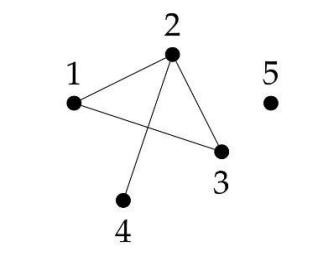
Map coloring is a classic problem in graph theory and it relates to many optimization techniques in mathematics such as linear programming and simulated annealing. This paper investigates the minimum number of colors required to color a map under different constraints and situations using linear programming. Specifically, it examines three different scenarios: (1) coloring each district on the map with the constraint that adjacent districts must be colored differently, (2) adding the additional constraint that two regions bordering the same region cannot be colored the same, and (3) assigning two colors to each district with the constraint that adjacent districts must be colored differently. To proceed with the research, hypotheses are formulated regarding the impact of these additional constraints on the minimum number of colors required to color the map. The data in the paper is collected by creating sample maps and analyzing the minimum number of colors required to color them under each of the different scenarios. The findings of this research suggest that the addition of constraints, indicating a complex situation, increases the minimum number of colors needed to color the map. Thus, linear programming is found to be an effective optimization technique for solving map coloring problems under these constraints. This research makes a valuable contribution to the field of mathematics and computer science, providing insights into the application of optimization techniques to real-world problems like map coloring. The findings of the research have significant implications for practitioners working in the field of optimization and inform the development of more efficient algorithms for solving map coloring problems.
Show more
Read Article PDF
Cite
Research Article Open Access
Nuclear fusion introduction and artificial fusion status
Article thumbnail
Nuclear fusion, a process that has the potential to revolutionize the world's energy landscape, is the subject of extensive research due to its promise of providing a clean and safe energy source. The article outlines the essential principles of nuclear fusion and the chronology of its discovery, from early predictions to its initial realization in the first half of the 20th century. It also highlights the extreme requirements and challenges associated with fusion. Furthermore, the article introduces two natural nuclear fusion reactions: thermonuclear fusion and pycnonuclear fusion. In the final section, the focus shifts to artificial nuclear fusion, discussing the progression from the uncontrollable hydrogen bomb to efforts toward controlled atomic fusion since the mid-20th century. The article emphasizes various nuclear fusion configurations (Tokamak, Stellarator, ICF, Magnetic mirrors, and z-pinch) that have been proposed globally, detailing their features, strengths, and weaknesses.
Show more
Read Article PDF
Cite
Research Article Open Access
Future physics prospects with CEPC and HL-LHC synergy
Article thumbnail
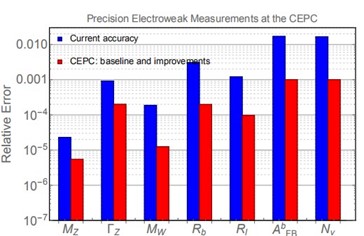
After constructing the Circular Electron Positron Collider (CEPC) and the High-Luminosity Large Hadron Collider (HL-LHC), particle physics experiments will reach a new mass region with more incredible energy. Both types of colliders have the unique duty of searching for new particles or estimating the coupling constants of the reactions based on their different structures, providing a different focus. This presentation will discuss and cover the regions of CEPC and HL-LHC to show their complementary functions. The CEPC can answer the Higgs particle, whether it is a composite particle, how it contributes to the dark matter mass, and whether its field provides enough matter mass for the universe. It can generally provide detections below 10 TeV, leading to possible new theories. For the HL-LHC, the upgraded HL-LHC has a higher luminosity and data acquisition capability, ten times higher than predicted. It is expected to produce 15 million Higgs particles annually, five times more than the LHC. The large number of collision events provides more opportunities to measure the characteristics of the Higgs particles.
Show more
Read Article PDF
Cite
Research Article Open Access
Using sensor fusion technology to realize pedestrian recognition and hazard assessment
Article thumbnail
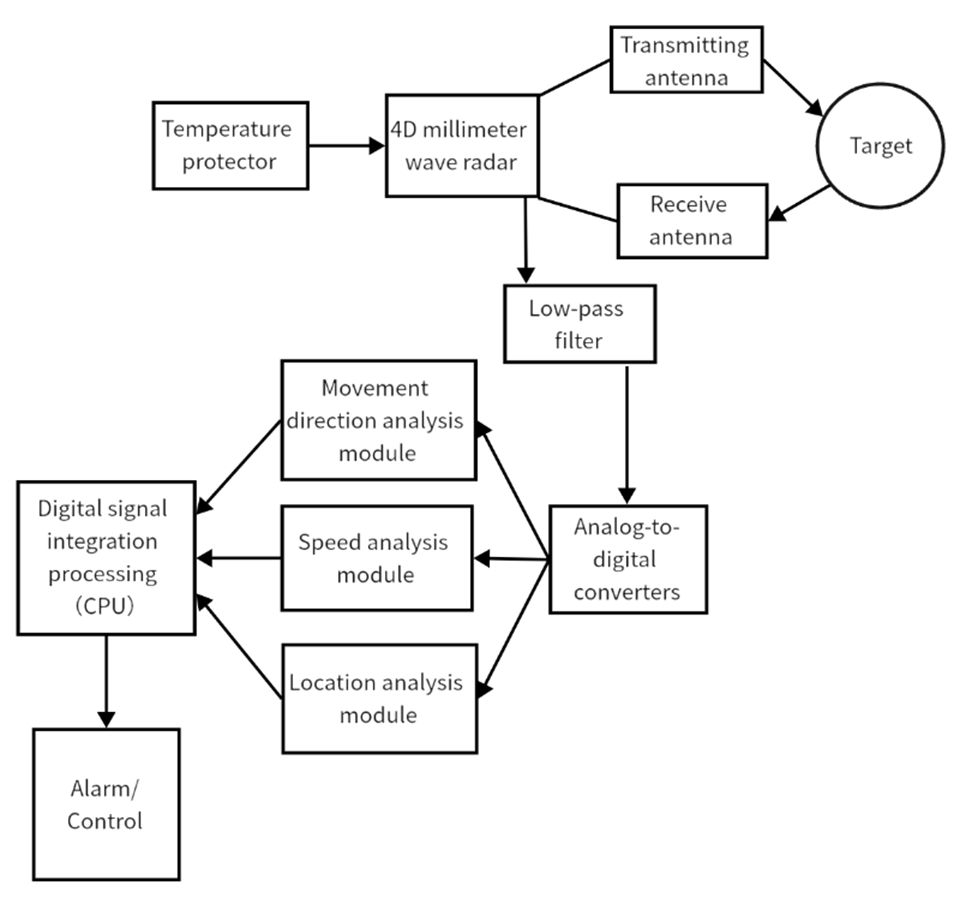
The prevailing technology for pedestrian recognition in unmanned driving, predominantly reliant on LiDAR, confronts the dual challenges of elevated expenses and limited anti-interference capabilities. To surmount these obstacles, this paper introduces an inventive fusion methodology that harmonizes inputs from visual cameras, 4D millimeter wave radar, and thermal imaging sensors. The advantages and promising development prospects of 4D millimeter wave radar over laser radar are comprehensively elucidated. By leveraging advanced signal processing algorithms, a robust mathematical model is formulated, facilitating the synthesis of information from a multitude of distinctive feature parameters. In tandem, an assessment of the hazard index is executed using the analytic hierarchy process, enriching vehicular safety and driving efficiency. This innovative approach strives to foster the progression of autonomous vehicle technology and expedite its commercial assimilation into the burgeoning autonomous driving market. By harnessing the synergistic capabilities of multiple sensor modalities, the proposed fusion technique not only addresses the existing limitations but also charts a transformative course towards a safer and more efficient autonomous driving landscape. Through the amalgamation of these cutting-edge technologies, this research aspires to carve a path for the accelerated evolution and widespread deployment of autonomous vehicles.
Show more
Read Article PDF
Cite
Research Article Open Access
The principle and state-of-art applications of Gravitational lensing
Article thumbnail
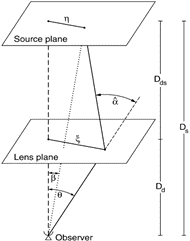
Gravitational lensing, since Einstein proposed, has developed into an essential part of astronomical exploration. On this basis, lots of projects will observe high-intensity explosive transients, such as gravitational waves generated by the merging of dense binaries, so as to improve the accuracy of cosmological observation. Strong gravitational lensing is an effective observation method, which can be used to observe dark mass (sub) halos and test various dark matter models. This study takes Gravitational wave as an example, analyses the application background and mode of explosive transient, and introduces the new measurement methods for dark matter detection. The measurement of redshifted chirp mass and luminosity distance of Gravitational wave is introduced through the formula. Analysis of the characteristics of dark of the pertuber through more group detections will be helpful for new investigation method in the future. In order to make a credible judgment of the nature of the universe, more experiments need to be carried out in these two aspects. This study briefly analyses the progress in these two fields, aiming to encourage more future exploration.
Show more
Read Article PDF
Cite
Research Article Open Access
Dissecting dark matter candidates: A comprehensive evaluation of axions, sterile neutrinos, and WIMPs
Article thumbnail
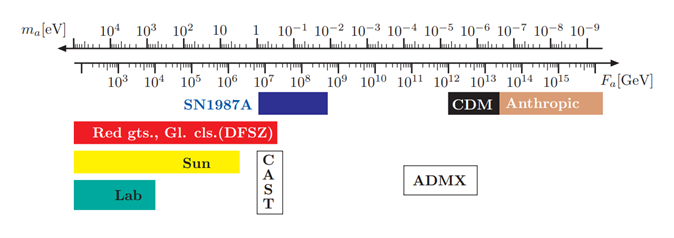
This article provides a comprehensive review of the three most popular candidates for dark matter: axions, sterile neutrinos, and WIMPs (Weakly Interacting Massive Particles). The article explores the theoretical origins of these candidates and their characteristic properties. It also examines the various observational constraints placed on them by different experiments, including direct and indirect detection experiments, as well as astrophysical and cosmological observations. The article also discusses the implications of these particle candidates on the development of cosmic structures, such as galaxies and galaxy clusters. This review aims to enhance comprehension of the present status in dark matter studies and the challenges faced in identifying the nature of dark matter. In summary, this comprehensive review provides a comparative analysis of the most promising dark matter candidates, shedding light on the latest developments in this exciting field of research.
Show more
Read Article PDF
Cite
Research Article Open Access
Innovation of new energy equipment in the context of smart grid
Article thumbnail
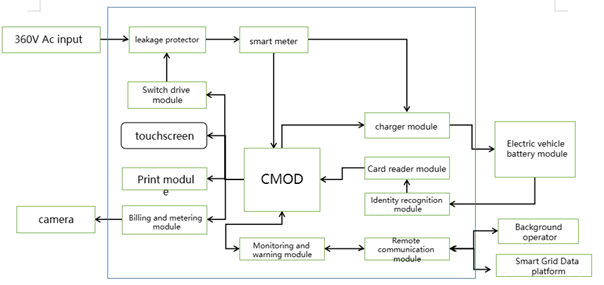
Charging pile technology is of great significance for the popularization of electric vehicles and the construction of smart grids. By analyzing the development status and trend of charging pile technology against the background of the smart grid, this paper discusses the future development direction of charging pile technology. The research results show that the development prospect of charging pile technology under the background of smart grids is very broad, and it is necessary for the government and enterprises to make joint efforts to solve the problems of high construction costs and unreasonable layout of charging piles through technological innovation and policy support, promote the rapid development of charging pile technology, and provide better support for the development of the electric vehicle market. Charging pile technology is an important device connecting electric vehicles and power grids, which is of great significance for the popularization of electric vehicles and the construction of smart grids. This essay designs a kind of high-power intelligent charging pile which can meet the security protection level, carry out real-time monitoring, real-time data acquisition and interconnection.
Show more
Read Article PDF
Cite
Research Article Open Access
A competitive infectious transmission model
Article thumbnail
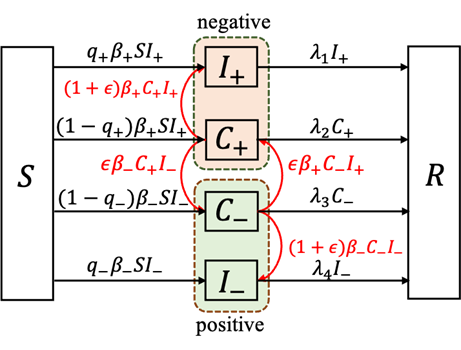
Compartmental disease transmission models are widely used to model state transmission in infectious diseases, using differential equations to model the change in the number of units in different states over time, and recently has produced significant practical implications in many downstream fields. However, inspired by the transmission of rumors in social media, we note that the previous compartmental transfer models neglect the "competitiveness" during the transfer process, that is, the "infection" of people with positive and negative opinions to "susceptibles" or even people with opposing views. To tackle the above issues, in this paper, we propose a novel competitive infectious transmission model in which the "infection" will lead to more people supporting the opinion of the infector, effectively establishing the change of the number of units in the positive, negative, and neutral parties over time. In addition, we performed extensive theoretical analysis to investigate the property of the disease-free equilibrium and to calculate the basic reproduction numbers for three different scenarios. For each system, we derive explicit solutions for the basic reproduction numbers and discuss their important implications for guidance in practice.
Show more
Read Article PDF
Cite
Research Article Open Access
Using upsampling CONV-LSTM with metadata embedding for respiratory sound classification
Article thumbnail
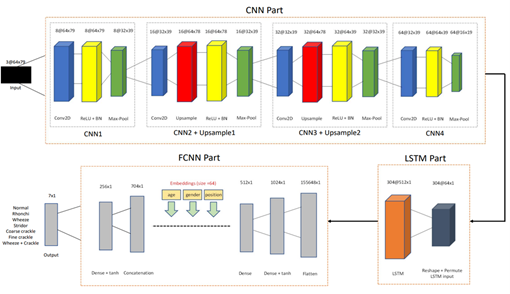
Respiratory diseases are one of the leading causes of death around the world and they severely affect patient quality of life. Auscultation is an essential method for diagnosing respiratory diseases, and it is low-cost and convenient. However, auscultation requires experts who are highly experienced. Medical trainees suffer from misdiagnosis inevitably. To address this issue, a novel machine learning model is proposed, which consists of upsampling convolutional neural network (CNN), a long short-term memory network (LSTM), and a fully connected network (FCNN) with embedding layers to classify respiratory sounds into seven categories: Normal (N), Rhonchi (R), Wheeze (W), Stridor (S), Coarse Crackle (CC), Fine Crackle (FC), Wheeze & Crackle (WC). The model is trained and evaluated on the SPRSound dataset and obtained the result on the test dataset with a sensitivity of 0.5716, specificity of 0.7882, average score of 0.6799, harmonic score of 0.6626, and total score of 0.6756.
Show more
Read Article PDF
Cite
Research Article Open Access
A review of some new materials for lightweight and better performance purposes in vehicle components
Article thumbnail
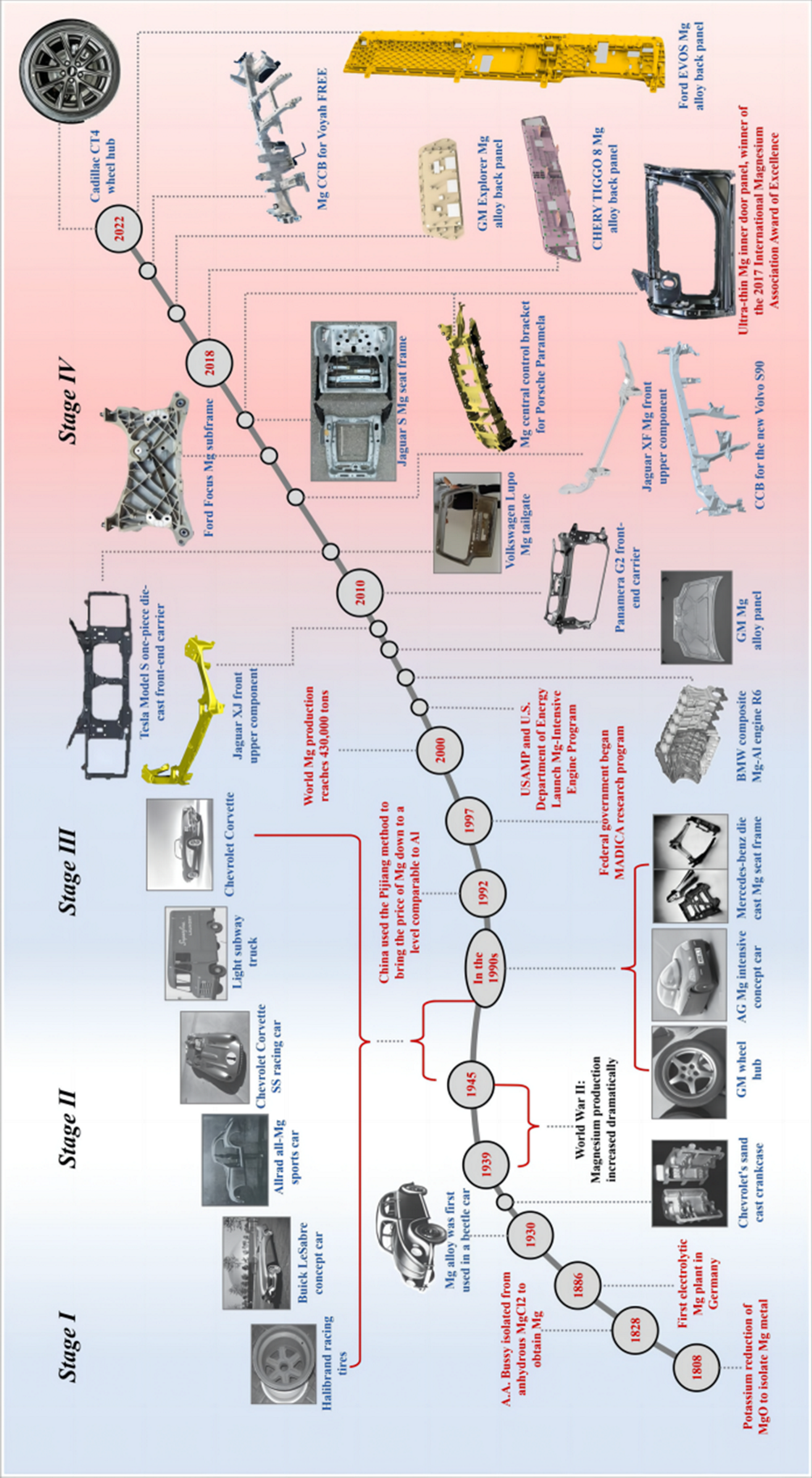
Automobiles are the world’s primary way to travel, which leads to a constant race that automobile manufacturers are improving their vehicle performance by reducing weight. This paper introduces the values of density, yield strength, tensile strength, tensile modulus, flexural strength, and other properties of some new materials such as carbon fiber composite, magnesium alloy, aluminum alloy, high-strength steel, and carbon ceramic. Their drawbacks and advantages in vehicle industries and their potential development are presented in this paper.
Show more
Read Article PDF
Cite