Articles in this Volume

Research Article Open Access
The Influence of stress factors on anxiety and depression: The mediating role of neural responses to errors and rewards
This paper examines how stress impacts depression and anxiety through neural responses to mistakes and rewards. Currently, mental health problems, specifically anxiety and depression, are on the rise. This paper presents a study on how stress affects depression and anxiety. To begin with, this paper describes two neural responses: Error-Related Negative Wave (ERN) and Reward Positive (RewP). ERN could be a significant biomarker of anxiety symptoms. RewP, however, is linked to depression. Based on previous studies, this paper posits that depressed patients exhibit lower RewP amplitude indicative of reduced sensitivity to rewards. Moreover, this paper combines previous studies to demonstrate that stress could impact the amplitude of ERN and RewP. To be more precise, stress could amplify the magnitude of ERN, indicating that people's neural response to errors is heightened, thereby resulting in higher levels of anxiety. However, stress may reduce the magnitude of RewP, indicating a decrease in reward sensitivity and potentially increasing the susceptibility to depression. In summary, this article offers insights on how to articulate the connections among stress, anxiety, depression, and related factors. Furthermore, this article introduces a novel perspective on approaches to treating and preventing anxiety and depression.
Show more
Read Article PDF
Cite
Research Article Open Access
The role of anthropological methods in the Ebola outbreak in Guinea: Bridging cultural and medical perspectives for effective response
This study delves into the role of anthropological methods in comprehending the dynamics of the Ebola outbreak in Guinea. The backdrop lies in the need to bridge gaps between biomedical research and socio-cultural insights in disease management. The research employs qualitative methods to explore local beliefs, practices, and perceptions. This study examines community engagement, healthcare access, and response effectiveness through participant observation, interviews, and document analysis. Results emphasize the crucial contribution of anthropologists in fostering trust, promoting culturally sensitive interventions, and enhancing collaboration between communities and healthcare entities. The study underscores the significance of interdisciplinary approaches in addressing complex infectious disease outbreaks.
Show more
Read Article PDF
Cite
Research Article Open Access
Review of effects of respiratory muscle training on athlete performance
For a long time, the respiratory system plays an important role in athletes' training and competition, and its quality directly affects the athletes' competitive level and state. In particular, after the COVID-19 pandemic, many athletes have experienced a significant decline in respiratory function due to viral infection, which has led to a renewed understanding of the importance of respiratory function in athlete training. Furthermore, respiratory muscle training can be a key to improving respiratory function. This paper will review the effects of respiratory muscle training on athlete performance by means of comparative analysis. After analyzing and organizing 36 articles, it can be concluded that different functions of respiratory muscles can improve the sports performance of different types of athletes. Among them, the exercise of inspiratory muscles is the most important, even for athletes infected with COVID-19.
Show more
Read Article PDF
Cite
Research Article Open Access
CRISPR/Cas9 gene editing: A promising approach towards Huntington’s Disease
Huntington's Disease (HD) is an incurable neurodegenerative condition marked by the gradual decline of motor abilities, cognitive capabilities, and emotional stability. It results from a mutation in the Huntingtin gene (HTT), which triggers the generation of a harmful variant of the Huntingtin protein known as mutant Huntingtin (mHTT). Despite significant advancements in understanding the disease's molecular basis, effective treatments to halt or reverse its progression remain elusive. Over the past few years, the groundbreaking genetic modification technique called Clustered Regularly Interspaced Short Palindromic Repeats (CRISPR) has risen as a hopeful tool in the realm of genetic investigation and treatment. CRISPR has the potential to precisely target and modify specific genes, offering new possibilities for the treatment of Huntington's Disease. This paper aims to provide an overview of Huntington's Disease, the CRISPR technology, and its potential applications in addressing the underlying genetic causes of HD. By exploring the fundamental aspects of both HD and CRISPR, this paper hopes to provide a clearer picture to the therapeutic potential of CRISPR in mitigating the effects of this neurodegenerative disorder.
Show more
Read Article PDF
Cite
Research Article Open Access
Icariin stimulates myeloid Leukemic cells differentiation by increasing smad4 protein abundance leading to the inhibition of myeloid Leukemic cell growth
As acute myeloid leukaemia (AML) is still a highly frequent disease (4.3 per 100,000 patients) worldwide and produces an incredibly high incidence rate (4 per 100,000), finding a more effective treatment or new direction of treatment is essential. This research aims to find a new direction of treatment by investigating cell differentiation. Focusing on the BMP signaling pathway, especially the protein of Smad4, the potential of increasing the chance of cell differentiation was found. Icariin (ICAR) was used to target the Smad4 pathway and hopefully become a potential treatment. Therefore, the hypothesis is set as the ICAR would increase the Smad4 level, which activates cell differentiation and potentially become a new treatment for AML. The experimental proposal was concluded in this research, and the combination of imaginary results was analyzed.
Show more
Read Article PDF
Cite
Research Article Open Access
Research on the bidirectional relationships between sleep and parkinson’s disease
Article thumbnail
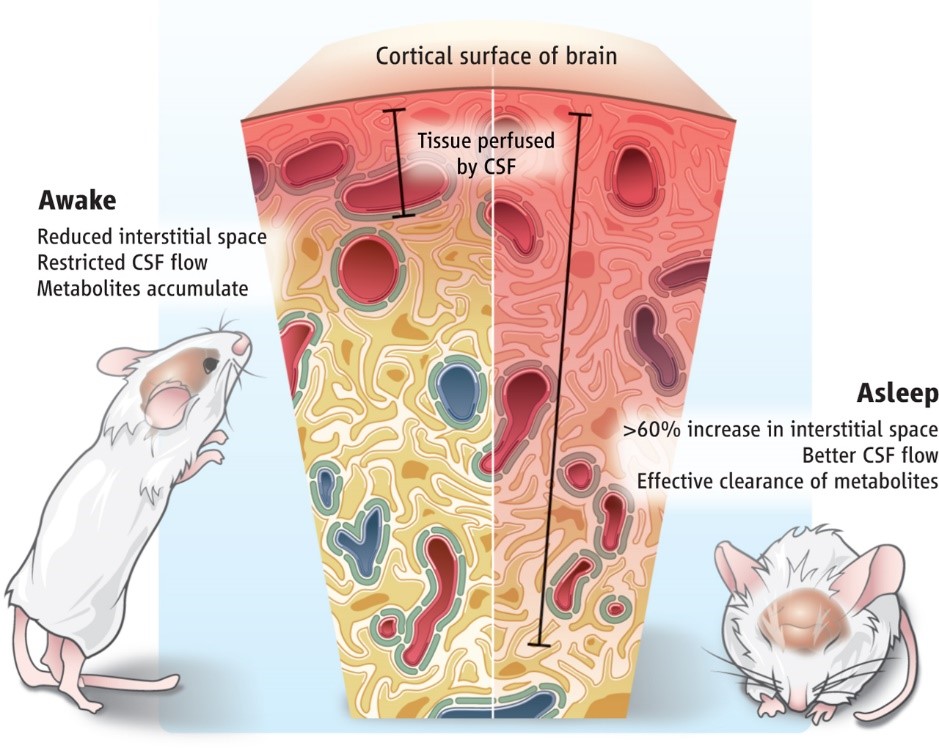
Parkinson’s disease (PD) is the second most prevalent neurodegenerative disease in the world, and among its most common symptoms is sleep disruption. Due to the glymphatic system’s role in removing alpha-synuclein and other substances related to PD pathogenesis, glymphatic dysfunction has been established as a risk factor for PD. Though sleep disturbance is often a symptom of PD, its role in increasing glymphatic clearance has led some researchers to believe that sleep disturbance could also be a risk factor for PD. This review will examine the scientific literature that suggests links between sleep disruption, PD pathology, or glymphatic dysfunction, as well as address some of the limitations in affirming such relationships. According to current research, sleep disruption is a common nonmotor symptom of PD but can also lead to reduced glymphatic function, which in turn reduces alpha-synuclein clearance and advances PD pathogenesis. However, PD development could also impair glymphatic clearance by depolarizing AQP4 channels or reducing sleep duration and quality.
Show more
Read Article PDF
Cite
Research Article Open Access
Research on the application of microRNA in hepatocellular carcinoma
The digestive tract frequently develops the malignant tumor known as hepatocellular carcinoma (HCC). A variety of liver diseases can develop into HCC and therefore a therapeutic approach is required. Extracellular vesicles known as exosomes are released by a number of cells and contain a wide range of active substances, including lipids, proteins, RNA, and DNA. microRNA is a type of RNA that accelerates apoptosis by participating in the regulation of downstream gene translation. Studies have shown that exosomal micrornas regulate HCC. Exosomal microRNAs have been proven in studies which regulate HCC. Exosomal micrornas may therefore be particular biomarkers for HCC metastases and early diagnosis as well as possible therapeutic targets. The utilization of exosomal micrornas in HCC is employed as biomarkers for early diagnosis and may trigger cancer cell apoptosis through the PI3K-AKT channel or MAPKs/ERK channel to produce therapeutic effects. Exosomal micrornas are briefly detailed in this paper.
Show more
Read Article PDF
Cite
Research Article Open Access
Modeling COVID-19 spreading — evidence from Canada
Article thumbnail
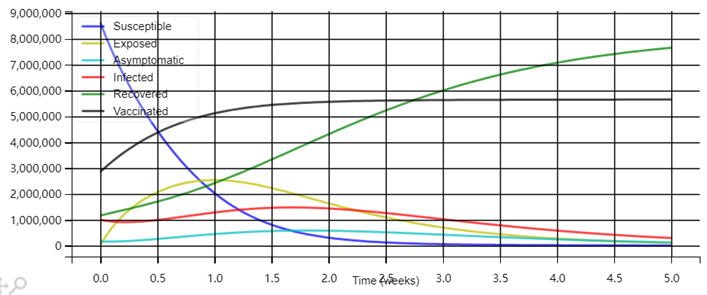
This study delves into the comprehensive examination of the COVID-19 pandemic that has been affecting the global community since late 2019. The repercussions have been ameliorated to some extent with the advent of effective vaccination campaigns, albeit the impact varies across regions and outbreaks. Beginning with an introduction to the fundamental epidemiological SIR (Susceptibility, Infection, Recovery) model, the research extrapolates it to reflect the complex dynamics of the COVID-19 scenario, employing data from Ontario, Canada, to ground the analysis in real-world observations. Several parameters and initial conditions inform the development of differential equations and ensuing line graphs within the scope of the extended VSEAIR (Vaccinated, Susceptible, Exposed, Asymptomatic Infected, Symptomatic Infected, and Recovered) model. The study scrutinizes the interplay of two pivotal aspects: the effectiveness of vaccination and the influence of governmental interventions. It offers a rigorous review of the trajectory of COVID-19 in Ontario, shedding light on potential strategies to optimize the response to the pandemic and contributing to evidence-based policymaking.
Show more
Read Article PDF
Cite
Research Article Open Access
The use of oncolytic virus to combat neuroblastoma
Article thumbnail
Neuroblastoma is a type of cancer that arises from immature nerve cells in the body and often appears in children. The current treatment of chemotherapy and radiotherapy is not a successful method of treatment due to its harm to the child’s body and its inability to effectively pass the blood-brain barrier (BBB) in the brain to effectively target the tumor. Recent studies into the field of oncolytic viruses have shown the possibility to target neuroblastoma cancer cells in the brain by engineering specific viruses to express NY-ESO-1, an antigen that is tumor-specific and commonly expressed in neuroblastoma. Research also showed a method to integrate protein A into the envelope protein of retroviruses which allows monoclonal antibodies’ Fc region to bind with the virus, allowing specificity to an antigen. This paper combines the ideas of previous studies to design a novel model of oncolytic virus treatment that specifically targets neuroblastoma. Since the oncolytic virus can be injected directly at the site and the virus is small enough to penetrate the BBB, the paper hypothesize that the model is a valid treatment for neuroblastoma in children.
Show more
Read Article PDF
Cite
Research Article Open Access
Guvacoline in betel nuts directly binds to and inhibits AChE activity, lowering ACh levels released by neurons
This paper investigates guvacoline, a compound found in betel nut, and its activity on acetylcholine level. Betel nuts are the chewable seeds of plant used in Chinese traditional medicine. It is commonly used all over southern Asia and the east African seaboard, being the fourth most commonly used drug in the world. It is known for being carcinogenic for throat cancer. Immediate symptoms of betel nut chewing indicate activation of the parasympathetic system, in which acetylcholine and acetylcholinesterase is involved. This paper predicts that guvacoline, found in areca nuts, increases free acetylcholine levels released from neurons by allosterically binding to acetylcholinesterase inhibiting it.
Show more
Read Article PDF
Cite