Articles in this Volume

Research Article Open Access
Spatio-Temporal Evolution Patterns and Driving Mechanisms of Population Distribution in Jiangsu Province, China during 2017–2023
Article thumbnail
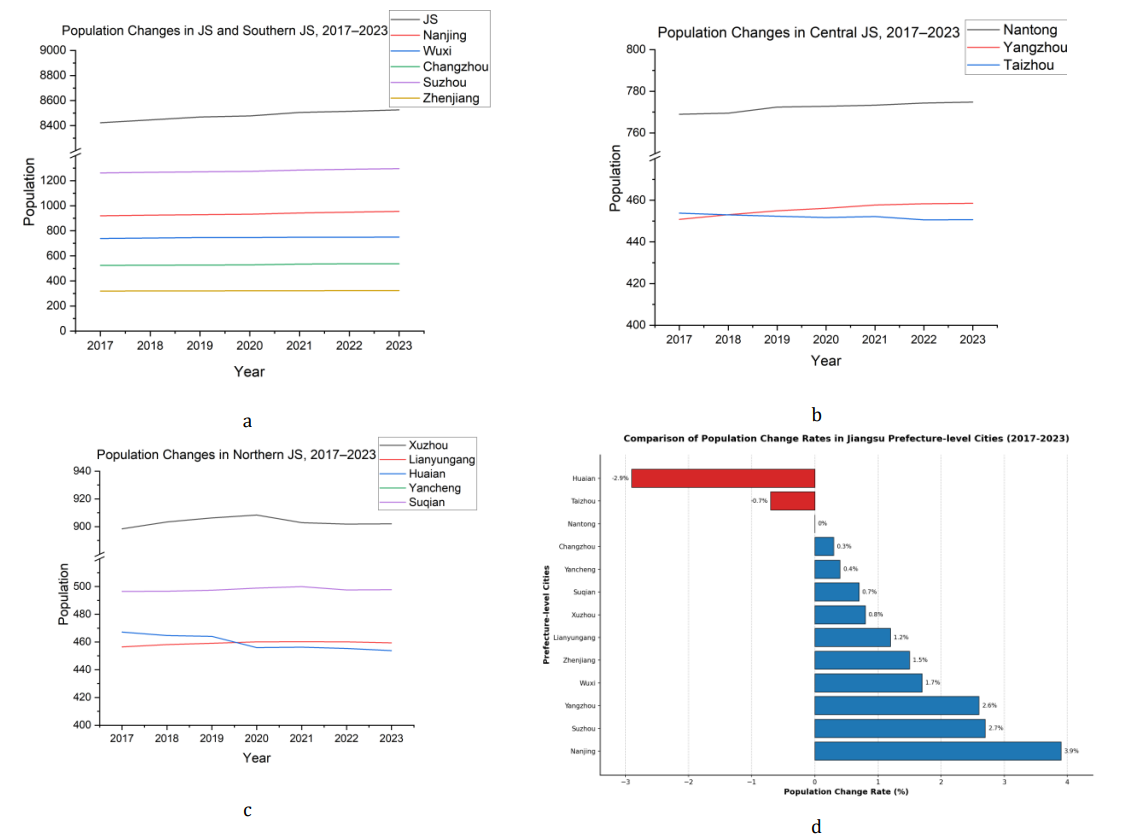
Research on the spatiotemporal evolution of regional populations is the core foundation for accurately forecasting population dynamics, analyzing migration patterns, and optimizing regional coordinated development layouts. The spatiotemporal patterns, evolution and driving mechanisms of population distribution in Jiangsu Province(JS) are systematically analyzed in this study, as well as its driving mechanisms, based on population distribution data from 2017 to 2023 across all prefecture-level cities in JS, China. Spatial visualization analysis, spatial autocorrelation analysis, population center of gravity analysis, and standard deviation ellipse modeling were used in this study. The following insights were obtained: (1) JS's total population maintains a sustained growth trend; (2) Spatially, the population exhibits a "high south, low north" gradient pattern; (3) The population center is located in Taizhou City and continues to shift toward the southern JS. Analysis indicates that economic development level is the dominant driver of population mobility. In addition, industrial structure upgrading is the key force behind spatial population differentiation, policy and planning guidance serve as crucial regulatory variables for population distribution adjustments, location and transportation conditions provide foundational support for population circulation, and the development of regional central cities acts as a supplementary catalyst for localized population agglomeration. A scientific basis is provided by this study for the coordinated development of population, economy, society, resources, and environment in JS, while valuable references are also offered for population research in similar region
Show more
Read Article PDF
Cite
Research Article Open Access
Campus Landscapes and Features: Factors Influencing Squirrels' Habitat Selection
Squirrels, especially the grey squirrels (Sciurus), are ubiquitous within the campus across North America. This widespread squirrel population suggests that campuses are able to provide highly ideal and suitable habitats for them rather than environment like forests. This literature review integrates multiple findings from ecological studies to identify the key features of campuses that attract squirrels. Several major factors emerge at the same time. First, the natural landscape, especially the density of green spaces, such as tree canopy, provides both shelter for survival. Moreover, levels of anthropogenic activities can also lead to stability of food resource and decreasing in predation death. Third, stable food source, including both natural fruits and human discarded food, play an important role in maintaining their energy level. All in all, the interaction of these factors, dense canopy covers, reliable food resources, and human activities, transforms the campuses into a stable and ideal habitat that supports and sustains a high squirrel population.
Show more
Read Article PDF
Cite
Research Article Open Access
Multi-source Data Integrated Prediction Method and Application for Fractured-Vuggy Carbonate Oil and Gas Reservoirs
Fracture-cavity carbonate oil and gas reservoirs are characterized by complex pore structures, strong heterogeneity, and significant uncertainties in seismic response. Traditional seismic prediction methods struggle to accurately characterize the distribution of fractures and cavities, hindering the exploration and development of deep carbonate oil and gas reservoirs. This paper proposes a comprehensive characterization and prediction method suitable for fracture-cavity carbonate reservoirs, integrating rock physics analysis, seismic attribute sensitivity assessment, post-stack seismic fracture-cavity characterization, and pre-stack fracture prediction techniques. In rock physics modeling, based on core and well logging data, the control laws of different diagenetic processes on elastic parameters are systematically analyzed, clarifying the correlation mechanism between fracture-cavity development and elastic parameters. For the comprehensive prediction method, seismic attribute sensitivity analysis is performed using drilling lithology combinations and well logging responses to select the most sensitive attributes. The characterization results of large faults and karst caves identified by seismic inversion are jointly analyzed with pre-stack fracture prediction results to establish a multi-scale phasic modeling workflow, constructing matrix and fracture models separately. This method is applied to the prediction of deep fracture-cavity carbonate reservoirs. The results show that this method can characterize the contact relationship between fractures and caverns, and the prediction results are consistent with the drilling results. This effectively improves the modeling accuracy and numerical simulation accuracy of complex carbonate reservoirs prediction, which provides the reliable support for the exploration and deployment of fracture-vuggy carbonate reservoirs.
Show more
Read Article PDF
Cite
Research Article Open Access
Application of Chiral Nanomaterials in Plant Disease Control: Mechanisms, Progress and Prospects
Chiral nanomaterials are novel functional materials formed by the intersection of chiral chemistry and nanomaterial science. They possess both the stereoselectivity unique to chiral structures and the size effect of nanomaterials, and can achieve precise targeting functions through specific recognition with chiral macromolecules in biological systems. Relying on the characteristics of high targeting and environmental friendliness, they provide new ideas and directions for the prevention and control of plant diseases. Chiral nanomaterials can significantly improve the dispersibility, stability and biological activity of drug-loading systems, and show important application potential in overcoming the functional defects of traditional pesticide formulations, improving the effective utilization rate of pesticides, reducing ecological and environmental risks and other aspects. Taking the control of soybean diseases by chiral nanomaterials as the starting point, this paper systematically elaborates the action mechanism of chiral nanomaterials in plant disease prevention and control, focuses on discussing their application potential and existing bottlenecks in the control of viral diseases of major crops such as soybeans, and hopes to provide certain theoretical references for the research and development of new green pesticides.
Show more
Read Article PDF
Cite
Research Article Open Access
Response and Prediction of Aedes Albopictus to Climate Change in China
Article thumbnail
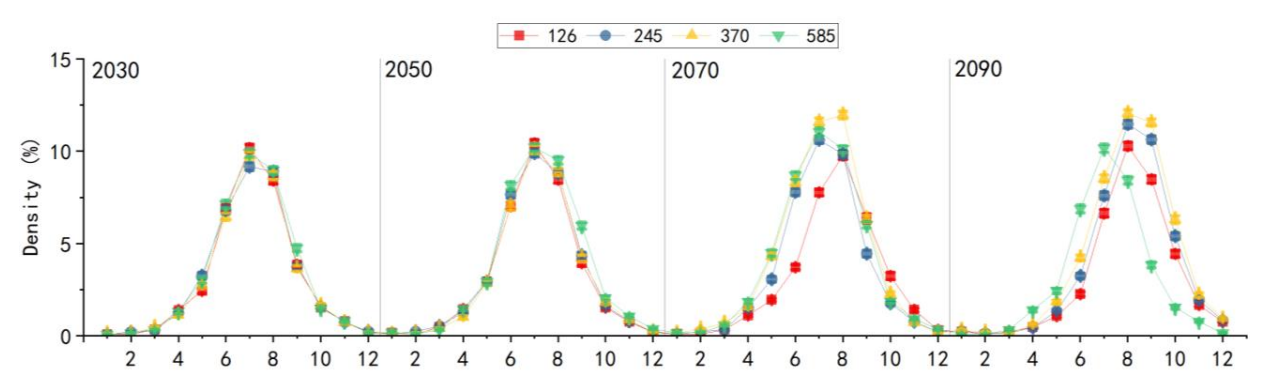
Aedes albopictus is the main transmitter of many mosquito-borne diseases such as dengue fever. It shows a significant global invasion trend, and its distribution has been expanding northward and westward driven by factors such as climate change. Most existing domestic studies focus on distribution prediction, lack density assessment, and often ignore extreme climate and seasonal dynamics of larvae. This study integrates 804 pieces of larval density data, combines historical and CMIP6 future climate scenarios, and constructs a random forest model to predict monthly density and distribution from 2030 to 2090. The results show that longitude and latitude are the main influencing factors, and the extreme minimum temperature of the current month is the most critical meteorological variable. In the middle and late future, the density peak will lag from July to August, suitable habitats will expand to the northwest and northeast, and the peak density will increase by 21.2% under high emission scenarios. This study reveals that spatial patterns and extreme climate jointly drive population dynamics, which can provide a scientific basis for early warning, prevention and control of mosquito-borne disease risks under the background of climate warming.
Show more
Read Article PDF
Cite
Research Article Open Access
Validation and Comparison of Sea Surface Temperature and Salinity Products in the Arctic Ocean
Article thumbnail
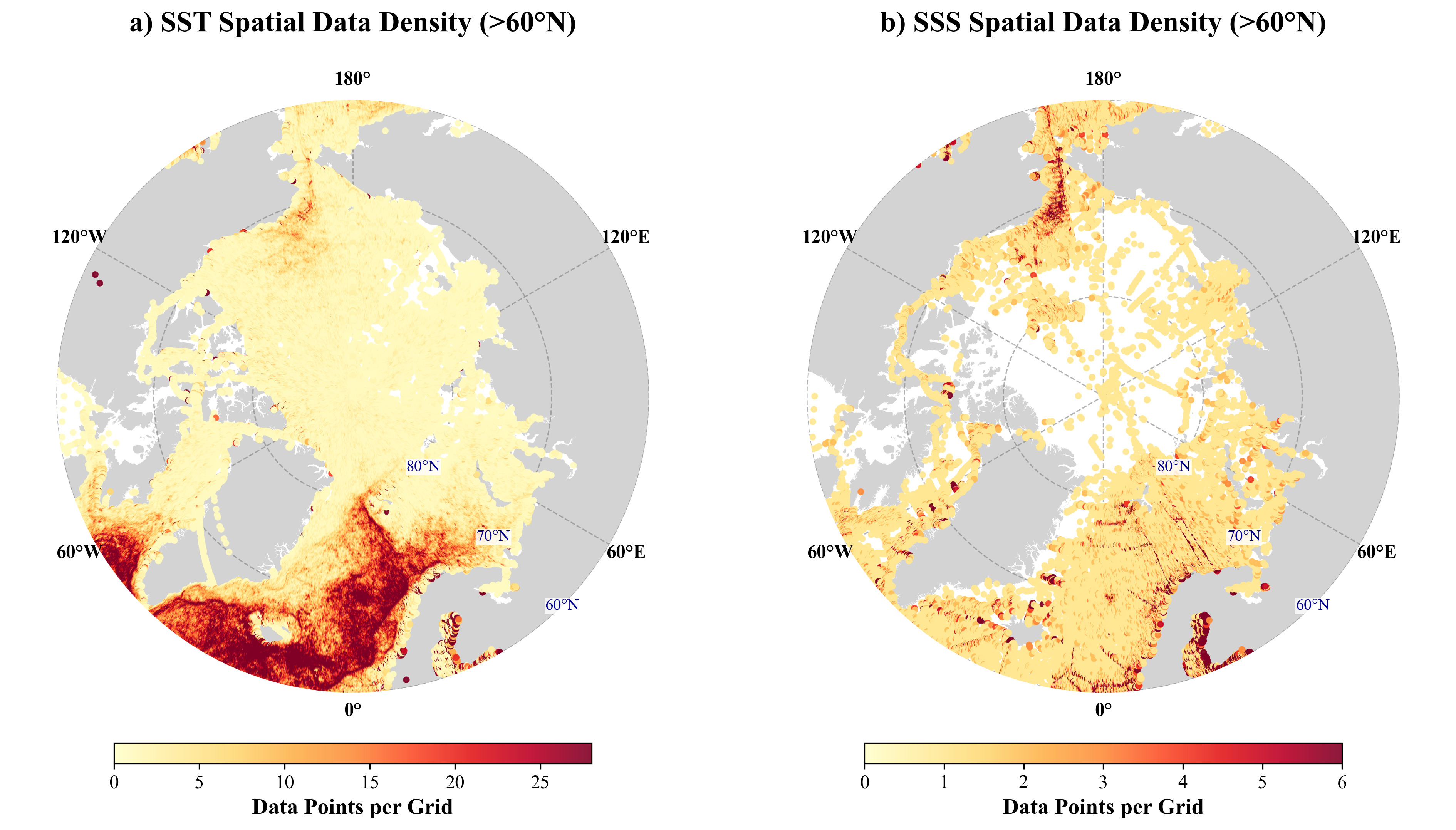
Accurate representation of Arctic sea surface temperature (SST) and sea surface salinity (SSS) is an important foundation for in-depth understanding of polar ocean dynamic processes and climate feedback mechanisms. However, systematic evaluations of existing data products are still scarce. This study constructs a unified daily-resolution evaluation framework, and takes the CMEMS in-situ observation dataset as the benchmark truth to systematically assess the thermohaline reconstruction capability of five ocean reanalysis products (G12V1, TOPAZ4, GREP_CGLO, GREP_GLOR and GREP_ORAS) and two satellite retrieval products (AVHRR and BEC) in the Arctic Ocean from 1993 to 2023. The results show that all products generally exhibit high reliability in reconstructing Arctic SST, but a systematic cold bias is widespread, with the most significant errors occurring in summer and multi-year ice zones. For SSS reconstruction, the errors of reanalysis products are most prominent in the estuarine regions of the Siberian shelf, reflecting the persistent inadequacy of current models in depicting the freshwater forcing of terrestrial runoff. The BEC satellite product demonstrates higher accuracy than all reanalysis products within its valid ice-free observation domain. Analysis of the impact of sea ice concentration reveals two distinct error response mechanisms: SST errors increase approximately linearly with rising sea ice concentration, while SSS errors show an inverted V-shaped nonlinear response, with error peaks concentrated in the marginal ice zone. The above findings provide a quantitative basis with physical interpretive significance for the selection of data products under different sea ice conditions, and point out key directions for the improvement of future Arctic ocean-sea ice models and the optimization of satellite retrieval algorithms.
Show more
Read Article PDF
Cite
Research Article Open Access
Seasonal Variation of the Direction of the Tropical Western Pacific Circulation and Its Climate Effects
Few places in the global ocean trade heat with the atmosphere as actively as the Tropical Western Pacific (TWP). When its currents shift with the seasons, the consequences travel. This paper pulls observational and modelling work from the literature into one synthesis on the directional and intensity changes of TWP circulation — and what they imply for climate variability. A few things come through. The monsoon's wind-stress curl decides where the North Equatorial Current (NEC) splits, and the splitting latitude — which moves through the year — controls how much water heads on into the Kuroshio versus the Mindanao Current. That same partition shapes the heat content and footprint of the Western Pacific Warm Pool, which feeds forward into ENSO onset and into how the cycle switches between phases. The atmosphere then responds in turn. Moisture transport adjusts, and observed precipitation anomalies across the Indo-Pacific line up with what the ocean is doing. No new model runs are reported here. The point made is simpler: seasonal TWP circulation is not background to climate prediction. It is one of the bridges linking western boundary variability to the climate response.
Show more
Read Article PDF
Cite
Research Article Open Access
Analysis of Tree Microstructure via Laser Diffraction for Climate Change Tracking
Article thumbnail
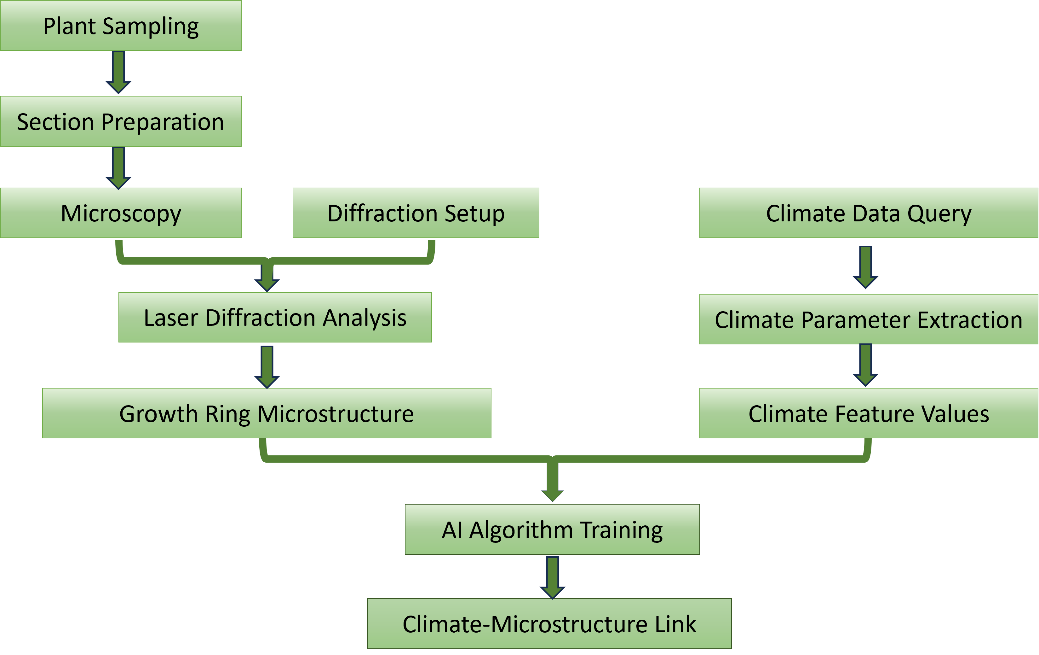
Climate change is a critical global issue. Traditional climate research often depends on costly equipment and complex systems, making it less accessible to the public. This study uses laser diffraction to quantitatively analyze historical tree growth and machine learning to explore links between climate change and tree development. Results show that tree microstructural size is positively correlated with annual precipitation and sunlight, with sunlight having a stronger effect. Lower annual average high and low temperatures were associated with faster growth, while higher average temperatures led to lush growth. Predictions for future tree growth and climate trends, based on historical data, have been partially verified. This study offers a practical method for analyzing tree microstructures and demonstrates that tree-based climate analysis is both accurate and applicable.
Show more
Read Article PDF
Cite
Research Article Open Access
A Review of the Co-evolutionary Processes in Deep Oil and Gas Systems
Single-factor models are insufficient to reasonably clarify deep oil and gas accumulation mechanisms in structurally complex geological zones; hydrocarbon generation, migration, trapping and preservation have close correlations with the interactive coupling of the lithosphere, fluid sphere and biosphere in actual geological processes. This paper summarizes the latest research progress of multi-sphere co-evolution theory in deep petroleum system research, and focuses on sorting out the systematic conceptual framework related to energy cascade, migration pathway optimization and regional structural geological response. By combing through the published research findings in this field, the paper analyzes the staged evolutionary rules of deep hydrocarbon accumulation, summarizes the spatial distribution differences of shale gas, tight gas and conventional deep oil and gas reservoirs, and clarifies several core controlling factors affecting hydrocarbon enrichment, including source rock inherent quality, reservoir physical properties, carrier system matching degree, effective preservation conditions and reasonable structural spatial position. The exploration data collected from the Tarim, Sichuan and Junggar basins can fully verify that multi-sphere coupling effects are able to effectively interpret the joint control effects of thermal dynamic conditions, migration pathway development, tectonic deformation transformation and later preservation environments on deep hydrocarbon differential enrichment. Deep petroleum systems will form obvious staged accumulation characteristics and orderly spatial distribution features under the combined action of underground energy supply, internal conduit systems and regional tectonic frameworks. The existing multi-sphere co-evolution theory has effectively improved the overall understanding of deep hydrocarbon enrichment laws; however, there are still many research gaps in quantitative parameter characterization, cross-basin geological comparison and multi-scale process coupled simulation that need to be further explored. This review can provide practical theoretical references for subsequent deep oil and gas theoretical research and actual exploration target optimization work.
Show more
Read Article PDF
Cite
Research Article Open Access
Research Advances in the Molecular Regulatory Mechanisms of Dimorphic Flower Development inViola philippica
Article thumbnail
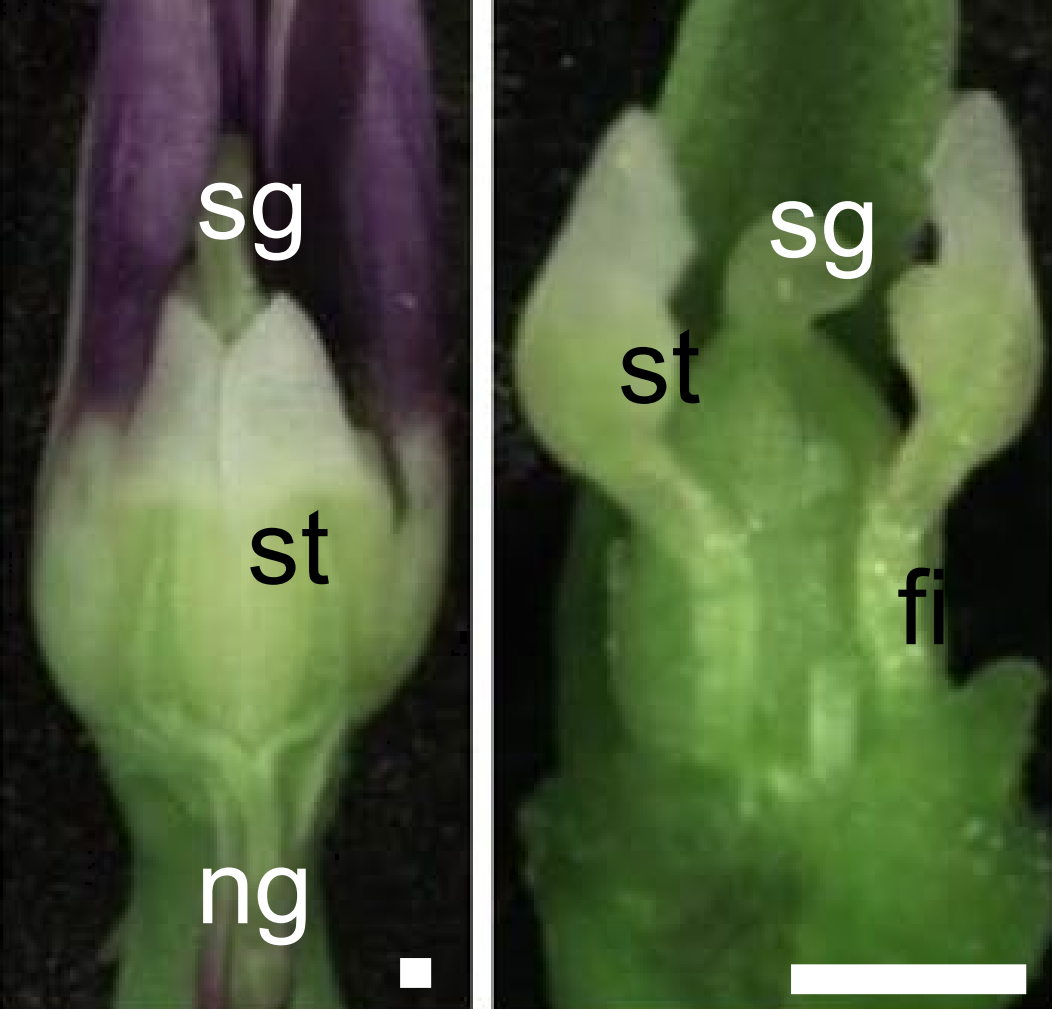
Dimorphic cleistogamy, in which a single plant produces both open chasmogamous flowers and closed cleistogamous flowers, provides a useful system for studying how environmental cues reshape floral development. Viola philippica is a suitable model for this question because it alternates seasonally between the two flower types and because photoperiod manipulation can induce or switch flower type under controlled conditions. In this species, floral dimorphism is expressed mainly through quantitative differences in corolla and stamen growth, organ number, and maturation state, rather than through classic homeotic changes in organ identity. The main developmental question therefore lies after organ initiation: how growth, maturation, and partial arrest are regulated in specific floral whorls. Available evidence links photoperiod signaling with hormone regulation, particularly gibberellin metabolism and signaling, and with reduced expression of floral B-function genes during cleistogamous development. Transcriptomic and small RNA studies in related Viola species also point to regulatory modules involving photoperiod integrators, hormone signaling components, and organ-specific transcriptional regulators. Functional evidence in V. philippica, however, remains limited. Here, we summarize current knowledge of morphological divergence, developmental timing, environmental and endogenous signal integration, and gene regulatory models for dimorphic flower development in V. philippica, and identify experimental directions needed to move from correlation to causal mechanism.
Show more
Read Article PDF
Cite