
Articles in this Volume

Research Article Open Access
Research on Artificial Aurora: Generation Mechanism, Technology and Application
Article thumbnail
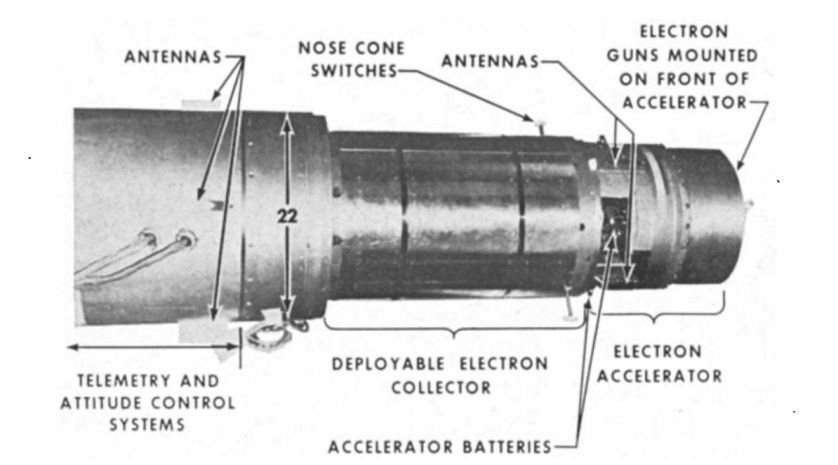
Natural auroras are luminous plasma phenomena produced by collisions between solar wind charged particles and Earth's magnetosphere, while artificial auroras refer to controllable luminous phenomena simulated by human plasma technology. This paper sorts out three mainstream artificial aurora generation technologies: ionospheric heating, satellite electron beam injection and near-space plasma release. The study adopts case analysis and comparative analysis to compare the luminous scale, energy consumption and operation difficulty of the three technical routes, and systematically analyzes the scientific and engineering application values of artificial auroras, as well as potential ionospheric disturbance risks. The results show that ionospheric high-frequency heating is the most mature scheme for large-area artificial aurora with low energy cost but limited brightness; electron beam injection can form high-brightness aurora but has high launch cost; plasma balloon technology is low-cost and easy to implement yet only generates short-lived small-scale aurora. This research supplements horizontal comparative data of multiple artificial aurora technologies and provides reference for low-interference artificial aurora experiment design.
Show more
Read Article PDF
Cite
Research Article Open Access
Quantum Communication of Images with 3-State Protocols
Article thumbnail
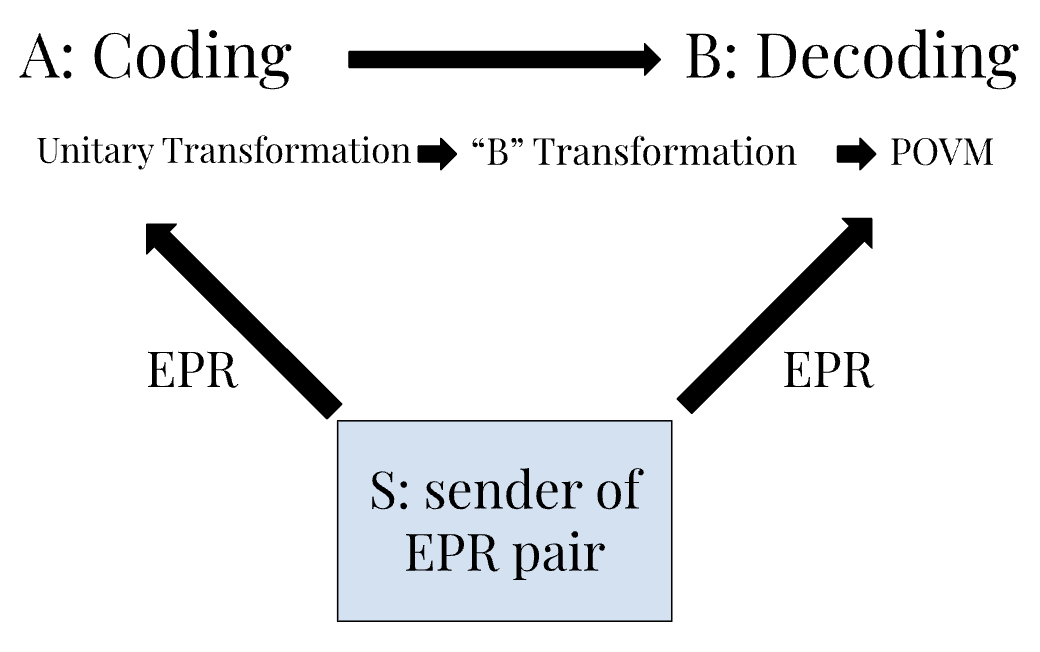
This paper investigates two distinct protocols and one combined protocol for image teleportation based on three quantum states. It begins by reviewing key linear algebraic concepts and formalized quantum states in Hilbert space. Building on this, it analyzes a variation of dense coding using non-maximally entangled (polluted) states. It demonstrates that while full distinguishability of four Bell-like states is lost under entanglement degradation, it is possible to design a restricted set of operations that maximizes distinguishability; it designs a new protocol of superdense coding based on three Bell states. In the next section of the article, it introduces a three-level energy system and designs a quantum teleportation protocol based on the three states. It also introduces the HSV color model, which features three parameters that are used to represent a color. With such a protocol, it can teleport a color with high confidence and security. Both of these protocols can be used for image teleportation technologies. Finally, it integrates the superdense coding protocol and the quantum teleportation protocol to create a highly theoretical image teleportation protocol that can perform filtering, encoding and decoding, and emergency destruction on colored images with enhanced security. An additional participant is added, so that the quantum state will be modified during the teleportation process by this new participant. All of these protocols can be applied in future image teleportation techniques.
Show more
Read Article PDF
Cite