Articles in this Volume

Research Article Open Access
Can Weekend Catch-Up Sleep Repair Health Damage Caused by Weekday Circadian Disruption
Many people, such as students and office workers, sleep little on weekdays but sleep much longer on weekends. People believe extra weekend sleep can fully repair the damage caused by irregular daily sleep and broken body clocks, which is called social jetlag. This paper uses basic sleep science and simple experiment results to check if this idea is true. Human sleep has two control systems: sleep pressure and the 24-hour body clock. Weekend sleep can ease tiredness from short weekday sleep for a short time by making deep sleep longer. However, if people wake up over two hours later on weekends, their body clocks will become more disordered. Three natural biological limits stop weekend sleep from fixing long-term clock damage. In short, sleeping in on weekends cannot fully heal health problems from messy weekday sleep. Keeping a steady sleep time every day is the better choice. This paper may give easy sleep tips for students and adults and help protect their body clocks.
Show more
Read Article PDF
Cite
Research Article Open Access
Breaking Sprouters: Proximity to Primary Forest Helps Displace Sprouter Dominance During Natural Regeneration of Degraded Neotropical Sites
Neotropical forests are experiencing increased conversion to agriculture through deforestation, which reduces biodiversity and ecosystem services in these sites. Compared to active restoration, natural regeneration is a more cost-effective approach to restoring abandoned agricultural sites when damage is not extremely significant. However, this passive process can be stagnated, limiting the speed of restoration and impairing the recovery of biodiversity and ecosystem services. Sprouters, individuals that regrow from a stump or roots, may be one reason, as they rapidly resprout and dominate the limited resources following a disturbance. However, literature that makes direct or quantified links between sprouters and stagnation in succession, specifically a decrease in establishment of seeds of other species, is absent. Knowledge on the relative roles of wind and animal dispersal vectors in breaking this dominance is also limited. I conducted a literature review on life history traits of sprouters and seeds, competition between species of different reproductive strategies, animal versus wind dispersal vectors, and the role of proximity in dispersal. I found that sprouters achieve dominance through self-replacement and resource monopolisation; small seeds cannot overcome this barrier while larger seeds likely can, since their seedlings' greater height and shade tolerance allows them to compete against sprouter dominance. Since animal dispersers carrying these large seeds only visit partially recovered sites, proximity to intact forest becomes pivotal, as it controls seed rain supply and thus initial vegetation development through wind-dispersed seeds that attract animal dispersers. Effective natural regeneration would therefore build out from existing intact forests.
Show more
Read Article PDF
Cite
Research Article Open Access
Bioremediation as a Sustainable Solution for Plastic Pollution under ESG Framework
Plastic pollution has emerged as a critical global environmental challenge, threatening marine biodiversity and human health through the generation of microplastics. Conventional waste management methods, such as landfilling and incineration, often entail high greenhouse gas emissions and land-use limitations.Consequently, sustainable alternatives are urgently needed. This paper investigates whether bioremediation-specifically the use of enzymes and microorganisms to degrade plastics-offers a viable solution within the Environmental, Social, and Governance (ESG) framework. Through a comparative analysis of traditional waste treatments and bioremediation technologies, supplemented by case studies of recent scientific and industrial applications, this study evaluates the sustainability of biological approaches. The findings suggest that while bioremediation holds significant potential to mitigate plastic waste and support the circular economy by reducing environmental impact, it is constrained by technological limitations, slow degradation rates, and economic costs. Therefore, bioremediation should be viewed not as a panacea, but as a complementary measure to reduction and recycling strategies. Its future application is promising but requires careful integration within the ESG framework.
Show more
Read Article PDF
Cite
Research Article Open Access
Beneficial Effects of Parasites on Their Hosts
It is widely known that parasites can compromise a host's health, survival, and reproductive success. However, recent research indicates that parasites can also confer benefits upon their hosts. Centered on the theory of the parasitism-theory continuum, this paper examines three pathways through which parasites affect hosts: modulating the immune system, enhancing disease resistance, and sequestering unwanted nutrients. Furthermore, the paper examines the experimental dependencies inherent in parasitological research and the dynamic nature of host–parasite interactions, providing an objective assessment of these potential benefits and their implications for future research. By systematically discussing the beneficial impacts of parasites across three dimensions - immune system function, disease defense, and resource allocation - and analyzing the mechanisms by which they alleviate inflammatory diseases, detoxify the host, and regulate resource distribution, this paper aims to foster a dialectical understanding of mutually beneficial parasitic relationships and provide a theoretical basis for the development and utilization of parasitic biological resources.
Show more
Read Article PDF
Cite
Research Article Open Access
Monoclonal Antibody-Based Cancer Therapy: From Mechanistic Insights to Clinical Practice
Monoclonal antibodies (mAbs) are a cornerstone of cancer therapy. They offer high target specificity and diverse cytotoxic mechanisms, which render them superior to many conventional cytotoxic treatments. This review examines therapeutic mAbs from two aspects. First, their mechanisms of action are analysed, including direct target modulation (signaling inhibition and ADC payload delivery), Fc‑mediated effector functions (ADCP, ADCC, and CDC), and immune checkpoint blockade (CTLA-4, PD-1/PD-L1, LAG-3, and TIM-3 pathways). In addition, engineering strategies that potentiate these effects are considered as well, such as Fc modification and optimised linker‑payload design for antibody-drug conjugates. Second, the clinical landscape of approved mAbs is reviewed. Their remarkable success in hematologic malignancies (anti-CD20, anti-CD33, anti-CD38) are compared with the greater challenges in solid tumors, where tumour heterogeneity, immunosuppressive microenvironments and primary resistance frequently limit therapeutic efficacy. In solid tumours, biomarker-driven agents (anti-HER2, anti-EGFR) and immune checkpoint inhibitors are central. Immune-related adverse events also represent an important safety concern for checkpoint-blocking antibodies. It is critical to understand these mechanisms and clinical outcomes before optimizing current therapies and guiding next-generation antibody development, including novel ADCs and bispecific antibodies.
Show more
Read Article PDF
Cite
Research Article Open Access
D ouble- L ayer S emantic D isambiguation of P ediatric M edical S poken A bbreviations B ased on ' Lung' and ' Allergy' E xamples
Article thumbnail
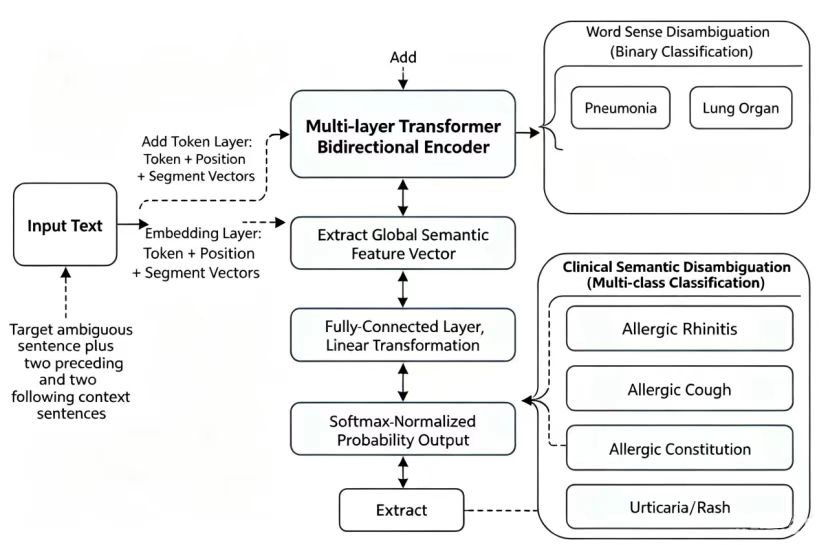
Traditional abbreviation disambiguation only maps abbreviations to their full forms and cannot identify different clinical meanings of the same full form in pediatric colloquial language. This paper constructs a dual-layer disambiguation framework for word meaning and clinical semantics, taking "lung" and "allergy" as examples, fine-tunes Bidirectional Encoder Representations from Transformers (BERT) based on the IMCS‑V2 corpus, and compares the zero-shot performance of DeepSeek and Tongyi Qianwen. Experiments show that the disambiguation accuracy of 'lung' is 95.0%, while the identification of the 'allergy' phenotype is only 76.6%. The zero-shot performance of large models is worse than fine-tuned BERT, and window ablation determines that the optimal setting is to consider the previous and next sentences. The results show that lightweight BERT fine-tuning outperforms zero-shot inference with large models, traditional frameworks underestimate the difficulty of this task, and this paper provides a new hierarchical evaluation benchmark for pediatric medical dialogue Natural Language Processing.
Show more
Read Article PDF
Cite
Research Article Open Access
An Automated Multi-criteria Computational Workflow for dsRNA Design and Prioritization in Aspergillus flavus
Efficient double-stranded RNA (dsRNA) design is a prerequisite for RNA interference (RNAi)-based control of fungal pathogens, yet a usable design has to satisfy several sequence requirements at once, and comparing candidates by hand is slow, inconsistent between researchers, and hard to audit. We developed an automated computational workflow that spans candidate generation, multi-criteria sequence evaluation, weighted composite scoring, and experimental preparation. Taking Aspergillus flavus, an aflatoxin-producing phytopathogen, as the case study, the workflow produced more than 100 000 dsRNA candidates and ranked them on seven biologically relevant metrics: GC content, sequence complexity, repeat sequence abundance, inverted repeat content, predicted RNA secondary structure stability, estimated effective siRNA abundance following Dicer processing, and potential off-target effects. The highest-scoring candidate reached a composite score of 91.8, and the workflow returned the matching PCR primers and T7 transcription templates alongside it. The framework offers a systematic and reproducible way to prioritize dsRNA candidates for RNAi-based pathogen control before any experimental validation is attempted.
Show more
Read Article PDF
Cite
Research Article Open Access
Macrostomum Lignano Quiescent Stem Cells (QNs) Orchestrate Distinct Mechanisms Following Gamma Ray Exposure
Article thumbnail
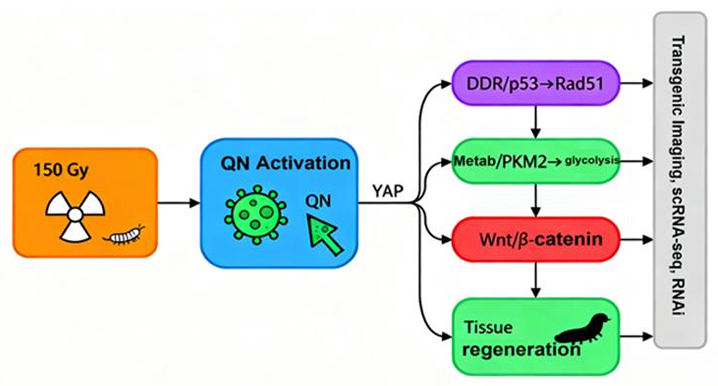
This research proposal aims to investigate the marine flatworm Macrostomum lignano, an ocean flatworm, which has a particularly powerful regenerative capacity, mainly relying on a cell called resting stem cells (QNs) in the body to maintain the balance of the body's tissues, and can also repair damage in the event of injury. Gamma rays can cause great harm to cells, such as destroying the double-stranded structure of DNA, causing oxidative stress reactions, and disrupting the cell cycle, which can seriously affect the function of stem cells. And how to coordinate the regeneration process. We plan to irradiate worms with 150 Gy gamma rays, which is expected to cause sufficient damage while preserving QN viability. We use transgenic report lines, single-cell RNA sequencing technology, HCR RNA-FISH technology, RNA interference technology, and long-term live imaging to observe the activation process of QN cells after exposure, and find out the key genes and signalling pathways that regulate QN cells, such as the DDR signal pathway, the Hippo/YAP signalling pathway, and the Wnt signalling pathway. How radiation works, such as whether they regulate the accuracy of DNA repair, whether they change the way they metabolize, or if they secrete some signalling molecules to help restore recovery. This study could help us better understand the role of QN cells in responding to radiation damage, and also give us more insight into the repair mechanisms of stem cell-mediated in other organisms with regenerative abilities.
Show more
Read Article PDF
Cite
Research Article Open Access
Marine Heatwaves Associated with Hypoxia in Coastal Bivalve Aquaculture and Management Implications
Marine heatwaves alter coastal dissolved oxygen dynamics and exacerbate hypoxia risk for farmed bivalves, yet causal relationships between warming and low oxygen remain poorly differentiated in aquaculture assessments. This paper establishes a three-category attribution framework to distinguish hypoxia directly induced by marine heatwaves, background hypoxia amplified during thermal anomalies, and merely coincident high-temperature and low-oxygen events. Compiled physiological and experimental evidence demonstrates that combined heat and hypoxia impose species-specific impacts on feeding, metabolism, antioxidant defence and survival, with nocturnal oxygen minima driving growth losses hidden by daily mean dissolved oxygen values. Molecular stress markers reflect cellular defence activation but cannot reliably predict harvest biomass or economic outcomes. Site characteristics, organismal traits and exposure recurrence modify stress responses, so universal oxygen thresholds are unsuitable for farm risk management. Integrated high-frequency monitoring and targeted aeration can mitigate oxygen-related damage, though thermal injury persists. This synthesis highlights the necessity of site-specific adaptive strategies to improve climate resilience of coastal bivalve aquaculture.
Show more
Read Article PDF
Cite
Research Article Open Access
The Biological Mechanisms Behind Northern Elephant Seals' Extreme Sleep Deprivation During Long Marine Voyages
Article thumbnail
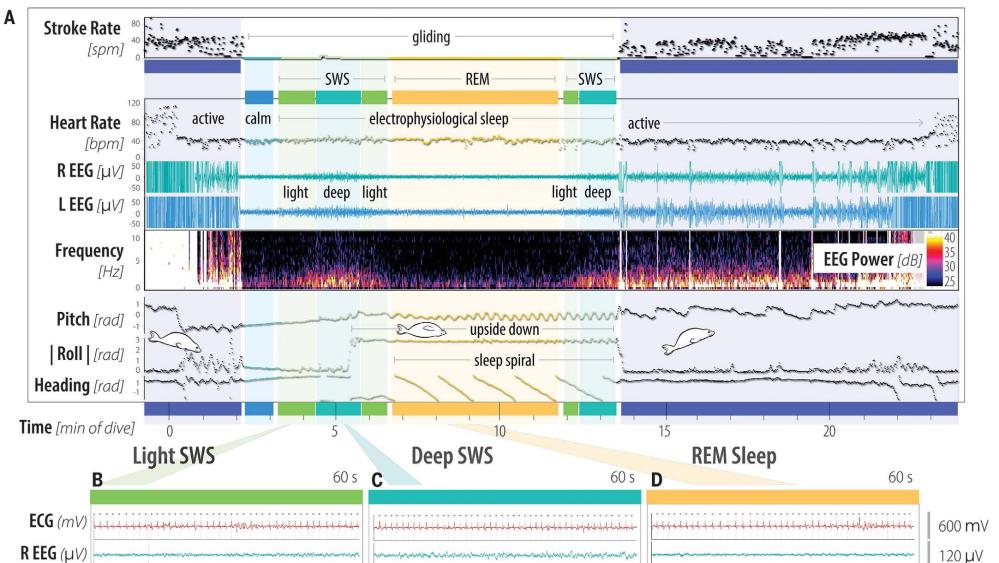
Northern elephant seals (Mirounga angustirostris), as lung-breathing mammals, have to voyage in the ocean while sleeping only about two hours per day. This creates an apparent conflict between their physiological needs of sleep and the ecological demands of feeding and surviving. This review synthesizes behavioral, physiological, cellular and comparative evidence to evaluate how such extreme sleep restriction may be tolerated for months. Direct electroencephalographic recordings show that elephant seals place short episodes of bilateral slow-wave sleep and rapid-eye-movement sleep within deep drift dives, preserving both major sleep states within a highly compressed sleep budget. Recent studies further suggest that sleep time can be reallocated according to elephant seals' current body conditions. At the cellular level, their endothelial cells can rapidly activate hypoxia-response and glutathione pathways, while comparative studies of hooded seals reveal an unusual neuronal hypoxia tolerance that may be shared as well in the elephant seals. Together, these findings support a layered-resilience model that elephant seals likely have used and provide a new perspective people can take when considering the lives of marine mammals.
Show more
Read Article PDF
Cite