Articles in this Volume

Research Article Open Access
Engineered Exosomes for Targeted Protein Delivery in Rheumatoid Arthritis
Rheumatoid arthritis is a sysrenmic autoimmune disease which mainly affects joints that affects millions of patients in the world. Protein therapeutic is one of the important treatment against this disease. In order to perform precised protien delivery, engineered exosomes are significant tools. This review includes the pathophysiology of rheumatoid arthritis and therapeutic targets, introduction of exosomes, strategies of engineering exosomes and the evaluation of engineered exosome-based protein drug delivery systems. The research shows that exosome is a good material for target protein delivery due to its accuracy and biocompatibility. The efficiency is significantly increased comparing with other delivery system. However, there are still some limitation for this method, such as high cost and low cargo loading efficiency. This review calls for the medical industry's attention on this kind of new technique to improve the engineeringf strategies and reduce the costs, in order to put this method in use for more patients.
Show more
Read Article PDF
Cite
Research Article Open Access
Design and Limitations of Tumor Microenvironment-Responsive Nanocarriers for Targeted Drug Delivery
Cancer is still a major cause of death worldwide, and the old ways of treating cancer have defects, such as systemic toxicity, quick drug resistance, and poor targeting. Given the favorable features of the tumour microenvironment, conventional therapy has shown limited efficacy, thus, new nanocarrier-based drug delivery systems are needed. This review will introduce the necessary biological and physical characteristics of the tumour microenvironment and present current responsive nanoparticle platforms, such as lipid-based, polymer-based, inorganic, biological, and hybrid systems, associated with their construction patterns, therapeutic effects, and preclinical progress. Preclinical data show that these nanocarriers improve tumour accumulation and realise controlled, localised drug release. However, clinical translation still faces many problems, such as poor manufacturing feasibility, unstable circulation, extended-term biosafety risks, tumour heterogeneity, and a lack of standardised evaluation systems. Another reason is that the preclinical model may not be in the same environment as a person. The following are some promising directions for this paper: multimodal analysis, optimisation with additional data from artificial intelligence (AI), and descendant models of patients. The above ways can help to solve the problems caused by translation and provide new directions for the development of cancer therapy.
Show more
Read Article PDF
Cite
Research Article Open Access
Reversing Skin Aging Through Partial Epigenetic Reprogramming
Skin aging is a complicated biological process that is associated with structural and functional progressive degradation; one of its core driving mechanisms is the disruption of epigenetic regulation. Among potential anti-aging intervention strategies, partial reprogramming has attracted widespread attention recently. It aims to reverse the epigenetic state of senescent cells towards a younger direction while not eliminating each specialized identity of cells. This paper systematically illustrates the research progress of epigenetic partial reprogramming in rejuvenating skin aging. Starting from the mechanism connection between epigenetic erosion and cellular identity loss, it analyses the experimental evidence in animal models, in human fibroblasts, and in vitro skin tissues, while emphasizing the crucial obstacles when translating this technology to clinical use. Current findings indicate that partial reprogramming is capable of reversing aging-related epigenetic markers while, to some extent, recovering some cellular functions, such as collagen synthesis, migration ability, and extracellular matrix remodeling, etc. However, all this evidence stems from preclinical investigation, yet has not been fully verified in terms of the safety, persistence, and functional significance of reprogramming effects in intact human skin. This review concludes that partial reprogramming has potential as an experimental strategy, but whether it could be developed into a real clinically feasible intervention depends on whether future investigation could gain substantive breakthroughs in terms of precisely controlling the intensity of reprogramming, maintaining cell identity, ensuring long-term safety, and achieving tissue-specific delivery..
Show more
Read Article PDF
Cite
Research Article Open Access
Per-Structure ROI-Weighted Loss Improves DVH Accuracy in Deep Learning-Based Radiotherapy Dose Prediction on the OpenKBP Benchmark
Article thumbnail
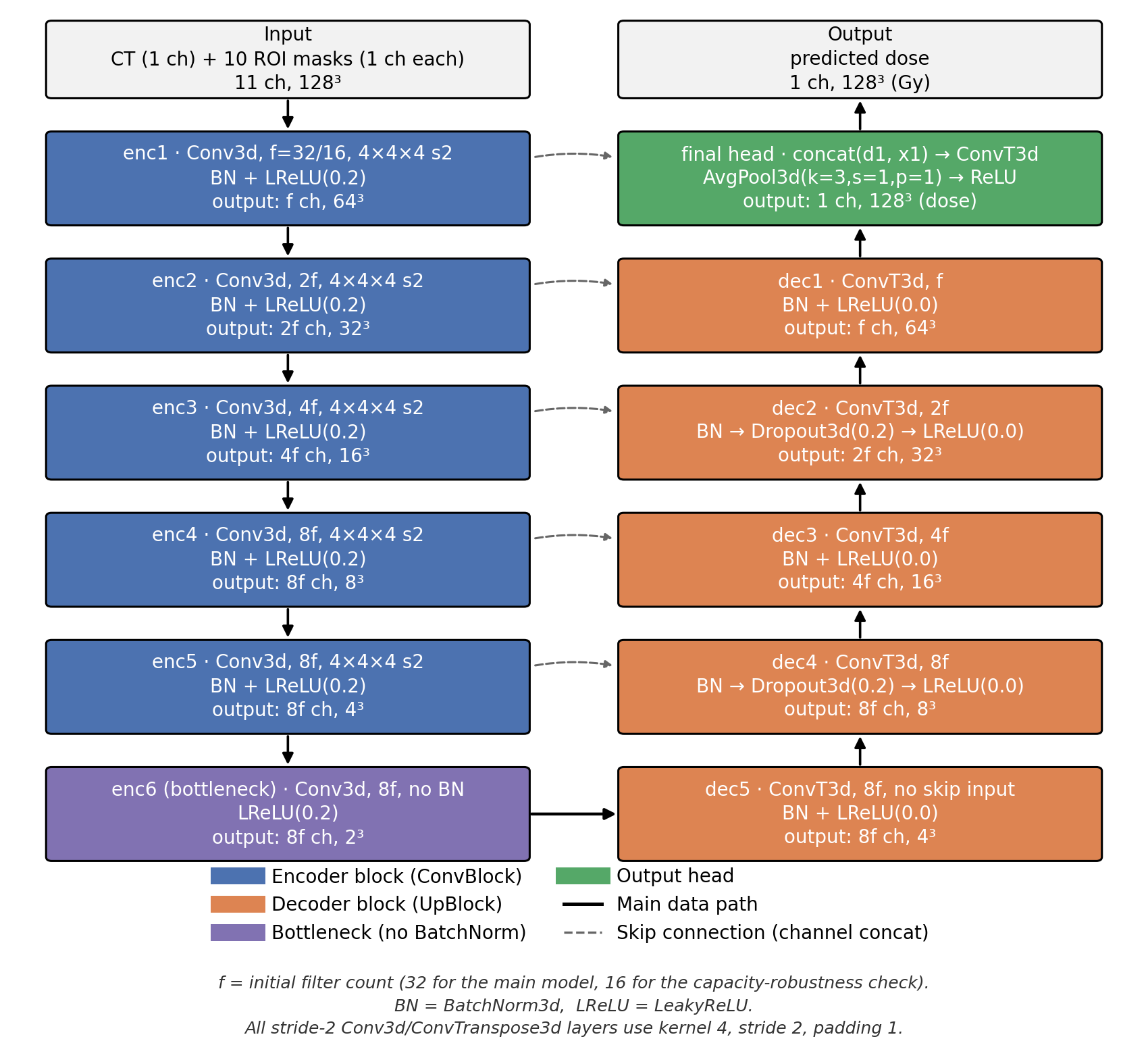
Radiotherapy dose prediction networks usually train with a single, spatially uniform loss such as voxel-wise mean absolute error (MAE), which weights errors in small, clinically critical structures the same as errors in unremarkable tissue. This study uses the official OpenKBP benchmark to test whether adding a per-structure, region-of-interest (ROI)-weighted term to a standard masked-MAE loss improves dose-volume histogram (DVH) accuracy without degrading dose accuracy. A 3-D U-Net dose predictor was reimplemented in PyTorch on the official OpenKBP data split (200/40/100 patients). Nine training runs varied loss (MAE baseline, MAE + ROI-weighted, ROI-only ablation), filter count, λ, and seed. The primary analysis compared the baseline and proposed losses at the main model capacity on the held-out 100-patient test set with a two-sided Wilcoxon signed-rank test and the Hodges–Lehmann estimator, under a prespecified plan. The proposed loss reduced dvh_error for 99/100 test patients (mean 3.58 → 2.44 Gy; Hodges–Lehmann −1.13 Gy, 95% CI [−1.23, −1.04]; p = 4.5×10⁻¹⁸), supporting the primary hypothesis. dose_error also decreased (3.57 → 3.36 Gy) rather than being traded off. The effect held in direction under an independent seed and a smaller capacity, and an ablation confirmed the global MAE term remains necessary: removing it left dose_error far worse while leaving dvh_error unimproved. A simple, architecture-agnostic per-structure ROI-weighted term, added to rather than substituted for a standard masked-MAE loss, produced a robust, directionally consistent improvement in DVH accuracy on the OpenKBP benchmark without an offsetting dose-accuracy cost.
Show more
Read Article PDF
Cite
Research Article Open Access
Mechanisms and Biomedical Applications of Sustained- and Controlled-Release Drug Delivery Systems
Sustained‑release and controlled‑release drug carriers represent valuable pharmaceutical tools that help boost treatment outcomes while simplifying clinical medication schemes. Unlike conventional immediate‑release tablets and capsules, these systems can moderate or adjust how active pharmaceutical ingredients get released inside organisms. Such features extend therapeutic action durations and lower daily dosing frequencies. This review sorts out core definitions and distinguishing traits of sustained‑release and controlled‑release dosage forms, alongside common product categories and their underlying release mechanisms. Three widely adopted technical solutions are discussed: matrix‑type, membrane‑coated and osmotic‑pump tablet systems. The text addresses their clinical strengths including stable in‑vivo drug levels, reduced dosing frequency and enhanced patient adherence. Real‑world clinical applications covering cardiovascular illnesses, metabolic syndromes and pain management are also summarized. Collectively, sustained‑release and controlled‑release technologies offer feasible pathways to optimize drug delivery and therapeutic performance. Further research into novel excipient materials and delivery techniques is likely to achieve more accurate drug release behaviours and expand the scope of clinical use for such formulations.
Show more
Read Article PDF
Cite
Research Article Open Access
Somatic Gene‑Editing Potential and Engineering Barriers for Chronic Cardiovascular Disease Management
Cardiovascular diseases (CVDs) are major chronic health conditions, and some patients require long-term medication to control disease progression and associated risks. The need for more durable treatment has therefore significantly increased, leading to importance to find a more long-lasting treatment strategy. This paper examines the potential of somatic gene editing in the foreseeable future, while evaluating the engineering challenges and ethical limitations. Current research demonstrates the potential of somatic gene editing in vivo to modify disease-associated genetic alterations, providing evidence that gene editing could contribute to more durable CVD treatment. However, off-target effects remain the main safety issue, as an accidental change to unintended DNA regions may lead to lethal biological consequences. In addition, safely and efficiently delivering editing agents is an engineering challenge, as precision and capacity have to be both guaranteed. Furthermore, there are ethical issues regarding genetic diversity and social inequalities due to a feasibility of low accessibility to gene editing therapy. Overall, somatic gene editing shows considerable potential to shift the management of selected chronic CVDs towards more durable, mechanism-based treatment, but significant engineering, safety and ethical barriers must be addressed before it can become a reliable alternative to long-term medication.
Show more
Read Article PDF
Cite
Research Article Open Access
Multi-target Pharmacological Effects and Bioavailability Enhancement Strategies of Berberine
Berberine is a naturally occurring isoquinoline alkaloid with various pharmacological activities and putative therapeutic uses. Recent research has shown its anti-inflammatory and antioxidant, metabolic regulatory, anticancer, neuroprotective, and cardiovascular protective actions by modulating diverse molecular targets and signaling pathways. Many in vivo effects of berberine may also be partially mediated by gut-derived metabolites rather than parent berberine alone. The therapeutic use of berberine is restricted because of its poor oral bioavailability due to its low solubility and membrane permeability, P-glycoprotein-mediated (P-gp) intestinal efflux, high extent of intestinal and hepatic metabolism, and complex tissue distribution. Several strategies have been explored for overcoming limitations of berberine, such as structural modification, nanoparticle-based delivery systems, novel physical formulation, and absorption enhancement. These investigations have shown potential for enhancing berberine delivery, absorption, or systemic exposure, though many have been limited to preclinical data. Further research is curbed by its complexity in multi-target mechanism and its challenges of clinical translation and pharmacokinetic variability. Future research should coordinate mechanistic exploration, pharmaceutical formulation, pharmacokinetic assessment, and human clinical studies to reveal a link between improved bioavailability and therapeutic actions. Overall, resolving these limitations may be helpful to develop better efficacy and more reliable therapeutic uses of berberine.
Show more
Read Article PDF
Cite
Research Article Open Access
Precision Cell Fate Engineering with CRISPR Epigenetic Editing for Regeneration and Off-the-Shelf Immunotherapy
Induced pluripotent stem cell (iPSC)-based regenerative medicine and cellular immunotherapy are severely hindered by heterogeneous cell phenotypes, unstable cellular functions and inconsistent large-scale manufacturing. Different from traditional CRISPR/Cas9 genome editing that induces DNA double-strand breaks and genomic risks, dCas9-mediated epigenetic editing offers a way to modulate gene regulation through targeted changes in DNA methylation and chromatin state without intentionally cutting the DNA. This review systematically summarizes core research progress and key findings in this field: targeted epigenetic modification mediated by CRISPRoff can establish persistent transcriptional memory during iPSC differentiation, supporting more stable control of cell state; IL1RN-targeted methylation editing of the promoter directly links epigenetic regulation to altered myeloid cell immune functions, providing evidence for a causal link between epigenetic state and cellular phenotype. The RENDER virus-like particle delivery platform may help address the cell-viability limitations associated with electroporation, realizing efficient and low-toxicity epigenetic editing in primary T cells. Combined with iPSC master cell bank technology, epigenetic editing may support more standardized expansion and batch-based production of CAR-T/CAR-NK off-the-shelf products. This review further clarifies existing limitations including off-target epigenetic effects, residual undifferentiated iPSCs and immune rejection, and proposes a systematic development strategy integrating precise epigenetic regulation, safe delivery and standardized iPSC manufacturing, providing a potential pathway for the clinical translation of cell fate engineering.
Show more
Read Article PDF
Cite
Research Article Open Access
Resistance Training and Homeostasis: Benefits, Risks and Diseases
Resistance training is inextricably linked with homeostasis. Resistance training will lead to disorders and reconstruction of homeostasis, and the muscle density of the reconstructed muscle system will increase while the muscle fibers will change. Furthermore, excessive resistance training may lead to disorders of sodium and potassium ions in the body, which lead to dehydration as well as ligament, muscle, and other injuries. This paper mainly studies the effect of steady-state imbalance on the adaptation process of resistance training and explores the specific changes and micro-regulation of resistance training on the steady-state of the internal environment. Resistance training can improve homeostasis to a higher level by improving and improving the ability and level of the body's buffer system, cardiovascular system, hormone secretion and glycogen reserve. Moreover, it can also regulate insulin sensitivity, blood glucose homeostasis, bone strength, etc., so that it also has a certain auxiliary role in the treatment of chronic diseases, fracture treatment and other fields. This paper will focus on the significance of resistance training to the body's steady-state balance and the significance of long-term resistance training in the treatment of chronic diseases and fractures such as diabetes and kidney disease.
Show more
Read Article PDF
Cite
Research Article Open Access
CAR-T Cell Therapy Accessibility: Barriers and Strategies for Improving Patient Access
Currently, antigen receptor T-cells therapy (CAR-T) cell therapy is an innovative immunotherapy that has a high effectiveness in treating certain hematologic cancers. However, despite the effectiveness, its access is limited to complex autologous manufacturing, high costs and financial burden, specialized treatment-center requirements, and geographical disparities. All these aspects contribute to inequalities in access to CAR-T cell therapy, preventing some eligible patients from receiving treatment. To address these barriers and improve equitable access to CAR-T cell therapy, researchers and healthcare systems have proposed several strategies across technological, healthcare systems, and economic aspects. Such as shortening the manufacturing time of CAR-T cell product, increasing the insurance coverage on CAR-T cell product, or increasing the number of specialized treatment centers. Simarily, the researcher develops allogeneic CAR-T or off-the-shelf therapy to standardize the treatment. However, this future treatment is still facing some major challenges around effectiveness and manufacturing. By doing this, the healthcare system could expand the health equity and access of CAR-T cell therapy to make more patients able to benefit from effective treatment.
Show more
Read Article PDF
Cite