Articles in this Volume

Research Article Open Access
Mechanism and Research Progress of Acupoint Injection in the Treatment of FS
Frozen Shoulder (FS), as a common shoulder joint disorder, faces dual challenges of pain control and functional recovery in clinical treatment. This paper systematically reviews the action mechanism and clinical research progress of acupoint injection therapy for FS. Grounded in the meridian-acupoint theory of traditional Chinese medicine and modern pharmacological studies, acupoint injection combined with other therapies exerts effects of inhibiting inflammatory factors and fibrosis, regulating bone metabolism and nerve function, and improves the living status of FS patients. Supported by modern technologies, ultrasound guidance and transmission electron microscopy enable more precise research and clinical application of acupoint injection. However, current studies still have limitations such as insufficient standardization of acupoint selection and unclear mechanism of drug compatibility. Future work should deepen mechanism exploration through multicenter trials and animal models to promote the development of acupoint injection therapy.
Show more
Read Article PDF
Cite
Research Article Open Access
Barriers and Facilitators to Healthy Dietary Adherence in Older Adults: A COM-B Qualitative Evidence Synthesis
Article thumbnail
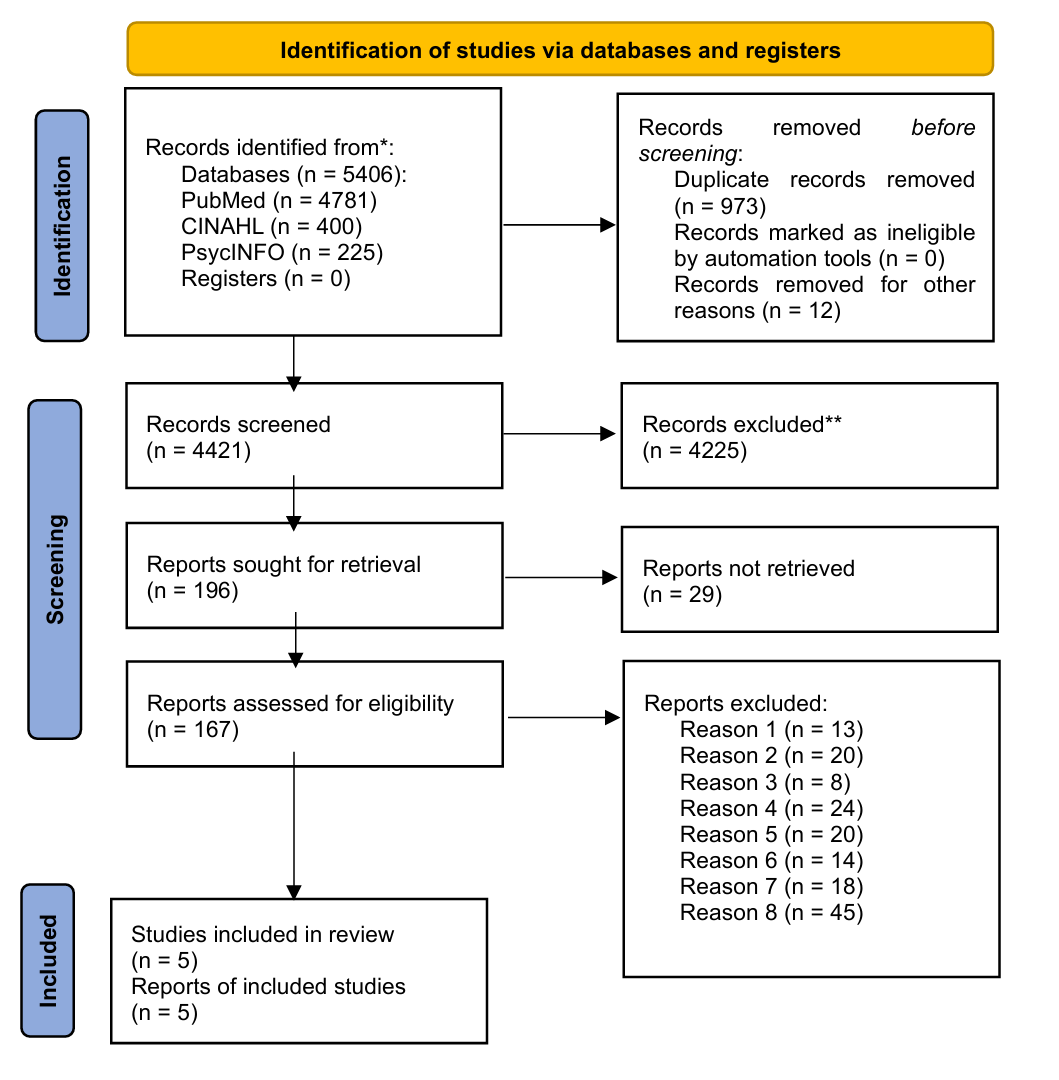
Poor dietary adherence contributes to malnutrition in community-dwelling older adults. This qualitative evidence synthesis aimed to identify barriers and facilitators to healthy dietary adherence among community-dwelling older adults using the COM-B model and to map barriers to Behaviour Change Wheel intervention functions and Behaviour Change Techniques. PubMed, CINAHL and PsycINFO were searched from May 2021 to May 2026. Studies were included if they reported qualitative data on barriers or facilitators to everyday dietary behaviour in community-dwelling adults aged 60 years and older. Data were synthesised using a deductive framework synthesis based on the COM-B model. GRADE-CERQual was used to assess confidence in review findings. Across the included studies, the most frequently reported barrier was lack of nutritional knowledge and difficulty understanding or applying nutrition information, followed by long-standing eating habits, emotional attachment to food, and emotional eating. Key facilitators included encouragement and support from family members, friends, caregivers, or research teams, as well as concerns about burdening children, desire to maintain health, attention to body shape, and positive health feedback. All four core findings had moderate CERQual confidence. Based on these findings, priority interventions should target psychological capability through education and training, and automatic motivation through habit substitution and reducing emotional eating.
Show more
Read Article PDF
Cite
Research Article Open Access
High-Fibre Dietary Patterns in Weight Managementfor Obese Individuals: Composition, Mechanismsand Clinical Application
The prevalence of obesity rises rapidly worldwide and evolves into a severe public health crisis endangering human health. Unbalanced dietary patterns act as a critical modifiable factor governing the onset and progression of obesity. The high-fibre dietary pattern, a wholesome eating regimen centered on naturally fibre-rich foods, delivers pronounced benefits in weight management and metabolic wellness. Existing studies verify that elevated dietary fibre intake effectively boosts satiety, cuts total energy intake, slows postprandial glucose absorption, lifts insulin sensitivity, reshapes intestinal microbiota composition, and stimulates short-chain fatty acid synthesis. Multiple pathways therefore alleviate metabolic abnormalities linked to obesity. Nevertheless, most current investigations focus solely on effects of isolated fibre supplements. Comprehensive summaries and mechanistic syntheses regarding holistic, structured high-fibre dietary patterns remain insufficient. Larger-scale, long-term cohort studies and personalized nutritional intervention trials are required in future analyses to develop targeted high-fibre dietary tactics. This paper systematically reviews the definition and core traits of high-fibre dietary patterns, classifications and food origins of dietary fibre, physiological mechanisms underlying weight regulation, clinical evidence, and practical guidance. Evidence-based references for nutritional intervention among obese populations are thereby supplied.
Show more
Read Article PDF
Cite
Research Article Open Access
Prodromal Recognition of Non-Motor Symptoms and Biomarkers in Parkinson's Disease
The diagnosis of Parkinson's disease (PD) is often delayed due to over-reliance on motor manifestations, despite the fact that pathological changes including abnormal aggregation of alpha-synuclein (α-syn) and progressive dopaminergic neuronal loss in the substantia nigra pars compacta begin years before overt symptoms emerge. This interval, termed the prodromal phase, represents a critical window for potential intervention. This review summarizes the application value of non-motor symptoms (NMS) and their biomarkers in prodromal identification. Evidence on four NMS categories, namely isolated rapid eye movement sleep behavior disorder (iRBD), autonomic dysfunction, sensory impairment, and neuropsychiatric symptoms, is synthesized. Fluid biomarkers including cerebrospinal fluid (CSF) α-syn seed amplification assay, plasma proteins, and urine proteins, as well as neuroimaging tools including magnetic resonance imaging striatal metrics and meta-iodobenzylguanidine scintigraphy, are evaluated. The findings indicate that while iRBD and CSF α-syn seed amplification assay offer strong predictive value, no single modality suffices for reliable prodromal screening. A multi-modal strategy combining clinical symptoms, fluid markers, and imaging data appears more promising. By consolidating dispersed evidence across subspecialties, this review aims to offer clinicians and researchers an integrated reference for selecting and refining early detection strategies.
Show more
Read Article PDF
Cite
Research Article Open Access
Effects of Different Intermittent Fasting Regimens on Core Indicators of Metabolic Syndrome: Body Weight, Glycemia, Blood Lipids, and Blood Pressure
Body weight, glycemia, lipids and blood pressure are interconnected factors of metabolic syndrome, which is a public health problem worldwide and, therefore, should be managed in an integrated way. Intermittent fasting (IF) is gaining more and more popularity as a potential non-pharmacological approach. This review brings up to date evidence for the effects of major IF methods, such as time-restricted eating (TRE), alternate-day fasting (ADF) and weekly/fasting methods (e.g. 5:2 and 4:3) on major indicators of metabolic syndrome. The majority of IF diets tend to be weight loss diets, with ADF and 5:2/4:3 having more impact on weight loss than TRE, though ADF might lead to more lean mass loss amongst normal weight individuals. Glycemic effects are better established in overweight/obese people and in patients with prediabetes or type 2 diabetes but the studies in metabolically healthy people are inconsistent. The lipid response seems to be regimen dependent; 5:2 with meal replacement is favourable for triglyceride reduction, ADF may be more beneficial in reducing total cholesterol and LDL-C and TRE may be more favourable in increasing HDL-C, while the blood pressure response is less consistent, with most short- to medium-term studies showing limited results. IF in general can be helpful in the management of metabolic syndrome, but dependent on the regimen, outcome and population. There is still a need for long-term high-quality studies.
Show more
Read Article PDF
Cite