Articles in this Volume

Research Article Open Access
Amino Acid Metabolic Reprogramming in Pancreatic Cancer: Current Advances and Perspectives
Pancreatic cancer is a highly aggressive digestive system tumor with a very poor prognosis. Initiation and progression of pancreatic cancer are closely associated with metabolic reprogramming. In recent years, more and more evidence shows that, apart from glucose metabolism, amino acid metabolism has an important role in pancreatic cancer cell proliferation, invasion, drug resistance, regulation of the tumor microenvironment and so on. This article summarizes the metabolic reprogramming of amino acid in pancreatic cancer and discusses the related influence to tumor biology behavior. Also points out the possible contribution of these amino acid metabolic reprogramming to targeted therapy and tumor marker and intends to introduce new ideas for basic and clinical studies of pancreatic cancer.
Show more
Read Article PDF
Cite
Research Article Open Access
Research Progress and Biological Applications of Nitric Oxide Fluorescent Probes
Nitric oxide (NO) is an important gaseous signaling molecule in the body. It plays dual regulatory roles in a range of physiological and pathological settings, including cardiovascular homeostasis, neural transmission, immune defense, and programmed cell death. Altered NO levels are closely linked to conditions such as atherosclerosis, neurodegenerative diseases, inflammatory disorders, and tumors. Therefore, accurate tracking of NO dynamics holds considerable value for basic research and may also offer clinical translational potential. NO Fluorescent probe technology has become a central tool for visualizing due to its non-invasive nature, high sensitivity, good spatial resolution, and real-time imaging ability. In this review, I summarize recent advances in NO fluorescent probes. I firstly discuss the biological background of NO and its chemical recognition mechanisms. Then, I systematically introduce probe design strategies across various modalities, including fluorescence, phosphorescence, chemiluminescence, and photoacoustic imaging. What's more, I specially introduce organelle-targeting probes that enable imaging at subcellular resolution. Finally, I discuss the NO signaling disturbances in aging-related diseases and offer views on current challenges and future research directions.
Show more
Read Article PDF
Cite
Research Article Open Access
Anchor-Guided Non-Rigid Motion Estimation for the Tongue Using Optical Flow
Article thumbnail
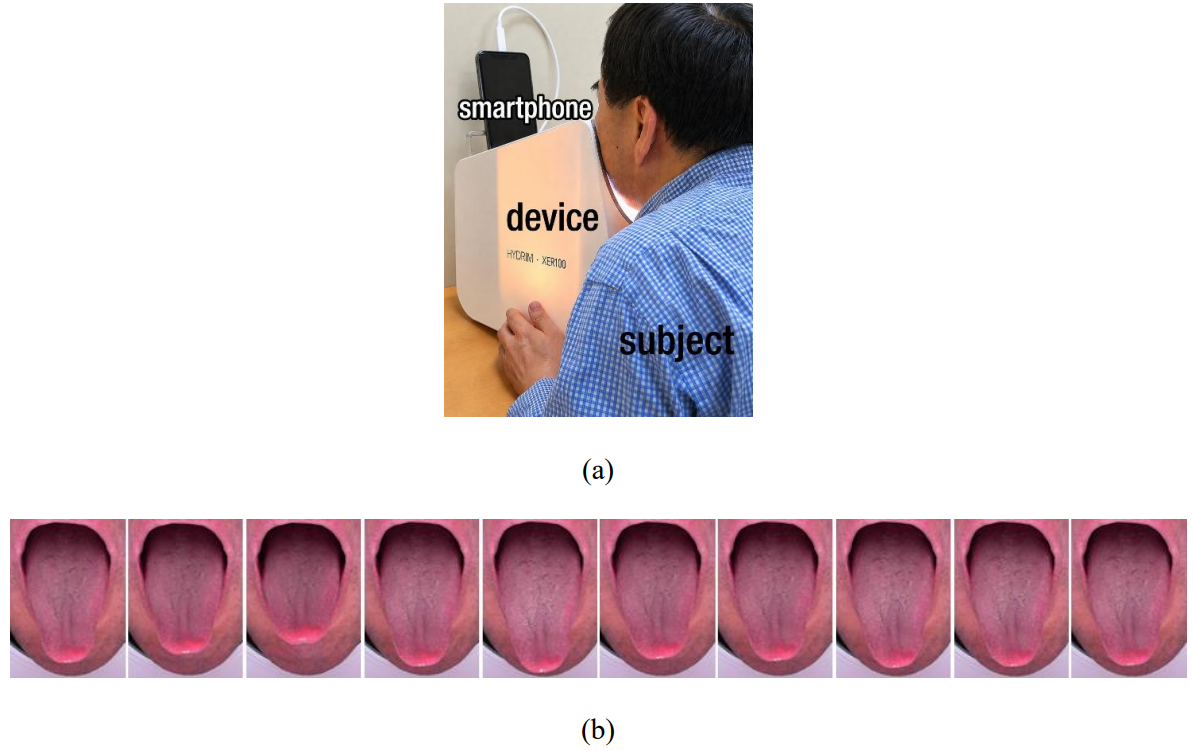
Tongue movement is related to various neurological and physiological conditions and has recently attracted attention as a potential biomarker in digital healthcare research. However, analyzing tongue motion from sequential images is difficult because tongue deformation is highly non-rigid and motion patterns vary across different tongue regions. In this study, an anchor-guided optical flow method was applied to estimate tongue motion more stably under large deformation conditions. Anchor regions were defined in the upper tongue area and near the tongue tip, and these anchor points were used to construct a global deformation field. Residual local motion obtained from Farnebäck optical flow was additionally incorporated to preserve detailed surface deformation. Tongue image sequences acquired using a tongue imaging system developed at the Korea Institute of Oriental Medicine were used in the experiments. In conventional Farnebäck optical flow results, motion around the tongue tip was not consistently estimated when relatively large displacement occurred. The proposed framework showed more stable displacement estimation while preserving local deformation patterns on the tongue surface. The results indicate that combining anchor-based global deformation with residual optical flow may improve representation of non-rigid tongue motion. Future work will include comparison with deep learning-based optical flow approaches and further evaluation under various tongue motion conditions.
Show more
Read Article PDF
Cite
Research Article Open Access
Application of Nano Materials in Artificial Limbs: Carbon Based, Metal Based and Hydrogel Materials
Traditional prostheses are hard to meet demands for precise control and long-term comfort because of rigid materials and poor biocompatibility. They lack perception and neural feedback functions, which further restricts their practical application effect. Nanomaterials have large specific surface areas, excellent mechanical and electrical properties and good biocompatibility. Studies show that carbon-based nanomaterials can be used to make highly stretchable and deformation-insensitive bionic sensory sensors. These sensors can achieve the integration of multi-modal signals in intelligent prosthetic devices. Metal nanomaterials such as silver nanowires are suitable for multi-axis force detection and dynamic tactile feedback. They can obviously improve the sensing range and response speed of prosthetic sensors. Hydrogel materials have obvious advantages in Electromyography (EMG) signal collection and flexible electrode interfaces. This is due to their skin-like modulus, high electrical conductivity and anti-freezing properties. Future development directions include designing multifunctional composite nanomaterials for prosthetic applications. Researchers also combine 3D printing and artificial intelligence algorithms to optimize prosthetic performance. Another direction is to build bionic intelligent prostheses with bidirectional neural interaction functions. This paper systematically reviews structural design and working mechanisms of carbon-based, metal-based and hydrogel materials. It also summarizes their applications in tactile sensation, neural signal transmission and EMG control.
Show more
Read Article PDF
Cite
Research Article Open Access
Neutrophil Extracellular Traps in Psoriasis: Mechanisms and Emerging Insights
Psoriasis is a well-known inflammatory skin disease characterized by recurring disease flare-ups and excessive proliferation of epidermal cells induced by immune system dysfunction. The disease arises from the synergistic impact of genetic predisposition, dysregulated immune responses and environmental factors. Rather than merely defined by structure, neutrophil extracellular traps (NETs) are regarded as a specific response of activated neutrophils, in which chromatin is released to the extracellular space along with antimicrobial proteins. Though originally regarded as a function for defense against invasion by pathogens, increasing evidence suggests that NET formation also impinges on inflammatory aggravation. In psoriasis, NETs formation is increasingly becoming recognized as an active role player in disease development and progression. In this review, we describe the regulation of NETs production and focus on how these structures can intersect with immune responses to affect the inflammatory microenvironment of psoriatic skin in order to direct future mechanistic research and therapeutic interventions.
Show more
Read Article PDF
Cite
Research Article Open Access
Research Progress of Exosomes in Vaccine Delivery
Exosomes are nanoscale vesicles secreted by cells, with a lipid bilayer structure, and serve as crucial mediators of intercellular communication. Exosomes have core advantages such as good biocompatibility, low immunogenicity, and strong inherent targeting. Currently, exosomes have demonstrated promising application prospects in antiviral, antitumor, and antibacterial vaccines, but still face challenges including non-standardized production, safety and ethical controversies, and the lack of a dedicated regulatory system for medical aesthetic products and biological agents. In the future, optimizing cargo loading and engineering modification techniques, and developing combination therapy and personalized immunization strategies will facilitate the clinical translation of exosome vaccines, providing new directions for the field of vaccinology.
Show more
Read Article PDF
Cite
Research Article Open Access
Progress and Prospects of Single-cell and Spatial Omics in Neurodegenerative Diseases
Article thumbnail
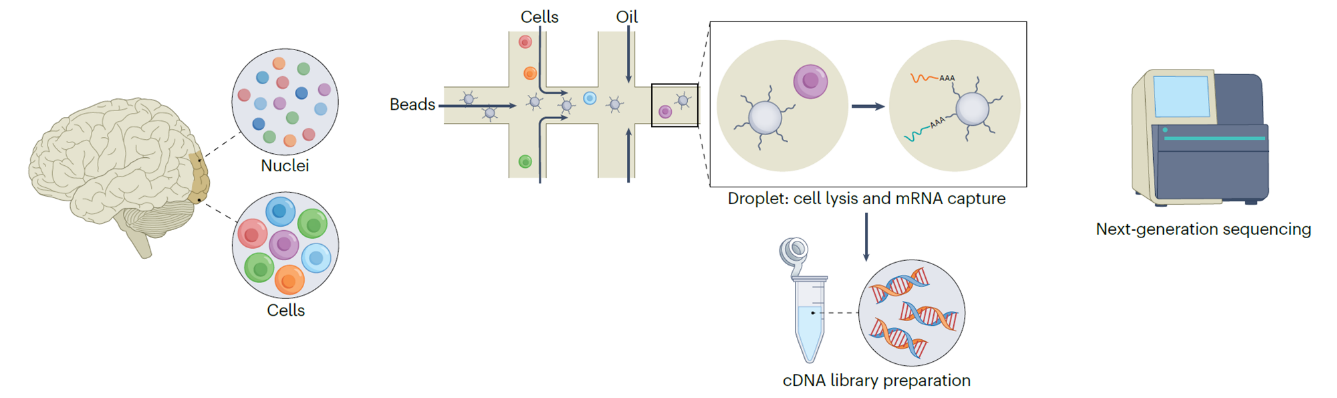
Neurodegenerative diseases (NDDs) are characterized by pronounced cell-type-specific vulnerabilities and heterogeneity in their pathological microenvironments, which traditional bulk tissue omics approaches cannot resolve in terms of cell lineage, state, and spatial context during disease progression. Single-cell and spatial omics have emerged as powerful technologies providing spatiotemporal expression profiles at single-cell resolution. The growing application of these approaches in NDD research is expected to uncover novel disease-associated cell populations, facilitate hypothesis testing, and identify therapeutic targets. In this review, we first outline the major methodologies of single-cell RNA sequencing (scRNA-seq) and spatial transcriptomics, including representative technical platforms and their main features. We then summarize their applications in major NDDS, including Alzheimer's disease, Parkinson's disease, amyotrophic lateral sclerosis, and frontotemporal dementia, with an emphasis on different cell types. Finally, we discuss current challenges such as sample limitations, resolution-throughput trade-offs, and data integration issues, and briefly consider future directions for clinical translation, particularly in biomarker discovery and patient stratification.
Show more
Read Article PDF
Cite
Research Article Open Access
Pyroptosisin Pediatric Mycoplasma pneumoniae Pneumonia: Mechanisms and Emerging Insights
Mycoplasma pneumoniae pneumonia (MPP) is one of the common infections of the pediatric respiratory tract, in which dysregulated immune responses drive much of the tissue inflammation. Pyroptosis mediated by inflammasome has become a leading way to promote inflammation. Activation of NLRP3 inflammasome activates cleaving of caspase-1 and the secretion of pro-inflammatory cytokines, aggravating local immune response. The role of pyroptosis in the initiation and aggravation of the pathology in MPP in children is already proved by studies. This review summarizes the existing advance of pyroptosis in pediatric MPP, aiming at providing the theoretical support to prevent and treat pediatric MPP.
Show more
Read Article PDF
Cite
Research Article Open Access
Efficacy of a Low-Carbohydrate Diet in the Treatment of Type 2 Diabetes
This study aimed to evaluate the efficacy, sustainability and long-term safety of a low-carbohydrate diet (LCD) in the treatment of type 2 diabetes. A randomized controlled trial was conducted involving 178 patients, who were randomly assigned to receive either a standard diet or a 30% carbohydrate LCD for 6 months. A total of 163 patients completed the trial. Compared with the standard diet group, the LCD group showed significantly better improvements in fasting blood glucose, 2-hour postprandial blood glucose, glycosylated hemoglobin, blood lipid profile and HOMA-IR. The results indicate that a 30% low-carbohydrate diet effectively improves glycemic and lipid control in patients with type 2 diabetes. However, long-term adherence is challenging, and nutritional balance should be guaranteed. Medication adjustment may be needed in clinical practice. This dietary intervention is not suitable for all patients and should be applied based on individual conditions.
Show more
Read Article PDF
Cite