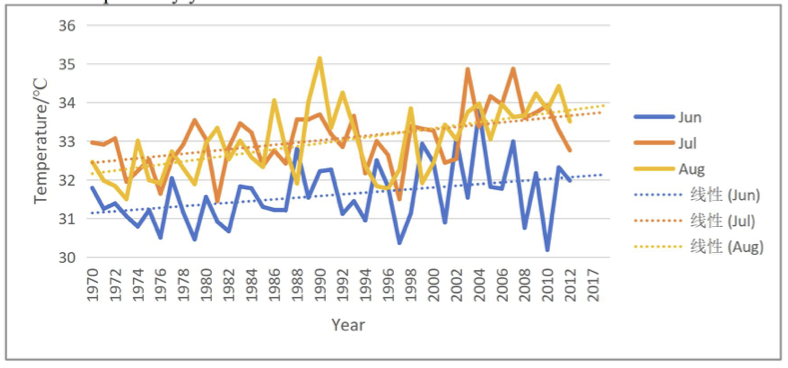
Global warming is significantly altering the patterns of extreme weather events, with extreme heat exerting an especially urgent impact on densely populated urban agglomerations. This paper focuses on Guangzhou, a core city in China's Pearl River Delta (PRD), as a representative case. Based on monthly maximum temperature data from 1970 to 2020 provided by the U.S. National Oceanic and Atmospheric Administration (NOAA), this study analyzes the long-term characteristics of summer high temperatures in this region. It shows that over the past 51 years, the average summer (June-August) maximum temperature in Guangzhou has exhibited a significant upward trend, with a linear warming rate of approximately 0.25°C per decade. Further research reveals that warming is asynchronous across the summer months, with August showing the most pronounced warming rate. This trend serves as the fundamental climatic background for the increasingly frequent and intensified extreme high-temperature events in the PRD region. Integrating existing literature, this paper demonstrates that continued warming poses compound risks to regional public health, the ecological environment, and socio-economic functioning through multiple pathways, such as intensifying the urban heat island effect, altering the ecology of infectious disease vectors, and increasing the potential for photochemical pollution.