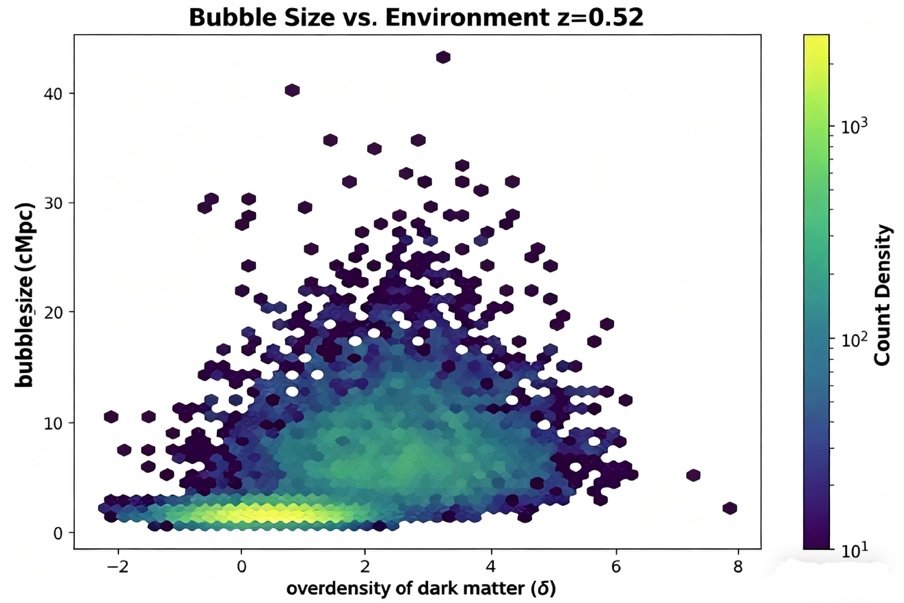
The Hubble tension—the significant discrepancy between the measured values of the Hubble constant (H₀) in the early and late universes—poses a fundamental challenge to the existing cosmological paradigm. This paper explores the local void hypothesis, which proposes that the Milky Way resides within a massive Kinan-Bage-Cowi (KBC) void, and attempts to explain the Hubble tension. By integrating multi-wavelength galaxy surveys with cosmological simulations, the gravitational effects of the void are systematically analyzed. The study focuses on elucidating how anomalous outward velocities caused by underdense regions distort the redshift-distance relationship, leading to artificially inflated estimates of local H₀. Furthermore, using baryon acoustic oscillation (BAO) data, this paper conducts a multi-faceted comparative test of predictions from homogeneous universe models and those based on voids. The ultimate goals include rigorously assessing the feasibility of voids in resolving the Hubble tension, thoroughly analyzing their broad implications for large-scale homogeneity hypotheses, and demonstrating the necessity of incorporating local structure into precision cosmological studies.
Research Article
Open Access