Articles in this Volume

Research Article Open Access
Introduction and Applications of Ultra High Pressure in Food Technology
In recent years, ultra high pressure (UHP) technology has gained high prominence in the food processing industry, which can meet the growing requirement of consumers of high-quality food. This article reviews the history of the ultra high pressure (UHP) process and introduces the principles connected with UHP processing and the methods we used in UHP processing. Also, this paper talks about applications like extracting bioactive peptides and inactivating bacteria through recent examples. Finally, this study combines specific research results to demonstrate the advantages of UHP, it is an advanced processing technique responding to market requirements, and is quite promising for the area of storing perishable food products. UHP treatment can also be widely applied in products’ rapid freezing to get high-quality food with longer shelf life in order to meet consumers’ requirements. In the future, some more advanced concepts and cutting-edge technologies, such as computer modeling can be applied to the field of UHP processing.
Show more
Read Article PDF
Cite
Research Article Open Access
Analysis on the Effects of Ocean on Temperature
Article thumbnail
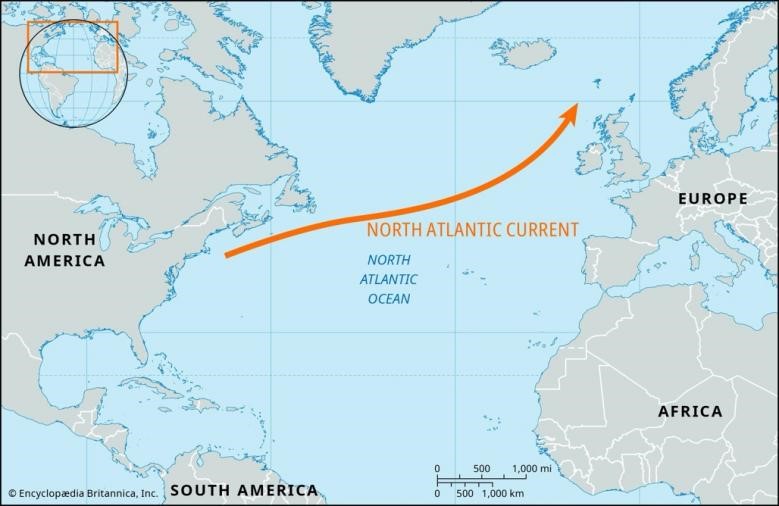
Nowadays, global climate change is one of the main concerns of modern society and an enormous issue for all humankind. Temperature is closely related to the greenhouse effect, so one of the major topics to be investigated in global climate is the factors affecting temperature rise. To estimate this change, it is typically crucial to forecast the temperature in the future. The Earth's average temperature is determined by a multi-step and complex process that uses statistical techniques and data from various sources. By collecting and summarizing data, this paper mainly focuses on analyzing the trends in sea surface temperature over the past few hundred years. Through recent studies and case analysis, this paper highlights that the ocean has become an indispensable part of mitigating climate warming and stabilizing temperature. The significance of studying the impact of the ocean on temperature lies in its role as a climate regulator, providing scientific basis for global climate change and guidance for regional adaptation efforts. Because of its enormous heat capacity and thermal inertia, the ocean is an important component of the climate system and plays a buffering and regulating role in atmospheric temperature.
Show more
Read Article PDF
Cite
Research Article Open Access
In What Ways Might Physical Tipping Points in the Climate System Pose ‘Security’ Problems Now and in the Future?
This paper analyzes physical tipping points in the climate system and their implications for national security, food security and social stability. Physical tipping points are critical states in the climate system that, once passed, lead to irreversible, rapid, and self-accelerating changes. Major tipping points include melting glaciers and rising sea levels, the collapse of terrestrial ecosystems, and an increase in the frequency and intensity of climate extremes. The paper explores the far-reaching impact of these tipping points on security issues, proposes countermeasures and policy recommendations by analyzing the case of Arctic climate change on Russian security, and emphasizes the importance of interdisciplinary cooperation and policy responses to reduce the risks posed by climate change.
Show more
Read Article PDF
Cite
Research Article Open Access
Impacts of Land-use Change on Biodiversity of Tropical Forests
The tropics possess a higher level of biodiversity compared to other climatic regions on the Earth. The tropics have diverse ecosystems such as forests, savannas, mountains, wetlands, and coral reefs, which provide habitat for thousands of species of fauna and flora. Tropical forests are one of the important tropical ecosystems with high biodiversity. Humans modify tropical forest landscapes on a large scale and use them for different purposes, including logging, mining, agriculture, pastures, urbanization, and road construction. Humans attain resources and profits through transforming tropical landscapes while making negative impacts to biodiversity and the environment of tropical forest ecosystems. Land-use change further causes habitat loss, habitat fragmentation, climate change, pollution, and species invasion of the tropical rainforests. These drivers lead to ecosystem destruction and the biodiversity crisis in the whole tropical region.
Show more
Read Article PDF
Cite
Research Article Open Access
Research on the Sustainable Development of Ancient Villages
In the wake of rural urbanization and the advancement of new rural construction, numerous ancient villages are confronted with issues, such as the loss of cultural characteristics, ecological environment deterioration, and lagging economic development. The sustainable development of ancient villages has thus emerged as a subject of considerable research value in the face of the challenges and opportunities presented by the modernization process. This paper initially analyzes the significance of the sustainable development of ancient villages, with the aim of exploring the paths and strategies for their sustainable development, in order to address the challenges and opportunities that traditional villages encounter during modernization. Subsequently, through a literature review and case analysis, this paper summarizes the main approaches to the sustainable development of ancient villages, and contends that it is not only necessary for protecting historical and cultural heritage and inheriting national culture but also constitutes an important means to facilitate the transformation and upgrading of the rural economy and achieve rural revitalization. Additionally, this paper presents the difficulties that ancient villages need to overcome in their pursuit of sustainable development. Firstly, the majority of research has a relatively short time scale and is unable to accurately predict the development trends of ancient villages. Secondly, the research directions are vague and simplistic, and the research content requires further refinement. Finally, attention must be paid to balancing cultural protection and modernization.
Show more
Read Article PDF
Cite
Research Article Open Access
Progress in Research on Materials, Preparation Processes, and Applications of Degradable Food Preservation Films
With the improvement of living standards, the application of degradable materials in the food industry has garnered widespread attention as these materials address the dual needs of environmental protection and food preservation. This paper aims to explore degradable food preservation films to mitigate the environmental impact of food preservation and promote green and sustainable development in the food industry. The properties, classifications, and application scenarios of degradable food materials are summarized, and the preparation processes of degradable food preservation films are introduced. Additionally, the application of degradable food materials in food preservation is discussed in detail. While considering both environmental protection and preservation effectiveness, this paper also analyzes potential issues in using degradable materials for food preservation film preparation and proposes future directions for degradable materials in food preservation, providing valuable insights for the development of the food preservation and environmental protection industries.
Show more
Read Article PDF
Cite
Research Article Open Access
The Relationship Between Wolf-to-dog Evolution and Geographic Variation and its Implications for Biodiversity
The evolutionary relationship between wolves and dogs is a fascinating subject in the field of biology, revealing how natural selection and human activity work together to shape the evolutionary trajectory of species. This paper takes the East Asian grey wolf as a research subject and analyse the evolutionary process from wolf to dog and the impacts caused by geographic distribution and human activities. At the same time, geographical isolation from Eurasian wolves also led to the differential evolution of wolves. Human activities, especially domestication and selection by humans, accelerated the evolution and diversity of dogs. The East Asian gray Wolf may be a key contributor to the East Asian dog breed, with humans selectively breeding wolves, forming a variety of dog breeds to meet different needs. The global distribution of dogs reflects the significant influence of geographical factors, with dog breeds in different regions forming unique breed differences due to differences in adaptation to the environment, as well as the influence of selective breeding by humans. This paper provides new insights into the formation of species diversity and reveal the important role of human activities in biological evolution.
Show more
Read Article PDF
Cite
Research Article Open Access
Generation and Transmission of Antibiotic Resistance Genes in Livestock and Poultry Breeding Environments
The widespread presence of antibiotic resistance genes (ARGs) in livestock and poultry farming poses a significant threat to the ecological environment and public health. In this paper, the causes, transmission routes and environmental impacts of ARGs in livestock and poultry breeding environments are reviewed. ARGs spread in the environment through horizontal gene transfer (HGT), biological vectors, and airborne transmission, further exacerbating the problem of drug resistance. The presence of ARGs not only has a negative impact on soil and water ecosystems, but also poses a potential threat to human health through the food chain. This article discusses the current methods of detecting and controlling ARGs, and puts forward the focus and direction of future research, aiming to provide theoretical support for the formulation of effective prevention and control strategies to reduce the environmental and health risks caused by ARGs.This review identifies horizontal gene transfer as a critical mechanism in ARG propagation and proposes advanced detection techniques to curb environmental contamination, laying the groundwork for sustainable antibiotic usage in livestock.
Show more
Read Article PDF
Cite
Research Article Open Access
Advancements and Limitations in Geomagnetic Storm Prediction Models
With the rapid increase in satellite launches and frequent space activities, the impact of space weather on human endeavors has become increasingly significant, prompting greater attention to space weather prediction. Geomagnetic storms, driven by solar wind and coronal mass ejections, significantly affect Earth's magnetosphere and ionosphere, necessitating accurate and timely predictions. Despite advancements in physical models, statistical methods, and machine learning techniques, current prediction methods face challenges in balancing accuracy, timeliness, and computational efficiency. This paper provides a comprehensive review of geomagnetic storm prediction methods, summarizing the principles, advantages, and limitations of these models. By integrating the strengths of these models, such as the theoretical foundation of physical models, the trend analysis capabilities of statistical methods, and the nonlinear processing power of machine learning, hybrid approaches proposes future directions for improving prediction accuracy and real-time performance. This review also highlights recent innovations, including data assimilation, transfer learning, and hybrid modeling, and proposes future directions to optimize model integration, enhance data quality, and address extreme geomagnetic events. These efforts aim to support more reliable early warning systems and foster advancements in space weather research and applications.
Show more
Read Article PDF
Cite
Research Article Open Access
Development of Smart Water Management in China: Current Status, Opportunities, and Challenges
Article thumbnail
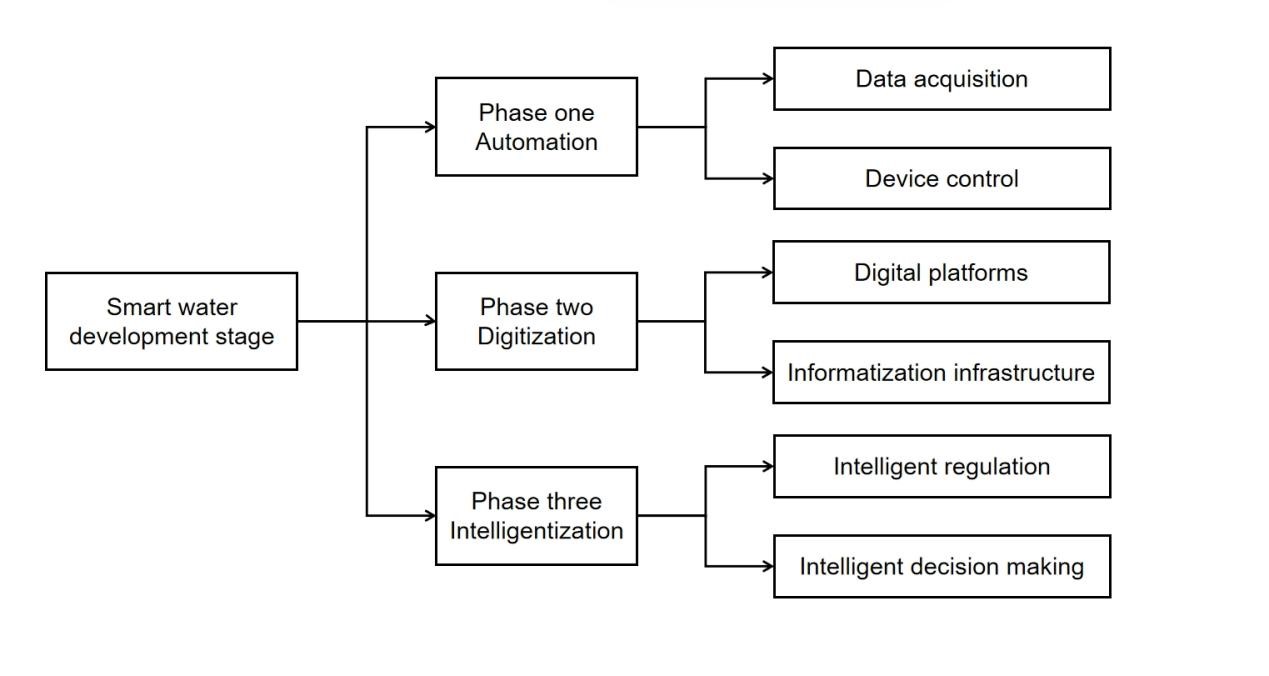
This paper analyzes the current status, opportunities, and challenges in the development of smart water management in China. Influenced by multiple factors, the traditional water management model is facing difficulties. Smart water management has emerged as a timely solution. China is in the phase of intelligent development. The development opportunities for smart water management include internal industry demand and benefits, as well as external policy support and technological drivers. However, challenges such as low internal management levels, lack of top-level planning, and difficulties in digital transformation pose significant barriers. To achieve high-quality and sustainable development, smart water management requires the improvement of standards, as well as region-specific planning. This will contribute to the rational use of water resources, effective prevention of water-related disasters, and the stable development of the socio-economic environment and ecological balance.
Show more
Read Article PDF
Cite