Articles in this Volume

Research Article Open Access
Progress in Atherosclerosis and treatments
Atherosclerosis is a lethal disease due to the fact that it is basically asymptomatic and acute. It is characterized by the formation of foam cells inside the patients’ arteries. The formation of foam cells is highly related to the high blood concentration of LDL which is mainly caused by the high volume of cholesterol intake. The people who are smoking, with high blood pressure, diabetes, old age or sedative lifestyle are very much vulnerable to atherosclerosis. Patients with contracted atherosclerosis often do not feel any discomfort until the condition is serious, therefore, regular examinations are vital to reduce the casualty rate of the patient, particularly for those people among the high-risk group. The most effective therapy for atherosclerosis is through a surgeon, while some medicines can improve the symptoms of the disease. However, atherosclerosis can rarely be reversed by drug treatment. Therefore, a healthy lifestyle is very important for the people who contract or are vulnerable to atherosclerosis. This includes low calories, low cholesterol diets and doing plenty of exercise.
Show more
Read Article PDF
Cite
Research Article Open Access
Applications of iPSCs on Cartilage Regeneration
Article thumbnail
Inflammatory diseases of the joint, such as osteoarthritis (OA), are characterized by the degeneration of cartilage, which leads to a loss of joint functionality and persistent pain if not treated properly. However, the field lacks effective treatments for this disease. The existing options may relieve symptoms, but it is hard to prevent future degeneration. Tissue engineering technologies, such as induced pluripotent stem cells (iPSCs), offer significant potential in developing personalized and effective treatments for joint diseases by producing artificial cartilage for replacement therapy. In this review, current developments in tissue engineering for joint diseases are discussed, with a particular focus on advancements in utilizing iPSCs for cartilage regeneration. The mechanisms by which iPSCs can be directed to differentiate into cartilage tissues and the strategies employed to enhance their therapeutic potential are discussed. Additionally, preclinical and clinical studies have explored the use of iPSCs in cartilage regeneration. The matrix production and stiffness of the implant have shown potential for clinical applications. Future studies may focus on the ethical considerations of employing this technology, safety hazards, and optimization of protocols to get a safe, cost-friendly, and efficient therapeutic pipeline.
Show more
Read Article PDF
Cite
Research Article Open Access
Protection of β Cells through Renalase (RNLS) and CRISPR/Cas9 as a Potential Therapeutic Approach in Diabetes
Type 1 diabetes mellitus (T1DM) is a metabolic disease caused by the destruction of pancreatic βcells, with various complications. RNLS (Renalase) is a protein expressed in the kidneys and is strongly associated with complications of cardiovascular disease and other diseases. Multiple studies have proved the association between RNLS and T1DM, showing that RNLS plays an important role in the protection of pancreas islet β cells. RNKS can reduce damage caused by immune attacks and oxidative stress and regulate energy metabolism. Current studies used gene-editing techniques, such as CRISPR/Cas9, as a potential therapeutic approach for T1DM through targeting multiple genes. Researchers also used in vivo CRISPR screen and identified the role of RNLS in β cells. However, future research is required to provide evidence of whether and how targeting RNLS with gene editing tools can restore β cell function, aiming to provide novel therapeutic approaches and personalized clinical applications for heterogeneous T1DM patients.
Show more
Read Article PDF
Cite
Research Article Open Access
The potential of CRISPR-Cas9 in treating HIV: current applications and challenges
Human Immunodeficiency Virus (HIV) and acquired immunodeficiency syndrome (AIDS) it causes are still among the major diseases the affect people throughout the world. Of course, antiretroviral therapies (ARTs) have increased the average life span of patients, but these drugs do not affect latent viral reservoirs, which is why there is a problem of cure. Existing strategies have so far aimed at anti-HIV interventions happening at deoxyribonucleic acid (DNA) level and are currently applicable through CRISPR associated protein 9 (CRISPR-Cas9) gene modification which works towards modifying single genes. CRISPR-Cas9 has relevance in HIV treatment as the deregulate the genomic organization of the virus. However, some limitations include mechanisms through which the virus can evade, consequences on other organisms, and problems in ethical issues concerning gene editing in human beings. This review focuses on such questions alongside analyzing how CRISPR-Cas9 interferes with the HIV genome. In order to provide references to work towards the advancement of using technology in treating diseases such as HIV through gene editing.
Show more
Read Article PDF
Cite
Research Article Open Access
The Role of Circadian Rhythm Disruption in Prostate Cancer Development: Epidemiological, Molecular, and Therapeutic Perspectives
Circadian rhythm disruption has been increasingly recognized as a critical factor in the development and development of prostate cancer. Through a comprehensive examination of epidemiological evidence, molecular pathways, and experimental studies, circadian misalignment is shown to influence key biological processes that regulate hormone production, DNA repair, and immune function, all essential to maintaining cellular homeostasis. Disruptions in circadian rhythms can lead to altered gene expression, impacting pathways associated with tumour development. Epidemiological data reveal an elevated risk of prostate cancer in individuals with irregular circadian patterns, such as shift workers, further reinforcing the link between circadian dysregulation and cancer risk. Molecular studies have identified potential therapeutic targets within circadian- regulated pathways, offering new opportunities for intervention. Therapeutic approaches aimed at restoring circadian alignment may not only prevent prostate cancer but also improve treatment outcomes by enhancing the effectiveness of current therapies. Understanding the character of circadian rhythms in prostate cancer opens new avenues for prevention and treatment strategies that could ultimately improve patient prognosis. This paper delves into the strong link between circadian rhythm disruption and prostate cancer. Based on the comprehensive analysis of the basic concept of circadian rhythm, the characteristics of prostate cancer, and the epidemiological evidence, molecular mechanism, experimental studies and potential therapeutic targets associated with the two, it is concluded that circadian rhythm disorder plays a crucial role in the occurrence and development of prostate cancer, which provides a new perspective and direction for the prevention and treatment of prostate cancer.
Show more
Read Article PDF
Cite
Research Article Open Access
Current status and progress of research on CAR-T Cell Therapy for the treatment of hematological malignancies
Article thumbnail
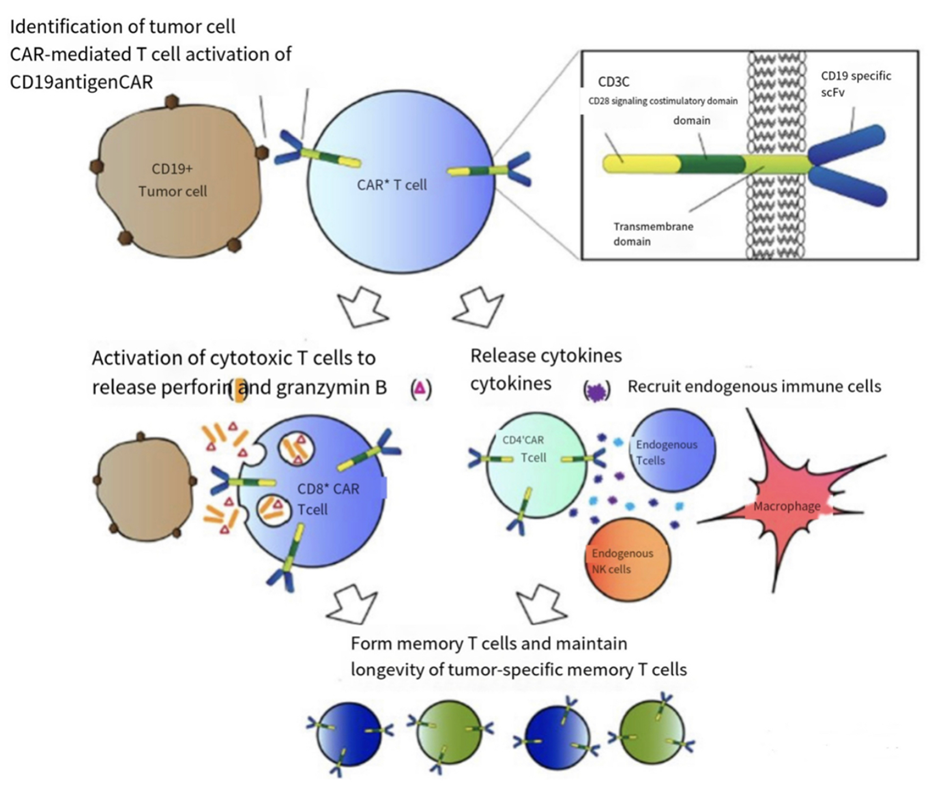
Chimeric antigen receptor T-cell (CAR-T) therapy, which first entered clinical use in 2010, it has achieved notable advancements in the treatment of blood cancers, leveraging the genetic modification of T cells to identify and destroy cancer cells. Some conditions like acute lymphoblastic leukemia (ALL), diffuse large B-cell lymphoma (DLBCL), and multiple myeloma can be effective treated with this therapy, this is important because of the premise that various previous therapies have failed. The aim of this therapy is to make T cells express chimeric antigen receptors, a process that requires engineering them, enabling them to specifically recognize tumor antigens, such as CD19. Despite the promising outcomes, challenges remain, this is accompanied by side effects that are more distressing to patients, such as neurotoxicity, as well as limited efficacy in solid tumors. Recent research efforts are focused on optimizing CAR design, enhancing T cell Chimeric Antigen Receptor T-cell (CAR-T) therapy represents a groundbreaking advancement in the treatment of hematologic malignancies persistence, and expanding applicability to solid tumors. Developments of bispecific and allogeneic CAR-T cells, and combination therapies are being explored to mitigate current limitations. This review discusses the mechanism of action, clinical applications, and future directions of CAR-T cell therapy, emphasizing its transformative potential and the ongoing efforts to coping with the difficulties of the moment.
Show more
Read Article PDF
Cite
Research Article Open Access
Advancements in Protein Structure Prediction: Novel Bioinformatics Algorithms and Applications
This paper conducts an in-depth analysis of the progression and current state of protein structure prediction methods, tracing the evolution from traditional techniques like homology modeling and threading to cutting-edge machine learning approaches such as AlphaFold and RoseTTAFold. A special focus is placed on recent developments like ESMFold, which significantly enhances computational efficiency. The review delves into the capabilities and limitations of these models, particularly in their handling of novel proteins and complex structures, and examines their implications for fields such as drug discovery and functional genomics. A comparative analysis across various methods highlights their operational frameworks, accuracy in prediction, and applicational relevance. This exploration not only provides a comprehensive overview of the state of the art but also offers insights into potential future directions for research and development in the domain of protein structure prediction, suggesting areas where further advancements are needed to improve prediction accuracy and expand the scope of applicability.
Show more
Read Article PDF
Cite
Research Article Open Access
Overview of Anterior Cruciate Ligament treatment
This paper presents the findings of every basis to know about an ACL (Anterior cruciate ligament) rupture. The purpose of this paper is to help understand aspects of an ACL rupture basis from its anatomy and physiology to recovery factors highlighting key aspects about the injury. Understanding anatomy of and around the knee can prevent further injuries to other ligaments or cartilage. Research indicates that ACL tears can be taken care of through various techniques surgical or non-surgical. Rates of ACL tears vary reliant on factors such as age, training type, gender and other factors. Diagnostics of ACL ruptures are very crucial to understand the type of treatment you need from manual tests such as the Lachman test or to decide for a CT, MRI, X-ray or an ultrasound. Rehabilitation programs are the most important part of the injury where the athlete should follow the guide of a physical therapist by a 3-5 month program.
Show more
Read Article PDF
Cite
Research Article Open Access
The main methods and application prospects of treating cancer through the induction of ferroptosis
The highly deadly illness known as cancer is brought on by the malignant growth of cells, and it ranks among the top causes of death globally at the moment.In recent years, research on cancer treatment drugs has emerged one after another. However, due to the continuous mutation of cancer cells, they develop resistance to traditional anti-cancer drugs, making it even more difficult to achieve a complete cure for cancer.Recent experimental studies have shown that ferroptosis,a non-apoptotic cell death pathway triggered by iron, can effectively overcome issues such as drug resistance in cancer cells, thereby achieving effective treatment for cancer. It is currently a promising therapeutic approach, and many researchers have been investigating iron death induction treatment methods.And alarge number of research papers on this novel cancer treatment method known as ferroptosis have been published.This review summarizes and introduces two treatment methods based on ferroptosis that have been extensively researched, which called therapeutic method for inducing ferroptosis using targeted nanoparticles and Methods for combining immunity and ferroptosis.,and analyzing their development prospects as well as some issues currently faced in research and suggestions for future development directions.
Show more
Read Article PDF
Cite
Research Article Open Access
Research and Application of Hyperbaric Oxygen Chambers
Hyperbaric oxygen chamber is a medical device that improves the oxygenation capacity of human tissue by increasing the ambient pressure and oxygen concentration. It has been widely used in a variety of clinical treatments and other fields. This study aims to systematically evaluate the application effects of hyperbaric oxygen chambers in different medical fields, explore its potential therapeutic principles and analyze its future development. Through a literature review, the study focused on the application of hyperbaric oxygen chambers in decompression sickness, carbon monoxide poisoning, chronic diseases and burn injuries. The results showed that hyperbaric oxygen chambers can significantly promote tissue regeneration, reduce nerve damage, and improve the survival rate of patients with carbon monoxide poisoning. Beyond medical applications, hyperbaric oxygen therapy is gaining recognition in the fields of sports recovery, beauty, and wellness, where it is used to enhance athletic performance, improve skin quality, and promote overall health. The conclusion of this study is that hyperbaric oxygen chambers have broad clinical application prospects as an auxiliary treatment method. With ongoing advancements in artificial intelligence and big data, the future of hyperbaric oxygen chambers is likely to see more personalized and intelligent systems, enabling treatments tailored to individual patient needs. Additionally, the development of portable and home-use chambers will increase accessibility, allowing more patients to benefit from this therapy outside traditional medical settings.
Show more
Read Article PDF
Cite