


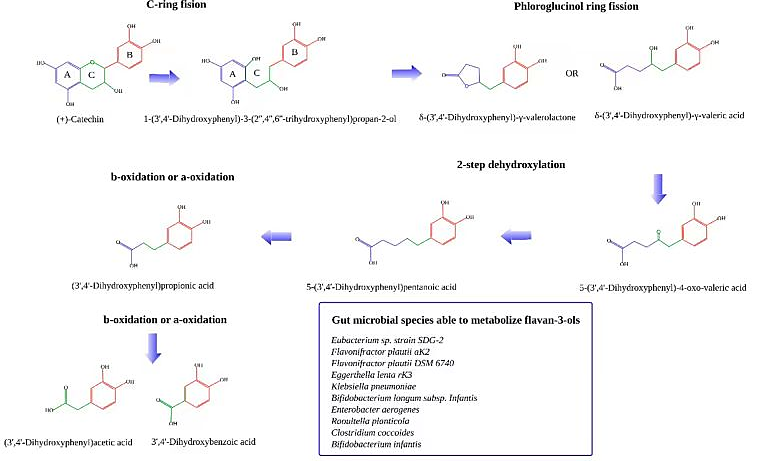
Obesity has become an increasingly serious global issue in recent years, leading to a myriad of health concerns for a growing population. Consequently, the quest for rational and safe methods to combat excess body fat has emerged as a mainstream demand among consumers. This paper focuses on tea polyphenols as the primary subject of investigation, employing gut microbiota as a mediator to explore and summarize existing research regarding the anti-obesity effects of tea polyphenols. Current reports suggest that the mechanisms by which tea polyphenols exhibit anti-obesity effects primarily encompass two aspects. Firstly, tea polyphenols can regulate the composition of the gut microbiota, primarily targeting the Firmicutes and Bacteroidetes phyla. This regulation occurs both in their digested state and undigested form, with a greater emphasis on their undigested state. Tea polyphenols primarily function by reducing the abundance of Firmicutes while increasing that of Bacteroidetes, thereby enhancing gut microbiota diversity to exert anti-obesity effects. Secondly, the metabolites of tea polyphenols also play a role in modulating gut microbiota, with phenolic acid compounds being the key metabolites responsible for anti-obesity effects. Compared to the parent tea polyphenols, phenolic acid compounds exhibit higher bioavailability and biological activity.