


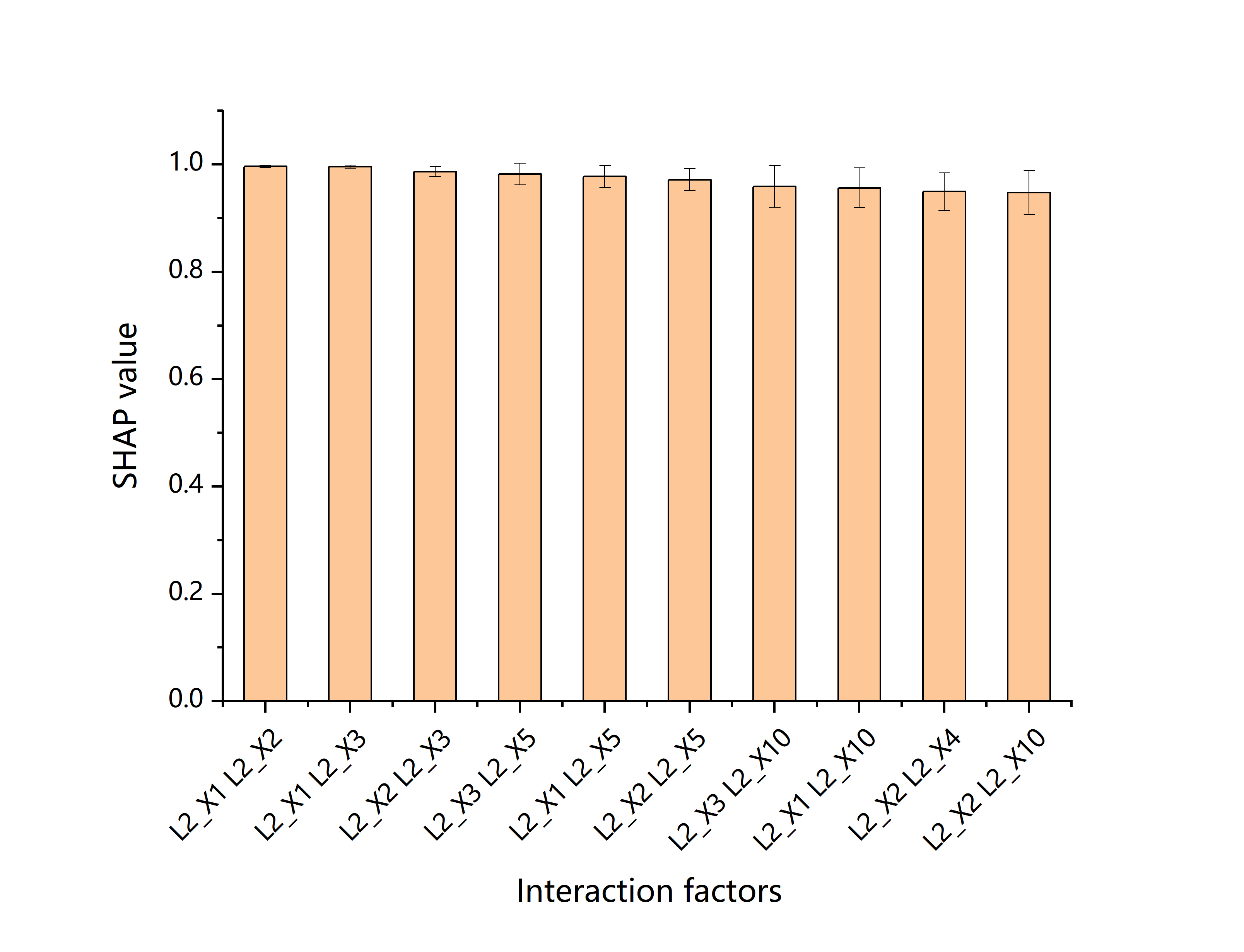
Anopheles sinensis is an important malaria vector in China. Clarifying the driving mechanism of meteorological factors on its population density has practical significance for consolidating the achievements of malaria elimination. Objective: to compare the differences between two models, the geographically weighted random forest (GWRF) combined with SHAP interpretability analysis and the geodetector, in identifying the driving factors of vector mosquitoes, and to analyze the effects of multiple meteorological factors, time-lag effects and their interactions on the density of Anopheles sinensis . Methods: based on public datasets of mosquito density and meteorology, 39 meteorological variables covering the current month, 1-month lag and 2-month lag were included, and GWRF‑SHAP and the geodetector were used respectively to carry out single-factor contribution and factor interaction effect analysis, and the outputs of the two models were compared. Results: relative humidity, precipitation, wind speed and temperature at 1-month lag are the key meteorological factors affecting the density of Anopheles sinensis , and the meteorological effects have a time lag of 1‑2 months. The primary driving factor identified by GWRF is relative humidity at 1-month lag, and the strong interaction effects are concentrated in the temperature‑temperature and temperature‑pressure variable combinations at 2-month lag; the geodetector takes precipitation days at 1-month lag as the primary factor, and the strong interactions are mostly short-term variable combinations of humidity with temperature, pressure and wind speed. The difference between the results of the two models comes from the different algorithm principles: GWRF focuses on the joint contribution of variables at the prediction level, and the geodetector focuses on the explanatory power of factors for spatial stratified differentiation. Conclusion: a single model will bring biased results, and a method of combining multiple models will be considered later, so as to provide methodological reference for zonal early warning and refined control of malaria vectors.