Articles in this Volume

Research Article Open Access
Research Progress in Physical Therapy for Rotator Cuff-Related Shoulder Pain (RCRSP)
Rotator cuff-related shoulder pain (RCRSP) is a broad spectrum of injuries affecting patients all age groups. Individual in this condition typically experience shoulder joint pain, restricted joint mobility, and a decline in muscle strength. How to effectively intervene in the treatment of RCRSP has become a hot topic in clinical research. Current primary interventions consist of biological therapy and surgical treatment, which are commonly limited by high medical costs and prolonged rehabilitation cycles. Given the above drawbacks, physical therapy has gained increasing academic attention in the clinical management of RCRSP in recent years. Based on clinical research published in recent years, this review systematically analyzes the clinical efficacy and underlying mechanisms of exercise therapy, physical agent modalities and traditional rehabilitation interventions (acupuncture therapy, massage techniques, traditional Chinese medicine cupping therapy, topical applications of traditional Chinese medicine). The relevant evidence summarized in this article provides evidence-based references for the formulation of individualized rehabilitation protocols for patients with RCRSP.
Show more
Read Article PDF
Cite
Research Article Open Access
Disruption of Ascending and Descending Visual Processing Circuits
Parkinson's disease (PD) is a neurodegenerative disorder caused by the loss of dopamine-carrying neurons in the substantia nigra in the brain. Non-motor symptoms (particularly visual impairment) significantly impair patients' quality of life, but the primary pathogenesis is poorly understood. This study aims to investigate the mechanisms by which the brain uses structural changes in the enzyme leucine-rich ribonuclease 2 (LRRK2) to process visual information, with a particular focus on abnormalities in top-down brain control and bottom-up sensory pathways. The results show that the LRRK2-G2019S mutation causes excessive LRRK2 expression in brain regions that affect higher-level visual processing, such as attention and working memory, while simultaneously inhibiting dopamine activity in the nucleus accumbens and viscerocortical sensory feedback, leading to impaired visual processing and impaired integration of visual information in two-dimensional space. This results in visual problems ranging from blurred and reduced vision to unusual dreams. This ongoing study uses LRRK2-G2019S mutant fruit flies, which will allow us to identify and investigate causal relationships from LRRK2 molecular pathology to visual network abnormalities and behavioral disorders. This study provides a new rationale for screening and identifying possible early signs (e.g., vision changes, abnormal eye movement patterns, and changes in body functions), so that early intervention in PD may be possible before the disease has spread throughout the body.
Show more
Read Article PDF
Cite
Research Article Open Access
Survival Analysis of Male Breast Cancer Patients Based on SEER Data
Male breast cancer is uncommon, but its clinical management remains challenging because evidence is still far less abundant than that for female breast cancer. This study used data from the SEER Program to evaluate prognostic factors in male breast cancer and to compare the performance of Cox proportional hazards and accelerated failure time (AFT) models. After data cleaning and variable construction, 1,743 male patients diagnosed between 2000 and 2019 were included in the final analytic cohort. The dataset contained demographic information, tumor stage, receptor status, treatment variables, survival time, and outcome status. According to the above results, the 1-year, 3-year and 5-year survival rates are 93.7%, 82.7% and 71.5%, respectively. The test for proportional hazards showed that some variables did not meet the requirements of the Cox model, so an AFT model was selected. We can find that survival analysis of SEER data can provide statistical support for the prognosis prediction of patients.
Show more
Read Article PDF
Cite
Research Article Open Access
Critical Quality Attributes and Manufacturing Process Control Strategies of Antibody–Drug Conjugates: A QbD /Risk Assessment Perspective
Antibody–drug conjugates (ADCs) have emerged as an important class of targeted cancer therapeutics by combining the specificity of monoclonal antibodies with the potency of cytotoxic payloads. Their complex molecular structure and multi-step manufacturing process, however, there are significant challenges for product consistency, characterization and quality control. The key critical quality attributes (CQAs) of ADCs are discussed in this essay, such as drug-to-antibody ratio, conjugation heterogeneity, aggregation, fragmentation, charge variants, linker stability, and residual free payload, as well as biological activity. It also examines the impact of these attributes upon the quality of the antibody, the properties of the linker–payload, the conditions of the conjugation procedure, and others. Special emphasis is placed on the use of Quality by Design and risk assessment in the connection of the QTPP with the CQAs, critical material attributes and critical process parameters. The analysis suggests that only an integrated, science based control strategy over the entire product lifecycle can ensure the quality of ADC, not just end product testing. However, the complexity and products' specificity of the ADCs might reduce the ability to apply a universal control framework directly. Therefore, process understanding and the development of more sensitive analytical technologies, as well as product-specific risk assessment approaches should be emphasized in the future to facilitate safer, more consistent and more robust ADC manufacture.
Show more
Read Article PDF
Cite
Research Article Open Access
Nanocarrier-Mediated Gene Editing for Improved Tumour Therapeutic Efficacy
Article thumbnail
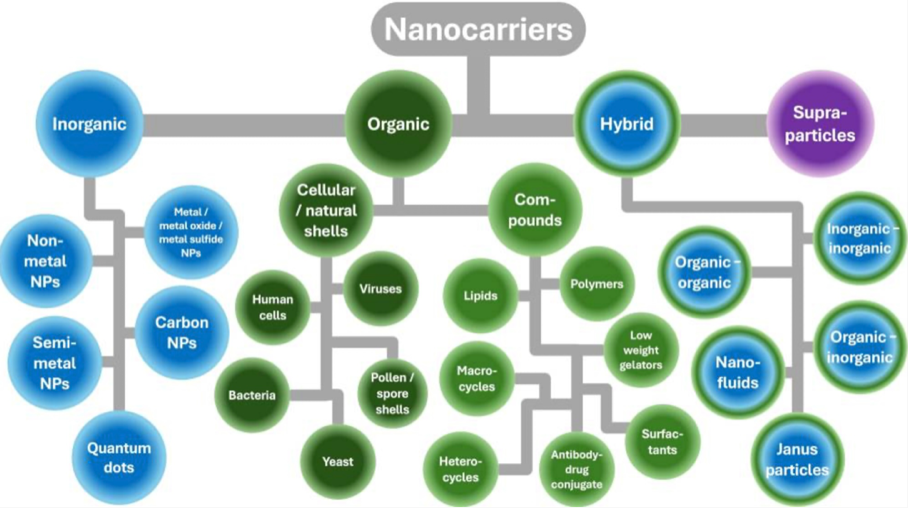
Conventional gene editing delivery systems are plagued by poor long-term blood circulation stability, weak active tumour-targeting capability, and severe off-target immunogenicity after systemic intravenous administration, greatly restricting the widespread clinical application of precise minimally invasive malignant tumour therapy. This paper reviews considerable recent preclinical literature to systematically summarize the classification, physicochemical properties, and diverse fabrication techniques of mainstream lipid, polymeric, and inorganic nanocarriers. It further elaborates the core working mechanisms of CRISPR/Cas9 gene editing and several types of nanomaterial-assisted delivery platforms, and comprehensively compares their in vivo antitumour performance along with distinct respective merits and unavoidable inherent biological drawbacks. While nanocarriers substantially enhance the systemic in vivo transport and intracellular endosomal escape delivery efficiency of CRISPR gene-editing components, multiple critical translational bottlenecks still persist, including low cargo loading efficiency and inadequate intratumoural enrichment after intravenous injection. This review sorts out such core technical bottlenecks and highlights prospective research directions, such as multifunctional unified carriers and tumour microenvironment-responsive targeted delivery designs, which provides reliable systematic theoretical support for the subsequent clinical translation of nanomaterial-mediated gene editing against various malignancies.
Show more
Read Article PDF
Cite
Research Article Open Access
Resveratrol as a Neuroprotective Bridge from Blue Zone Longevity to Alzheimer's Prevention
Alzheimer's disease is the most common type of dementia among older adults in ageing populations, and the pathological changes that occur before symptoms appear are too extensive; therefore, the focus of research has shifted from late-stage treatment to prevention. This paper investigates whether the low chronic-disease burden in Blue Zone populations can serve as a starting point for prevention-oriented research on neurodegeneration and, as a mechanistic case study, uses resveratrol. First, the literature on the Blue Zone has been evaluated as an observational, hypothesis-generating system rather than a controlled natural experiment, and the proposed path connecting peripheral inflammatory burden to central nervous system immune activity has been set up hypothetically. Next, the neuroinflammatory cascade of Alzheimer's disease is presented, including amyloid-beta and tau pathology, nuclear factor kappa B signalling, cytokine release and oxidative stress, as well as a self-amplifying feedback mechanism among these factors. Resveratrol is a known Sirtuin 1 activator that suppresses various harmful factors, such as the accumulation of amyloid and tau phosphorylation, glial cell activation, reduced antioxidant capacity, impaired insulin signalling, mitochondrial dysfunction, and so on. Although human trials have shown that resveratrol can reach the central nervous system and alter some biomarkers, there have been no corresponding cognitive benefits; instead, an unexplained decrease in brain volume and severe bioavailability limitations have occurred. Resveratrol is thus best understood as a typical representative of the all-around prevention system rather than as the cause of Blue Zone longevity or an independent treatment.
Show more
Read Article PDF
Cite
Research Article Open Access
Stalled Replication Forks under Replication Stress: Cellular Responses, Repair Mechanisms and Therapeutic Implications
DNA replication is essential for maintaining genome integrity during cell division. However, endogenous and exogenous factors frequently induce replication stress, leading to replication fork stalling and genome instability if unresolved. Recent studies have identified multiple mechanisms that coordinate replication fork stabilisation, protection and restart, although their regulation and roles in disease remain incompletely understood. This review summarises the current understanding of the mechanisms regulating stalled replication forks during replication stress. It first outlines the major endogenous and exogenous sources of replication stress before discussing the key cellular responses that maintain fork integrity, including Rad3-related (ATR)-checkpoint kinase 1 (CHK1) signalling, replication fork reversal and replication fork protection. Finally, it reviews the relationship between replication stress and cancer development, together with recent advances in therapeutic strategies targeting replication stress response pathways. Future studies should clarify the interactions among replication stress response pathways and develop more effective therapeutic approaches that selectively target replication stress in tumour cells.
Show more
Read Article PDF
Cite
Research Article Open Access
Interleukins in Alzheimer's Disease: Mechanisms, Biomarkers, and Therapies
Alzheimer's disease (AD) is a complex neurodegenerative disorder in which long-term brain inflammation interacts with amyloid-β (Aβ) and tau abnormalities, leading to synaptic damage and cognitive decline. Interleukins are important in this process because they connect glial activation, harmful protein accumulation, and neuronal injury. Although recent studies have identified inflammatory pathways and blood cytokine patterns associated with AD, their roles at different stages and their clinical value remain unclear. This review discusses interleukin-related inflammation, inflammatory biomarkers, and developing immune-regulating treatments for AD. It describes how microglia change from protective cells that clear harmful substances into overactivated cells that may increase damage; the NLRP3–caspase-1 pathway is also presented as a link between Aβ or tau stress and IL-1β/IL-18 release. IL-6, IL-17A, IL-7, and IL-15 are examined within wider immune networks, as combined inflammatory patterns may be more closely related to cognition and nerve fiber injury than single cytokines. Treatments involving NLRP3, TREM2, CD33, TNF-related pathways, natural products, diet, gut microbiota, and lifestyle are also reviewed; combination therapy may be suitable because AD varies among patients. Current findings support a move from general anti-inflammatory treatment toward stage-based, biomarker-guided immune regulation, which may reduce cytokine damage while maintaining microglial clearance and repair. However, causal links, suitable treatment periods, and reliable brain-specific inflammatory markers remain uncertain; future studies should use long-term multimodal cohorts, human-relevant models, and grouped clinical trials combining cytokine patterns with Aβ, tau, NfL, GFAP, genetics, and neuroinflammatory imaging.
Show more
Read Article PDF
Cite