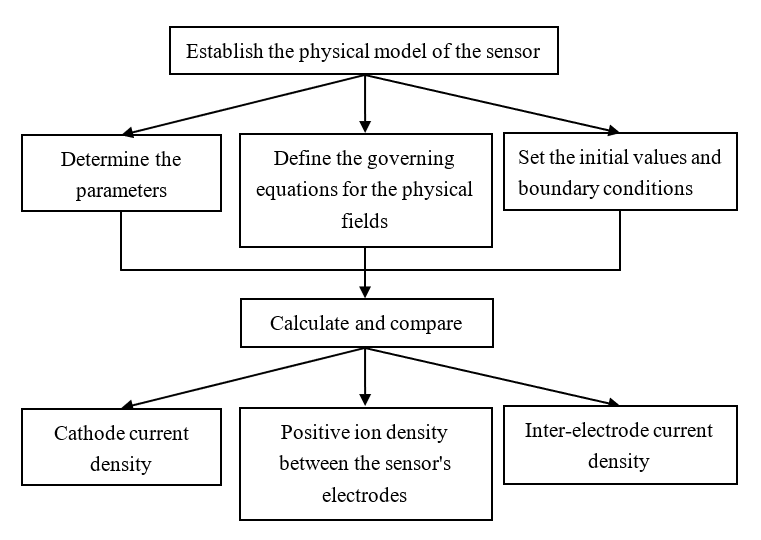
In areas such as respiratory disease prevention and control, life science research, and food and drug development, bioaerosol samplers can monitor the surrounding environment in real time. Within bioaerosol research, various gas sensor designs have been developed based on different collection principles, including liquid impaction, solid impaction, cyclone, filtration, and electrostatic methods. However, due to the diverse characteristics of bioaerosols, instruments employing different design principles show variations in physical and biological sampling efficiency for different bioaerosol particles. The objective of this paper is to examine the design of a highly sensitive, high-speed microelectromechanical systems’ (MEMS) electrode ionization bioaerosol gas sensor. This study investigates the sensitivity characteristics of gas sensors toward aerosols, with the aim of improving upon the limitations of existing gas sensor designs. First, a silicon micropillar sensor composed of a three-electrode structure is proposed for real-time monitoring of multiple parameters, including particulate matter concentration, gas concentration, and temperature. Second, the sensing mechanism of the silicon micropillar toward particulate matter, gas, and temperature is explored. The analysis is based on gas discharge, field-assisted emission, and particle charging theories, establishing a direct detection principle for these parameters. Finally, experiments and simulations were conducted to investigate the effects of micropillar aspect ratio and electrode spacing on sensor performance and bioaerosol sensitivity.