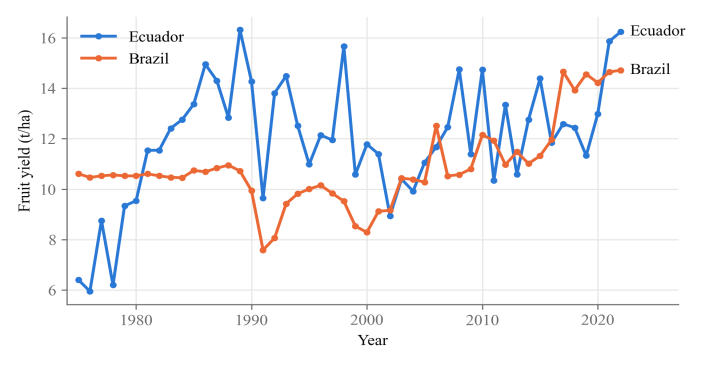
Oil palm needs warm temperatures and a steady water supply, so climate change may affect its yield. This study examined whether long-term climate conditions were related to oil palm yield in Ecuador between 1975 and 2022, using Brazil as a comparison. Yield data from FAOSTAT were combined with temperature and rainfall data from the CRU TS 4.07 dataset. Annual water deficit and a moisture index were calculated, and multiple linear regression was used to test how temperature, rainfall, and water deficit were associated with yield. Ecuador warmed by about 0.09 °C per decade (p = 0.038), while its water deficit decreased by about 17 mm per decade (p = 0.038). Yield rose from 6.4 to 16.2 t/ha but varied strongly between years. The climate variables explained only 8.4% of yield variation (R² = 0.084, p = 0.272), and none of them was statistically significant. In Brazil, temperature was linked to yield only until a time trend was added. A simple yield–impact model showed that a 20% fall in yield could raise the environmental impact per kilogram of crude palm oil by 12–20%. The results suggest that, at the national level, management and disease have shaped Ecuadorian yield more than climate has so far.