Articles in this Volume

Research Article Open Access
The Mechanism of Brain-Computer Interfaces: Converting Motor Cortex Neural Signals into Robotic Arm Control Commands
Brain-computer interfaces (BCIs) can provide patients with severe motor disorders with a new way to bypass damaged nerve pathways and control external devices by decoding the nerve activity of the motor cortex. Current research has made progress in continuous movement, multi-degree-of-freedom control and sensory feedback, but long-term stability, control accuracy and clinical safety are still limited. This paper analyses the signal acquisition characteristics of invasive, non-invasive and intravascular BCIs, sorts out the signal preprocessing, feature extraction and neural decoding processes, and summarizes the generation methods of continuous, discrete and multi-degree-of-freedom robotic arm instructions. Analysis shows that the collaborative optimization of signal quality, decoding algorithm and shared control strategy is the key to improving the naturalness and reliability of robotic arm operation. This article provides a systematic reference for the design and research of the BCI robotic arm system. Future research should focus on developing stable neural interfaces, adaptive individual decoding, computer vision assistance and two-way sensory feedback to promote their long-term clinical and daily applications.
Show more
Read Article PDF
Cite
Research Article Open Access
Application, Progress, Challenges and Coping Strategies of Artificial Intelligence in Laser Diagnosis and Treatment of Dermatology
Article thumbnail
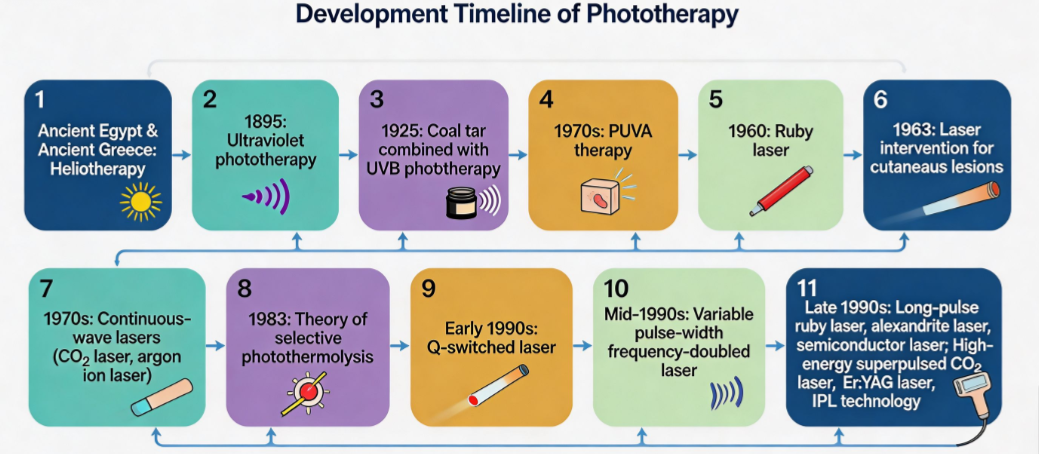
Selective photothermolysis is the basic theoretical foundation of laser therapy, and now a highly used diagnostic and treatment method in dermatology is based on it. Although laser therapy has shown some good curative effects on various skin diseases, clinical application still faces many problems: the parameters are not standardized, the criteria for choosing them are inconsistent, the assessment of efficacy is mostly based on subjective visual checks, and dark-skinned people are more prone to adverse effects such as burns, pigment changes, etc. The general process and applications of artificial intelligence in laser dermatology will be introduced in this paper, such as pre-operative quantitative analysis of lesion images, intelligent adjustment of laser energy during surgery, and objective quantification of the effect of post-operative treatment. There are many serious problems in the actual operation that have not been solved yet; there is a lack of high-level clinical validation data, an opaque "black-box" mechanism for algorithms, data bias due to racial imbalance, a fragmented industrial supervision system, unreliable content hallucination from large language models, etc. The four problems that need to be solved in the new round of targeted countermeasures are large-scale multicenter cohort studies, the development of interpretable AI models, fair and standardised patient data privacy governance, and optimisation of human-machine collaborative clinical workflows. The aims of this paper are to offer theoretical support for the standardisation of clinical application of AI-assisted laser intervention and to help realise the goal of personalised and precise skincare.
Show more
Read Article PDF
Cite
Research Article Open Access
Bidirectional Synaptic Plasticity Mechanism Mediates the Abnormal Fear Memory Flashbacks in PTSD
Post-traumatic stress disorder (PTSD) is characterized by persistent traumatic memories and flashbacks, which may arise from dysregulated synaptic plasticity mediated by inflammatory and epigenetic mechanisms. Three intervention strategies are evaluated in this paper. They are exercise and exposure therapy, targeted drugs, and personalized repetitive transcranial magnetic stimulation (rTMS) respectively. Inflammatory and epigenetic pathways are integrated in this framework to provide a new perspective on PTSD synaptic pathology mechanism. Restoring the balance between long-term potentiation (LTP) and long-term depression (LTD) should be an important therapeutic target. Future studies should validate LTP and LTD changes in patients and develop personalized combination therapies based on plasticity subtypes. Studies have found that traumatic stress can promote excessive enhancement of the amygdala's LTP through abnormal activation of the hypothalamic–pituitary–adrenal (HPA) axis, leading to reinforced fear memories. Simultaneously, it can inhibit hippocampal LTD processes through Brain-derived neurotrophic factor (BDNF) DNA methylation and related signaling alterations, thus hindering the extinction of traumatic memories. The NF-κB inflammatory pathway and the BDNF methylation pathway may serve as key molecular nodes which regulate synaptic plasticity imbalance. Based on these mechanisms, this article further summarizes intervention strategies for restoring synaptic plasticity balance, including exercise combined with exposure therapy, targeted drug therapy, and personalized rTMS therapy.
Show more
Read Article PDF
Cite
Research Article Open Access
AI-Based Histopathological Diagnosis of Ameloblastoma: Research Progress, Limitations and Prospects
Article thumbnail
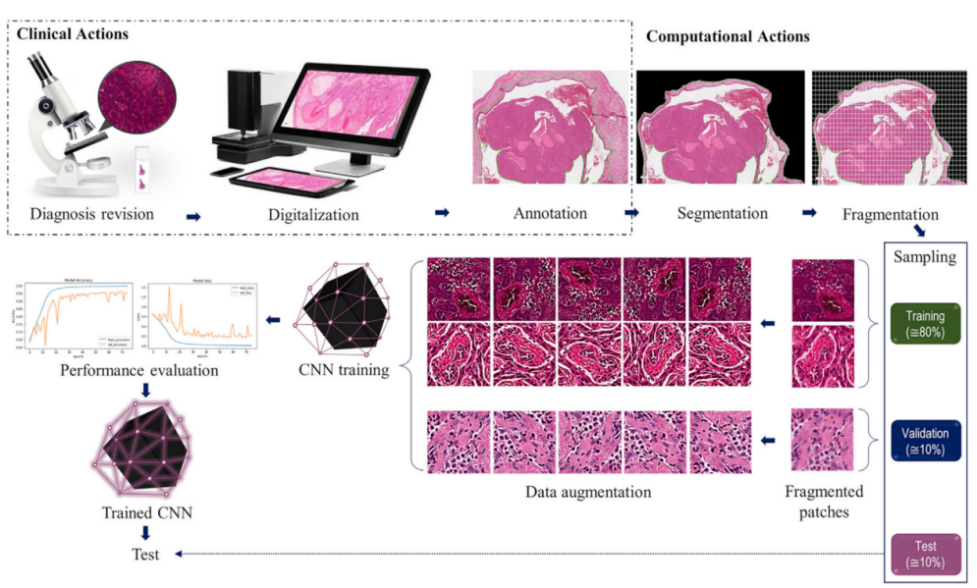
Locally aggressive and prone to recurrence, ameloblastoma (AME) is among the most common odontogenic epithelial tumors of the jaws. Histopathological diagnosis is often difficult because AME morphologically overlaps with other jaw lesions; where specialist expertise is scarce, misdiagnosis can lead to suboptimal surgery and poorer outcomes. This narrative review examines current evidence on AI-assisted histopathological diagnosis of AME. We describe the deep learning workflow and evaluate three tasks—pixel-level tumor epithelium segmentation, benign-malignant stratification, and multi-class differential diagnosis—with attention to intra-cohort comparisons. Reported results are encouraging: three-class classification reaches AUC 0.91, and tumor epithelium segmentation attains mean Intersection over Union (mIoU) 0.846, albeit in single-center retrospective settings. Clinical translation is hindered by cross-dataset domain shift, absent benchmarks, limited interpretability, and privacy constraints. We also outline an "AI screening plus pathologist review" arrangement that could improve efficiency. AI offers genuine promise as an adjunct, but progress will require standardized multi-center datasets, more interpretable algorithms, and prospective validation.
Show more
Read Article PDF
Cite
Research Article Open Access
Targeting LZK in Oral Squamous Cell Carcinoma: A Review of Local PROTAC Delivery via Dissolving Microneedles
Article thumbnail
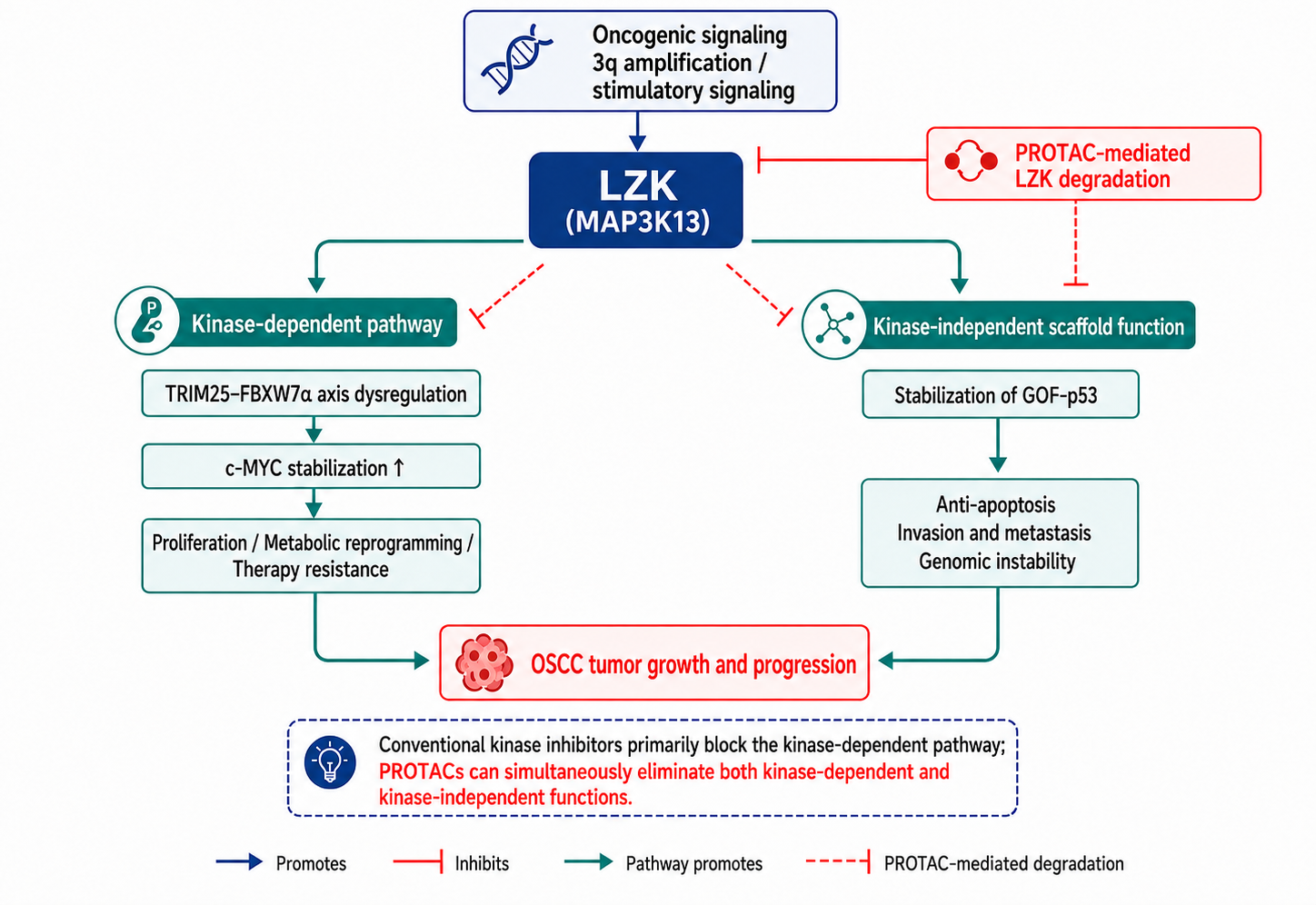
Oral squamous cell carcinoma (OSCC) is the predominant histological type of oral cancer, with a continuously increasing disease burden and unsatisfactory long-term survival. c-MYC and gain-of-function mutant p53 (GOF-p53) are important oncogenic factors in OSCC/head and neck squamous cell carcinoma (HNSCC), but both remain difficult to target directly. Leucine zipper-bearing kinase (LZK) can maintain c-MYC stability through kinase-dependent mechanisms and stabilize GOF-p53 through non-kinase-dependent scaffold functions. Proteolysis-targeting chimera (PROTAC)-mediated degradation of LZK may simultaneously block its catalytic and non-catalytic functions; however, this strategy is limited by the large molecular size, poor membrane permeability, and restricted systemic delivery of PROTAC molecules. Dissolving microneedles (DMNs) may enable local delivery and reduce systemic exposure. This review summarizes recent advances in LZK-PROTAC and dissolving microneedle-mediated delivery, and discusses their potential value as postoperative adjuvant therapy for stage I-II OSCC.
Show more
Read Article PDF
Cite
Research Article Open Access
Influences of Circadian Rhythm on Memory Formation and Underlying Neuronal Regulatory Mechanisms
Circadian Rhythm disruption in modern society damages the hippocampus and leads to memory loss. However, the existing interventions for the central clock have not restored hippocampal rhythms and cognition. Therefore, this paper systematically summarizes the neural circuits and molecular feedback loops of the mammalian circadian system, analyzes the regulatory effects of environmental zeitgebers on central and peripheral rhythm entrainment, and elaborates the multi-layer mechanisms of memory impairment mediated by reduced hippocampal neurogenesis, disrupted synaptic plasticity and epigenetic dysregulation of clock genes. REV-ERBα (nuclear receptor subfamily 1 group D member 1, NR1D1) is a required molecular hub that coordinates the regulation of circadian rhythms and neural function and whole-body metabolism, according to a second proposal. This paper presents an organised theoretical system for the study of circadian regulation of memory and offers a reference for screening intervention targets in rhythm-related cognitive disorders. Research will be conducted on hippocampus-specific targeting strategies to improve the therapeutic effect of circadian rhythm disorders for memory next.
Show more
Read Article PDF
Cite
Research Article Open Access
Effects of Lactylation in Cancer Progression
Protein lactylation is a newly described post-translational modification (PTM), initiated by the transfer of lactyl group in lactyl-CoA to lysine residues, and can be classified into histone and non-histone lactylation. Lactylation bridges glycolytic metabolism pathways to epigenetic modifications, complementing knowledge in both parts of cancer regulation. Here, we systemically review the recent advances in understanding the effects of lactylation on cancer, including survival, proliferation, metastasis, angiogenesis and vasculogenic mimicry, stemness and immune evasion. We also summarized lactylation-induced resistance mechanisms and emerging therapeutic opportunities, which may contribute to its integration in current therapies as a sensitizer.
Show more
Read Article PDF
Cite
Research Article Open Access
Brain–Computer Interfaces in Functional Recovery from Severe Motor Disabilities: A Focus on ALS and High‑Level Paraplegia
Motor disabilities like amyotrophic lateral sclerosis (ALS), or high-level paraplegia severely affect patient's interaction with their environment and independence. Brain-computer interfaces (BCIs) are an essential technology linking neural activity to external devices to recover lost functions. Advances in signal acquisition and decoding algorithms have greatly enhanced the accuracy and stability of BCIs; however, there remains much room for improvement concerning long-term biocompatibility and seamless integration within everyday life. This review analyzes the present role of BCIs in functional recovery among patients suffering from severe motor impairments, summarizing recent results obtained using both invasive and non-invasive modalities about motor rehabilitation and communication restoration. This analysis shows that although BCIs provide significant benefits in regaining autonomy they face technical hurdles and lack standardization in evaluation metrics. This paper provides here a comprehensive reference towards further BCI developments and highlight open issues related to system robustness and user adaptability. Further efforts should be directed toward optimization of closed-loop neuromodulation strategies and large-scale longitudinal clinical trials to enable wide practical use.
Show more
Read Article PDF
Cite