Articles in this Volume

Research Article Open Access
The Causes of Using Animal Model to Understand Human Metabolism
It is ethically impermissible to conduct continuous interventions on humans from birth to old age for the purpose of studying the long-term side effects of a new drug or the function of a gene. Animal models offer us a controllable and operable platform for studying complex metabolic processes in a complete life system, which is impossible to achieve in human research. This paper delves into the rationale, methodologies, and implications of using animal models to understand human metabolism. It explores the theoretical bases, presents experimental cases like the Diet-Induced Obesity (DIO) mouse model, and assesses the value and limitations. By examining the biological similarity, controllability, and translational potential, this paper indicates that animal models are crucial tools; the causes for their uses are rooted in a combination of ethical necessity, biological similarity, and practical experimental advantages, but they cannot perfectly replicate the complex metabolism of humans. The insights gained can be used for future metabolism research, such as obesity and diabetes.
Show more
Read Article PDF
Cite
Research Article Open Access
Research Progress on the Distribution Characteristics, Ecological Risks, and Removal Technologies of Antibiotic Residues and Resistance in the Environment
Antibiotic residues and resistance have emerged as pervasive environmental pollutants because of extensive use in medicine, agriculture, and aquaculture. A review of recent literature reveals a lack of comprehensive analyses which integrate distribution characteristics, ecological risks, and the full spectrum of removal technologies across environmental matrices. This study synthesizes recent research on distribution patterns, ecological and public health risks, and removal technologies in relation to antibiotic residues and resistance. The results reveal significant ecological impacts: inhibiting microbial and primary producer activity, altering community structures, and reducing biodiversity, while potentially undermining the efficacy of antibiotics in medicine. Various technologies have been explored and implemented to remove antibiotic contaminants and mitigate antibiotic resistance in environmental matrices, each employing different mechanisms and exhibiting varying efficacy in eliminating antibiotics or antibiotic resistance genes. To combat antibiotic pollution effectively, integrated strategies under a One Health framework are essential.
Show more
Read Article PDF
Cite
Research Article Open Access
Spatial Patterns of Greenhouse Gas Emissions in Livestock Farming and the Potential of Plant Protein Emission Reduction
Article thumbnail
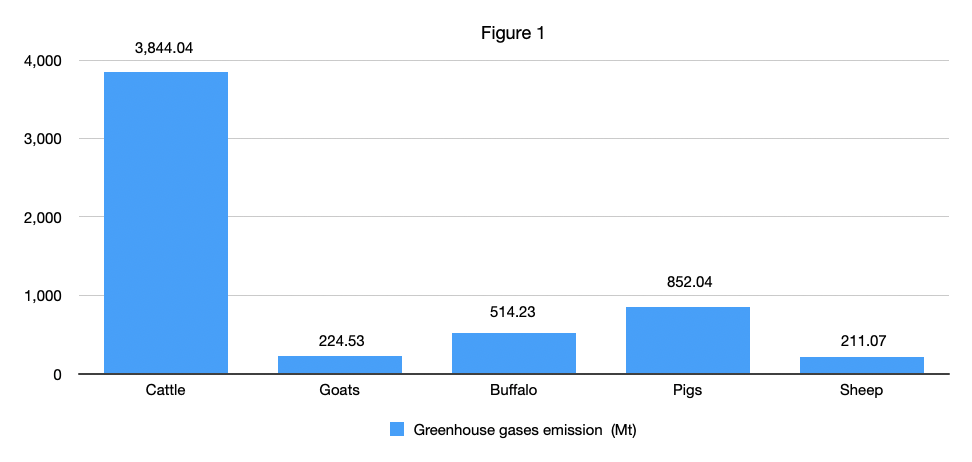
As global climate change worsens, the substantial greenhouse gas emissions from livestock farming have emerged as a major contributor to overall greenhouse gas levels. As a result, the mitigation of livestock farming’s impact on climate change has become a key global challenge. This paper investigates regional variations in greenhouse gas emissions from livestock farming and explores the potential of substituting animal protein with plant protein as an effective strategy for emission reduction. Through a comprehensive analysis of greenhouse gas emission data and relevant literature in major livestock farming regions around the world, such as North America, Latin America, East Asia and South Asia, the results indicate that large-scale breeding will lead to higher energy consumption and carbon emissions than extensive breeding. Besides, social factors, like the huge population and the high demand consumption market for cattle and sheep, have contributed to the expansion of livestock farming and further aggravated carbon emissions. Accordingly, this paper reveals that replacing animal protein with plant protein can greatly lower greenhouse gas emissions and promote low-carbon, environmentally friendly production, providing a feasible solution to climate change.
Show more
Read Article PDF
Cite
Research Article Open Access
From the Black Death to the Age of Superbugs: Lessons from History for the Antimicrobial Resistance Crisis
Antimicrobial resistance has become one of the most severe global health threats, challenging the foundations of modern medicine. The article outlines the historical trajectory between humans and bacterial infections, from the devastating Black Death of the 14th century to the revolutionary discovery of antibiotics in the 20th century, and now to the crisis exacerbated by "superbugs." Combining historical analysis with contemporary epidemiological data, this study explores how past uncontrolled bacterial outbreaks can provide insights for current drug resistance management. The research methodology relies on historical literature, reports from the World Health Organization and the Centers for Disease Control and Prevention in the United States, as well as the latest findings on resistance mechanisms and control measures. The research question focuses on how historical experience can provide insights for current and future drug resistance strategies. Results indicate that alleviating drug resistance requires a combination of multiple approaches, including rational antibiotic management, enhanced infection prevention, and exploration of alternative therapies. These experiences are of decisive significance in preventing humanity from returning to the era before the emergence of antibiotics.
Show more
Read Article PDF
Cite
Research Article Open Access
Global Prevalence, Drivers, and One Health Implications of Methicillin-Resistant Staphylococcus Aureus (MRSA) in Companion Animals: A Systematic Review
Article thumbnail
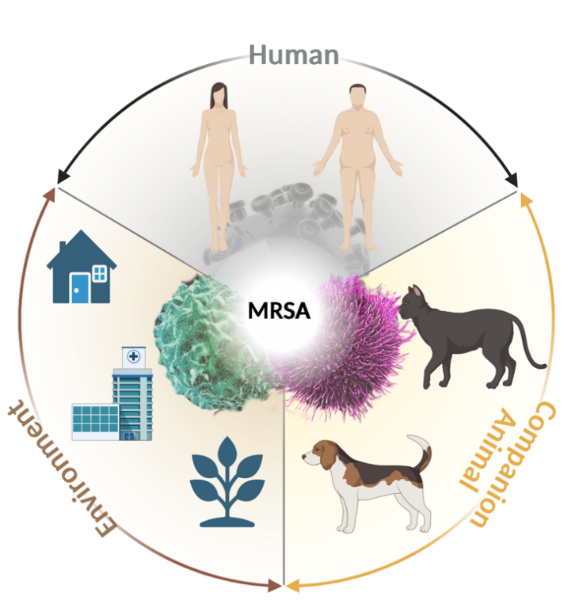
The growing number of companion animals worldwide has raised public health concerns about zoonotic microorganisms, especially Staphylococcus aureus and methicillin-resistant Staphylococcus aureus (MRSA). As an antibiotic-resistant bacterium, MRSA is a major concern across animal and human populations because it has high virulence, transmissibility, and multiantibiotic resistance. Close and frequent contact between humans and companion animals facilitates bidirectional transmission, enabling pets to act as potential reservoirs of community-acquired MRSA. This review after extensive compilation has revealed variations in the prevalence of MRSA with respect to geographic locations, ranging from North America to Europe and Asia, influenced to varying extents by variations in study protocols used, diagnostic methods, study animals, and current practices related to antimicrobial usage in different parts of the world. The appearance of new human clones such as CC398, ST1, and ST5 has clearly indicated the importance of zoonotic transmission. Notably, the diagnostic biases, with special emphasis on methicillin resistance in Staphylococcus pseudintermedius (MRSP), clearly has major implications in causing variability in the prevalence of MRSA in human and veterinary settings. Additionally, the review elaborates on key resistance mechanisms, including SCCmec-mediated β-lactam resistance and multidrug efflux systems, which complicate treatment protocols. Therefore, implementing standardized global surveillance under a One Health framework is imperative to control the spread of MRSA and mitigate its public health impact.
Show more
Read Article PDF
Cite
Research Article Open Access
Effect of Cyanobacterial Concentration in Water on the Prevalence of Parasitic Infections
This study aims to investigate the impact of cyanobacterial concentrations in water bodies on the prevalence of parasitic infections. We systematically reviewed nine peer-reviewed articles published between 2010 and 2023, focusing on empirical data linking cyanotoxins and parasitic infections in freshwater ecosystems. Studies involving marine systems and pathogen-related research unrelated to the study topic were excluded. Data were categorized into the following groups: 1) effects of cyanobacteria on hosts (e.g., toxin effects); 2) parasite transmission dynamics (e.g., host susceptibility). The study primarily addressed the following questions: Do algal blooms exacerbate parasite transmission within ecosystems? Is there an association between cyanobacterial concentration and the health status of other organisms in the water body? The findings support the hypothesis that cyanobacterial blooms intensify parasite infections. The study found that cyanobacterial blooms disrupt host physiology through toxin effects, increasing host susceptibility to parasites. Additionally, blooms impair hosts' antioxidant defense systems via oxidative stress, further compromising host health.
Show more
Read Article PDF
Cite
Research Article Open Access
The Mechanism and Clinical Application of Licorice in the Treatment of Recurrent Aphthous Ulcers
Recurrent Aphthous Ulcer (RAU), a common type of oral mucosal disease, has a significant impact on the quality of the general public. It is urgently to explore safe and effective treatment strategies. By comprehensiving description of traditional Chinese medicine and modern research basis, the article summarizes the main pathogenesis of RAU, including immune imbalance, inflammatory reaction, oxidative stress and so on. As a traditional and widely used rug, Licorice has multiple roles including anti-inflammatory effects, immunomodulation, promoting mucosal repair, anti-bacterial and anti-viral effects. Based on the above, licorice and its compounds, such as Licorice Heart-Draining Decoction, can not only relieve pain effectively but also accelerate wound healing and reduce the recurrence rate. Also, licorice and its compounds have high safety of topical application. Therefore, licorice has its own unique advantages and broad prospects in the treatment of RAU. To promote the standardized and international application of licorice and its compounds, researchers should further improve the preparation form of licorice and conduct higher-quality clinical trials.
Show more
Read Article PDF
Cite
Research Article Open Access
Threats Posed by Ocean Noise to Marine Mammals and Implications for Management
With the increasing frequency of human activities in the ocean, marine noise pollution has become a significant environmental stressor threatening the survival of marine mammals. This paper systematically reviews the primary sources of marine noise (such as vessel navigation, underwater pile driving, and offshore engineering) and its propagation mechanisms in complex marine environments. It focuses on analyzing the adverse effects of noise on the auditory perception, behavioral patterns, and ecological functions of marine mammals like cetaceans and pinnipeds. Research indicates that marine mammals rely on sound for communication, navigation, reproduction, and foraging. Anthropogenic noise not only risks causing hearing damage but also disrupts echolocation and social behaviors, potentially leading to severe consequences like strandings. Regarding governance, the paper reviews the progress and limitations of existing technical measures (such as bubble curtains) and legal frameworks. It proposes a systematic governance approach encompassing source control, propagation mitigation, and intelligent monitoring. The study emphasizes the need for enhanced interdisciplinary collaboration and international coordination to advance the implementation of dynamic adaptive management strategies, thereby achieving effective protection of the marine soundscape and sustainable management of marine ecosystems.
Show more
Read Article PDF
Cite
Research Article Open Access
CRISPR/Cas9 Gene Editing Technology in Crop Quality Improvement: Applications and Challenges
CRISPR/Cas9 gene editing technology has become an important tool for crop quality improvement due to its simplicity, efficiency, and precision. Compared to traditional breeding methods, CRISPR/Cas9 can achieve targeted modification of specific genes in a short period, thereby improving crop yield and quality. This paper reviews the progress of CRISPR/Cas9 technology in quality improvement of food crops, economic crops, and horticultural crops. In food crops, CRISPR/Cas9 has been used to regulate genes related to rice appearance and eating quality; in economic crops, the technology has been successfully applied to improve the quality of cotton and rapeseed oil; in horticultural crops, the nutritional components and taste of tomatoes have been significantly improved. Despite the remarkable achievements of CRISPR/Cas9 in crop quality improvement, technical challenges remain, including plant organelle genome editing, establishment of transgene-free editing systems, and transformation of important crop varieties. With continuous refinement of CRISPR/Cas9 technology, it will provide more possibilities for crop quality improvement and make important contributions to solving food security problems.
Show more
Read Article PDF
Cite
Research Article Open Access
The Adjuvant Potential of Astragalus Radix in Non-small Cell Lung Cancer Therapy
NSCLC is still a severe disease with high mortality in the whole world, which has threatened human life for a long time. The treatment of NSCLC are various and effective, however, with the prolongation of treatment cycle, the patients catch a lot of side effects and the tumor cells has developed mutations and drug resistance during the treatment. The traditional Chinese medicine can improve and alleviate this series of problems. This article talks about the pathogenesis, the external factor, symptoms and the relevant conventional therapy of NSCLC. It focuses on the analysis of the mechanism of Astragalus Radix (AR) as an adjuvant treatment from the perspectives of chemical composition and traditional Chinese medicine, and combined multiple cases and studies to analyze the advantages of combination therapy with AR compared with conventional therapy alone. Although the adjuvant treatment of AR is very effective, it still needs to be combined with other traditional Chinese medicine to form a compound preparation. This article also introduces two representative traditional Chinese medicine prescriptions containing AR and analyzes the additional adjuvant efficacy for NSCLC patients after using them in routine treatment. Finally, this article discusses and analysises the treatment efficacy of AR, the deficiencies in research and the limitation in NSCLC treatment of this herb to inspire the reseachers to find the potentiality of AR in NSCLC treatment.
Show more
Read Article PDF
Cite